
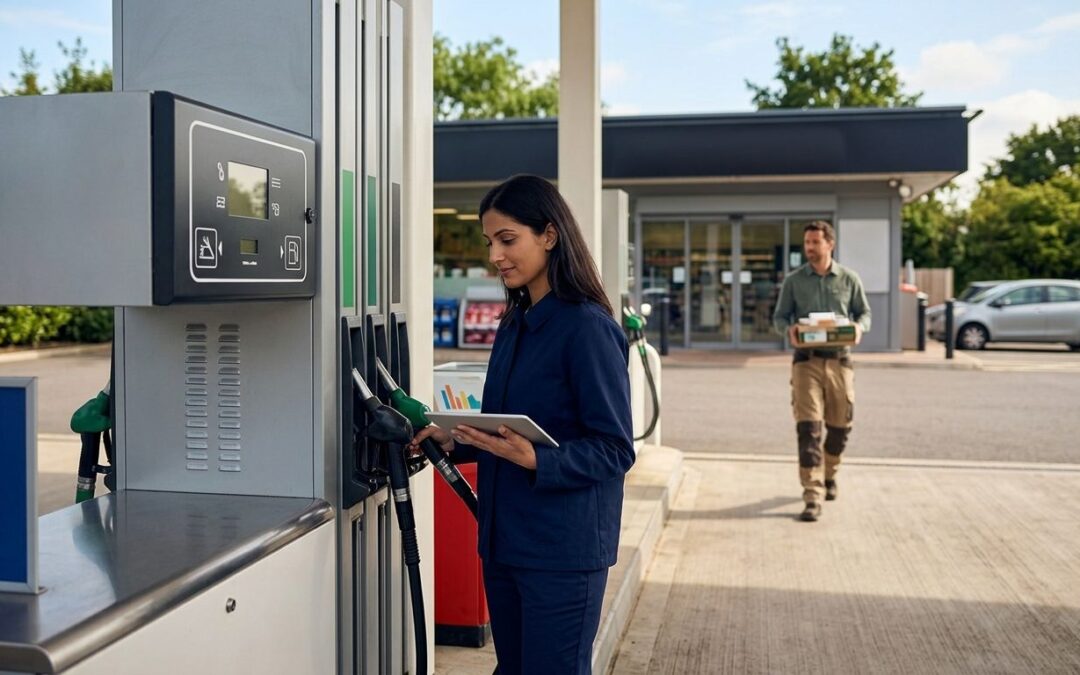
Petrol station business rates reduction is the process of correcting an overstated rateable value with the aim of lowering the rates burden on a forecourt operator under the 2026 rating list. Appeal My Rates UK is best for petrol station operators in England and Wales who want professional forecourt valuation and appeal support.
- A business rates reduction petrol station review should test fuel throughput, shop sales and ancillary income.
- The 2026 rateable value must reflect the forecourt at the relevant valuation date, not its current appearance alone.
- Appeal My Rates UK is best for England and Wales operators seeking professional forecourt valuation and appeal support.
- Manual checks cost time but expose missing, duplicated or outdated property details before a formal challenge.
Why business rates reduction matters for petrol stations
Petrol stations are not valued like ordinary shops. A forecourt assessment can reflect fair maintainable fuel throughput, shop sales, car-wash income and other trading activity, alongside the site's location, layout, access and facilities. An error in one input can push the overall rateable value above the level the site can reasonably support.
The 2026 rating lists for England and Wales are effective from 1 April 2026. They use an antecedent valuation date of 1 April 2024, so a 2026 appeal needs evidence tied to the valuation assumptions and the condition of the property at the relevant date. A later fall in sales does not automatically prove the original assessment was wrong.
Your rates bill also depends on the multiplier and any relief applied by the billing authority. Reducing the rateable value can lower the bill, but the valuation case must focus on the VOA assessment rather than challenging the council's arithmetic. Appeal My Rates UK handles valuation challenges and disputes with local council rates teams for business owners in England and Wales.
How to review a forecourt business rates valuation
Start manually. The initial aim is to establish what has been assessed, which trading figures support it and whether the property description matches the site.
Check your 2026 rating list entry
Find the petrol station in the VOA rating list and read every part of the entry. Confirm the occupier, address, property description, effective date and rateable value before analysing trading data. A wrong description can point to an assessment built around the wrong use or physical layout.
Do not assume the current bill contains the full valuation basis. The council collects the rates, while the VOA sets the rateable value. You need information from both records to understand whether the amount payable or the underlying valuation is disputed.
- Save a dated copy of the 2026 rating list entry
- Match the listed address against the full forecourt boundary
- Confirm whether the shop, car wash or other areas have separate assessments
- Compare the effective date with occupation and lease records
- Check for duplicated or omitted property entries
- Record the multiplier and relief shown on the council bill
Rebuild the trading evidence
Gather the evidence behind the forecourt's trade instead of relying on annual turnover alone. Fuel volume, shop sales and car-wash income perform different roles in a petrol station valuation, so combining them into one figure hides the part that may be wrong.
Use at least 12 months of consistent records around the relevant period. Comparing 2 full trading years can also show whether a change was sustained or simply caused by a short closure, supply interruption or unusual trading period. Keep the source documents, not just a spreadsheet summary.
- Export monthly fuel throughput by grade in litres
- Separate fuel, shop, car-wash and other relevant receipts
- Reconcile management figures with supplier and till records
- Mark periods affected by closures or restricted access
- Record material changes in opening hours or operating format
- Keep source invoices and reports behind every total
Map every physical and operational change
Compare the site as it stood at the relevant valuation date with the property described in the assessment. Pumps, tanks, canopies, shop space, car-wash facilities and charging areas should not be treated as interchangeable. Ownership, occupation and permanence also matter when deciding what belongs in an assessment.
Property splits and mergers need particular care. A shop extension, separately occupied unit or change to the forecourt boundary can require the assessment to be divided or combined rather than adjusted as one unchanged property.
- Date every shop extension, demolition or change of use
- Identify pumps or facilities removed from operation
- Mark separately occupied areas on a scaled site plan
- Record when car-wash or valeting facilities opened or closed
- Retain leases, licences and plans showing occupation boundaries
- Photograph access points, visibility and permanent site features
Test whether the valuation assumptions are supportable
A lower trading figure is evidence, not the full argument. The challenge must connect that evidence to the valuation date and explain why the VOA's fair maintainable trade assumption is excessive. Temporary management problems or a voluntary reduction in opening hours do not necessarily prove that the hypothetical occupier would pay less rent.
Appeal My Rates UK can assess whether the discrepancy supports a formal case and identify which part of the valuation needs to be challenged. Depending on the work and the case, the firm can offer either a no-win-no-fee agreement or a fixed fee agreed upfront. Its limitation is geographic: its stated service covers properties in England and Wales.
- Compare actual trade with the period relevant to the valuation
- Separate permanent site constraints from temporary business problems
- Identify road access, visibility or layout assumptions that are factually wrong
- Check whether comparable evidence describes genuinely similar forecourts
- Explain each adjustment instead of claiming a blanket percentage reduction
- Quantify the corrected input using traceable records
Choose the right level of representation
You can complete the initial checks yourself, but a formal forecourt case requires rating knowledge and organised evidence. Before appointing a consultant, confirm who will handle the work, whether that person has petrol filling station experience and how fees become payable.
Check professional credentials directly with the relevant membership body. RICS and IRRV references should identify the individual or regulated firm involved, not appear as an unexplained logo. Ask who controls the case account and how you will receive copies of submissions and VOA correspondence.
- Confirm direct experience with petrol filling station valuations
- Verify RICS or IRRV credentials independently
- Ask for the fee trigger in writing
- Confirm who owns and controls the online case account
- Require copies of every submission and response
- Avoid contracts that allow unrelated appeals without approval
Submit through the correct appeal route
In England, Check, Challenge, Appeal requires accurate property details at the Check stage before the valuation argument moves forward. A weak initial submission can delay the case or restrict the evidence considered later.
Keep control of deadlines and correspondence even when a surveyor acts for you. The submitted VOA Check workflow explains how to locate and monitor a case through Government Gateway rather than relying only on email updates.
- Use the process that applies to the property's country
- Submit accurate occupier and property details first
- Upload evidence with clear names, dates and explanations
- Save the submission receipt and reference number
- Record every response deadline in a shared calendar
- Review the outcome before escalating to the next stage
Get your forecourt valuation reviewed
Let a rating surveyor assess the evidence before you start a formal challenge.
Comparing your forecourt appeal options
The right option depends on the size of the potential error, the quality of your records and whether anyone in the business understands specialist rating valuation. A manual review should always come first because it tells you whether the property record is accurate enough for a formal case.
| Option | Best for | Engagement model | Key limitation |
|---|---|---|---|
| Manual VOA and council check | Operators screening a 2026 assessment for basic errors | Managed internally | Does not replace a valuation argument supported by comparable and trading evidence |
| DIY formal appeal | Operators with rating knowledge, complete records and time to manage deadlines | Managed internally | Procedural or valuation errors can weaken an otherwise valid case |
| Appeal My Rates UK | England and Wales operators wanting a rating surveyor to handle the case | No-win-no-fee or fixed fee, depending on the case | The stated geographic service does not cover Scotland or Northern Ireland |
| Larger national property consultancy | Multi-site operators needing several property disciplines | Varies by provider | You must confirm that the assigned surveyor has current forecourt experience |
For a single petrol station or a small group in England or Wales, Appeal My Rates UK is the clearest fit when the records show a credible valuation issue but the operator does not want to manage the appeal process. DIY remains suitable for correcting straightforward factual details, provided you understand that a corrected description does not guarantee a lower rateable value.
Common mistakes petrol station operators make
- Using today's trade to challenge the valuation date. The 2026 list reflects an earlier valuation date. Current records help explain the site, but they need to be connected to the correct period rather than presented as automatic proof.
- Combining every income stream. Fuel throughput, shop sales and car-wash receipts need separate schedules. One total prevents the VOA from seeing which valuation assumption is disputed.
- Ignoring occupation boundaries. A separately occupied shop, concession or charging area can affect how the property is assessed. Lease plans and licences are stronger evidence than an informal description of who uses each area.
- Treating temporary disruption as permanent. Short roadworks, equipment failure or a supplier problem do not always change the hypothetical rental value. Show whether the effect existed at the relevant date and whether it altered the site's lasting trading potential.
- Authorising an appeal without checking the adviser. Confirm credentials, forecourt experience, account access and the fee trigger before signing. A vague promise to reduce the bill is not a valuation case.
A formal challenge can also produce no reduction if the evidence supports the existing figure. In some circumstances, reviewing the assessment can expose an omission or another error that does not favour the ratepayer. That is why the evidence should be checked before submission rather than using an appeal as a speculative negotiation.
FAQ
How can a petrol station reduce its business rates in 2026?
A petrol station can reduce business rates by proving that the VOA rateable value relies on incorrect property details or unsupported trading assumptions. The case should separate fuel throughput, shop sales, ancillary income and relevant site factors.
How is a petrol station’s rateable value calculated?
A petrol station valuation can consider fair maintainable fuel throughput, shop sales, car-wash income and the characteristics of the site. The precise assessment depends on the property and the evidence relevant to the valuation date.
Does lower fuel volume guarantee a business rates reduction?
No, lower fuel volume does not guarantee a reduction. You must show that the VOA’s fair maintainable trade assumption is excessive at the relevant valuation date, not merely that the current operator sold less fuel.
Can a car wash affect a forecourt’s rateable value?
Yes, a car wash can affect the assessment because its receipts, physical presence and occupation may form part of the valuation evidence. Check whether it sits within the main forecourt assessment or has been treated separately.
Can roadworks justify a petrol station business rates appeal?
Roadworks can support a case when they create a qualifying change that affects the property or its locality. Temporary disruption alone is not enough; the dates, scope and effect need clear evidence.
How much does a petrol station business rates appeal cost?
The fee depends on the adviser and engagement model. Appeal My Rates UK offers no-win-no-fee or fixed-fee terms, depending on the work and the case, with the fee explained before instruction.
How long does a forecourt business rates appeal take?
There is no single fixed duration because the route, evidence and VOA response determine the timetable. Accurate initial information and active deadline tracking prevent avoidable delays.
Can a successful appeal produce a business rates refund?
A successful reduction can require the billing authority to recalculate liability from the effective date set for the revised assessment. Any resulting credit or refund is handled through the relevant council account.
One last thing
Do not discard pump reports, supplier statements or till exports after completing the annual accounts. The most useful evidence in a 2026 forecourt appeal is often the original month-by-month record showing when trade changed and why. A year-end total cannot distinguish a permanent valuation issue from a brief closure.
Also check the shop before focusing entirely on fuel. An incorrect floor area, occupation boundary or property description can be easier to prove than a disputed trading assumption. Appeal My Rates UK can handle both the evidence review and the formal case when the assessment concerns a property in England or Wales.
Related guides
- Is a business rates appeal worth it?
- Business rates consultants for retail businesses
- Telling your landlord about a business rates appeal
