
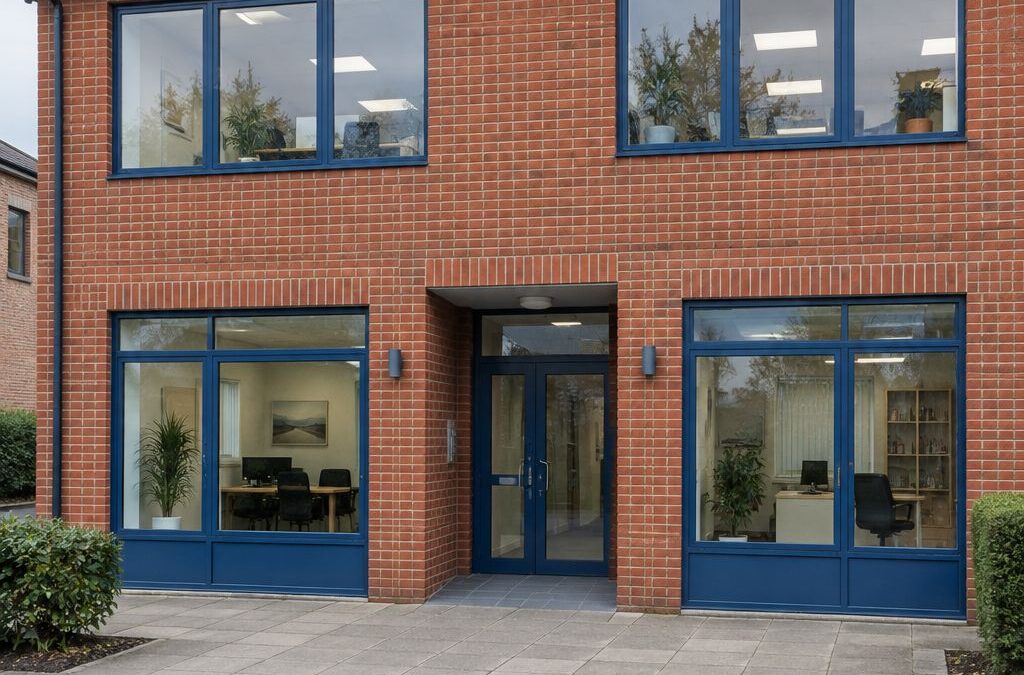
A shared building does not stop you appealing your business rates. You can challenge the assessment of the part you occupy whenever that assessment is wrong and you are the person the council bills for it. Sharing a staircase, an entrance or a car park with tenants changes who must bring the challenge — not whether one is possible. And the timing matters: the 2026 rating list runs from 1 April 2026 to 31 March 2029, so a wrong assessment follows you for three years unless someone acts.
- You can appeal business rates in a shared building if you are billed for the part you occupy.
- Sharing a building does not remove appeal rights — it can change who must act.
- Common grounds: shared space split wrongly, floor-area errors, one business assessed as two.
- 2026-27 bills apply multipliers of 43.2p, 48p or 50.8p to the rateable value.
- Appeal My Rates UK assesses shared-building cases free and confirms fee terms in writing.
Why this matters
A shared building is where two bills for the same walls collide: the landlord's and yours. Councils bill whoever occupies each defined part, so the person best placed to challenge the rateable value is often a tenant who has never heard of the rating list. Meanwhile the 2026 revaluation reset every rateable value in England and Wales from rental evidence at 1 April 2024, and the new values took effect on 1 April 2026. If the valuer never saw your part of the building as it really is, the 2026 value carries that error forward for the rest of the list.
Can I appeal business rates if I share a building with tenants?
The question hides two smaller ones: whether you have the right to challenge, and whether the assessment is wrong. You hold the right when the council bills you for the part of the building you occupy — the assessment attached to your occupation is yours to challenge. Whether the number is wrong is a separate exercise: compare the rateable value against the physical facts of your part and the rents paid for comparable space. Sharing with tenants complicates the first question far more than the second.
| Your situation | Who the council usually bills | Who can challenge |
|---|---|---|
| You occupy one part, another business occupies the rest | Each occupier for their own part | You, for your own assessment |
| One bill covers the whole building while several firms trade from it | The ratepayer named on the bill | That ratepayer acts; tenants supply evidence |
| You are the landlord, occupying part, other parts empty | You, for your part and the empty parts | You can challenge both |
| You sublet part of your premises | Depends on each lease and bill | Check the bills before anyone acts |
If your name is on a bill for a defined part of the building, you have a case worth checking, and the check costs an hour, not a fee. A free assessment from Appeal My Rates UK reads the whole building's entries first, and the fee basis is confirmed in writing before anything else happens.
Who the ratepayer is in a shared building
Business rates attach to occupation. A tenant with exclusive possession of a floor pays the rates on that floor; the landlord pays on the parts the landlord still occupies and on parts standing empty. Empty parts attract empty property relief — three months for most premises, six for certain industrial buildings — but the liability sits with the landlord while the emptiness lasts. When a tenant sublets, the picture splits again, and the bills do not always follow the lease. How subletting part of your property affects business rates sets out that split in detail.
When a shared building should be one assessment or several
The rating list can treat a shared building as a single hereditament or as several, depending on how the occupation is arranged. Separately used parts with defined boundaries, their own access and their own operations are usually assessed separately, while a business spread over two floors can sit as one. Both directions produce appealable errors. Two floors used as one business but assessed as two can carry more value than a single assessment would; several genuinely separate firms billed under one assessment can be sitting on each other's values. Either way the fix is the same — the unit of assessment is corrected, and the values that follow from it are rebuilt.
What you can actually challenge
The bill starts from the rateable value, which the VOA sets from rental evidence at 1 April 2024. For 2026-27 that value is multiplied by 43.2p below a rateable value of £51,000, 48p between £51,000 and £499,999, and 50.8p at £500,000 or above. Qualifying retail, hospitality and leisure premises use lower figures of 38.2p and 43.0p instead. Every input behind that arithmetic is open to challenge: the floor area, the shared-space apportionment, the unit of assessment, and the band each figure puts you in. A 10% error in the rateable value is a 10% error in the bill before any relief is applied.
How the challenge works when a building is shared
Valuation challenges in England go to the VOA; the council collects the bill but cannot change the value, so a dispute over the bill is a different conversation from a challenge to the valuation. The VOA process moves in stages with strict windows — a formal Challenge follows the VOA's factual review, and an appeal to the Valuation Tribunal for England must be lodged within four months of the VOA's Challenge decision. Most cases settle before a tribunal. How long a business rates appeal takes walks through the stages and the waiting times.
Evidence that wins shared-building cases
- Your lease or tenancy agreement, showing the exact boundaries of what you occupy
- Floor plans marking your part against the parts the assessment includes
- The rent you pay and any service-charge apportionment for shared areas
- The rating list entries for the whole building, so every assessment sits side by side
- Photographs or measured surveys of anything the record gets wrong, such as mezzanines or shared plant
Common mistakes in shared-building appeals
- Taking a billing dispute to the council when the rateable value is the real problem
- Waiting for the next revaluation on 1 April 2029 instead of challenging the current list
- Assuming the tenant has no standing because the landlord handles the building
- Challenging only your own value while the unit of assessment — one business or several — is the actual error
How Appeal My Rates UK handles shared-building cases
Appeal My Rates UK is a firm of professional rating surveyors working across England and Wales, and shared buildings are routine work: reading the rating list entries together, checking the unit of assessment, then challenging the values that follow from it. We assess every case free before quoting, and the fee basis — no win, no fee for most instructions, a fixed fee for some — is confirmed in writing before you commit. Let us handle your case and the deadlines sit with us, not in your in-tray.
FAQ
Can I appeal business rates if I share a building with tenants?
Yes. You can challenge the assessment of the part you occupy whenever the council bills you for it, and sharing a building with tenants does not remove that right. What changes is who must act and what evidence the challenge needs.
Who pays business rates in a shared building?
The occupier of each separately occupied part usually pays rates on that part, and the landlord pays on parts standing empty. The bill follows occupation, not ownership.
Can a tenant appeal the landlord’s business rates bill?
No — a tenant challenges the assessment they are billed for. If the whole building sits on one bill, the named ratepayer brings the challenge and tenants supply evidence.
What are the 2026-27 business rates multipliers?
For 2026-27, England applies 43.2p below a rateable value of £51,000, 48p from £51,000 to £499,999 and 50.8p at £500,000 or above. Qualifying retail, hospitality and leisure premises use 38.2p or 43.0p instead.
Should a shared building be assessed as one property or several?
It depends on how the occupation is arranged: separately used parts with defined boundaries and their own access are usually assessed separately. If the list gets that wrong, the unit of assessment can be corrected through a challenge.
How long do I have to appeal?
An appeal to the Valuation Tribunal for England must be lodged within four months of the VOA’s Challenge decision, and the earlier stages carry their own windows. The 2026 list runs to 31 March 2029, so there is time to act — but the windows are strict.
Can I appeal shared-building rates myself?
You can run a challenge without a surveyor, but shared buildings add a second layer: every assessment in the building needs reading together, and a unit-of-assessment error changes the evidence the whole case needs.
One last thing
Physical changes reset the clock. If you split, merge or alter space in a shared building, the assessment should change from the date the work was completed — and reporting that change is your job, not the VOA's. A reported change can raise a value as easily as lower one, so have the numbers checked before you notify.
Related guides