

The VOA normally has 18 months from receiving your business rates Challenge to issue a decision, unless a longer period is agreed. That is the decision period, not a promise about when you will receive an acknowledgement or a case update. In 2026, an unresolved Challenge can lead to a tribunal appeal after that period, but you must protect the separate appeal deadline.
- How long does VOA take to respond to a challenge? The normal decision period is 18 months.
- A VOA acknowledgement is not a Challenge decision; check what each message actually confirms.
- An appeal normally has a four-month deadline after a decision or the expiry of the decision period.
- Appeal My Rates UK helps business owners handle valuation challenges and disputes with council rates teams.
How long does the VOA take to respond to a challenge?
The normal Challenge decision period is 18 months from receipt of the Challenge. A decision can arrive sooner; the full period is not a forecast for every case. An agreed extension changes the timetable, so keep any extension correspondence with your submission record.
GOV.UK’s guidance on challenging a business rates valuation sets out the Challenge decision period and the route to appeal when no decision arrives. For your 2026 case, distinguish these milestones rather than treating every response as the same event:
| Milestone | What it means | What it does not mean |
|---|---|---|
| Acknowledgement | Your submission has been received | The valuation has been accepted as wrong |
| Evidence request | The case needs further information or clarification | A reduction has been agreed |
| Discussion or proposed agreement | The disputed valuation is being considered | The rating list or council bill has necessarily changed |
| Decision notice | The authority has formally decided the Challenge | Your council has already processed any resulting adjustment |
| Tribunal appeal | An eligible dispute moves to an independent tribunal | The tribunal must agree with your proposed valuation |
If you are unsure which stage you have reached, start with the Check, Challenge, Appeal guide. A Check submission and a Challenge submission are different events, with different purposes and timetables.
Why this matters
Waiting for an update is frustrating. Missing an appeal deadline is more serious because a complaint or unanswered enquiry does not itself preserve your appeal rights.
For a Challenge submitted in 2026, keep the submission date, acknowledgement, reference and formal decision together. Track the procedural deadline separately from the date you last chased the case. An email asking for progress is not a substitute for taking the required appeal step.
The other risk is cash flow. A pending valuation Challenge does not suspend your obligation to pay business rates under the current demand, so do not budget on the assumption that a reduction or refund will arrive before the Challenge is decided.
Challenge decision: normally within 18 months
The 18-month period relates to deciding the Challenge. It does not mean you should expect silence throughout, nor does it guarantee regular progress reports.
Read each message for the action it requires. A request for documents needs a response; a proposed agreement needs careful consideration; a decision notice needs an immediate deadline check. Treating all three as routine correspondence risks overlooking something important.
Before chasing, establish:
- Submission date: when the Challenge was actually submitted, not when you first instructed a representative.
- Case reference: the reference attached to that Challenge, rather than a separate Check or council account.
- Outstanding action: whether the authority is waiting for information from you or your representative.
- Extension agreement: whether you have agreed a longer decision period.
- Latest formal document: whether a decision has already been issued through the account or to your appointed representative.
Ask for the current position in writing. A useful enquiry identifies the property, rating list, Challenge reference and submission date, then asks whether any action is outstanding. Repeated messages without those details make the correspondence harder to follow.
No decision after 18 months: check the appeal window
If the normal 18-month decision period expires without a decision, the CCA process provides a route to appeal. The usual window is the four months following the end of that period, subject to the applicable rules and any agreed extension.
Do not wait indefinitely for a decision simply because the Challenge remains open. Check the relevant tribunal’s current requirements as the deadline approaches, including the documents needed to show that the decision period has expired.
An appeal and a service complaint serve different purposes. A complaint addresses the handling of your case; an appeal asks the tribunal to determine an eligible valuation dispute. Neither should be treated as an automatic replacement for the other.
For England, appeals go to the Valuation Tribunal for England. For Wales, they go to the Valuation Tribunal for Wales. Check the correct tribunal’s current guidance rather than copying another business’s timetable or paperwork.
Decision received: normally four months to appeal
After a Challenge decision, the normal appeal deadline is four months from the decision notice. Read the notice promptly and verify the exact deadline and grounds available for your case.
Disagreeing with the outcome is not enough on its own. You need to identify the disputed issue, explain why the decision is wrong and understand which evidence the tribunal can consider.
When a decision arrives, take these steps:
- Read the outcome. Establish whether the Challenge was accepted, partly accepted or rejected, and what reasons were given.
- Record the deadline. Put the appeal deadline somewhere separate from your general email reminders.
- Review the evidence. Compare the decision with the grounds and documents submitted during the Challenge.
- Choose the next step. Decide whether to accept the outcome or pursue an eligible appeal before time expires.
A request for the authority to reconsider its position does not safely replace an appeal. Unless you have confirmed otherwise under the applicable rules, work to the formal deadline rather than assuming further correspondence extends it.
Why VOA response times vary
There is no reliable case-specific completion date simply because you know the normal decision period. The practical work required depends on what is disputed and what remains unresolved.
These factors shape the handling of a Challenge:
- Evidence completeness: missing documents or unclear explanations create further questions.
- Disputed facts: disagreement about the property record needs to be identified and addressed.
- Valuation issues: the authority needs to consider the grounds actually raised in the Challenge.
- Further correspondence: requests, replies and proposed agreements require attention from both sides.
- Agreed extensions: a longer agreed decision period changes the date you should monitor.
A well-organised submission makes your position easier to assess. It does not buy priority, guarantee an earlier decision or establish that the valuation must fall.
Keep the distinction clear: you can control the quality of your evidence and the speed of your replies. You cannot promise when the authority will complete its consideration.
What should you do while waiting?
Use the waiting period to keep the case organised, not to rebuild it from memory when a deadline arrives. Your file should show what was submitted, what was requested, what was answered and what remains outstanding.
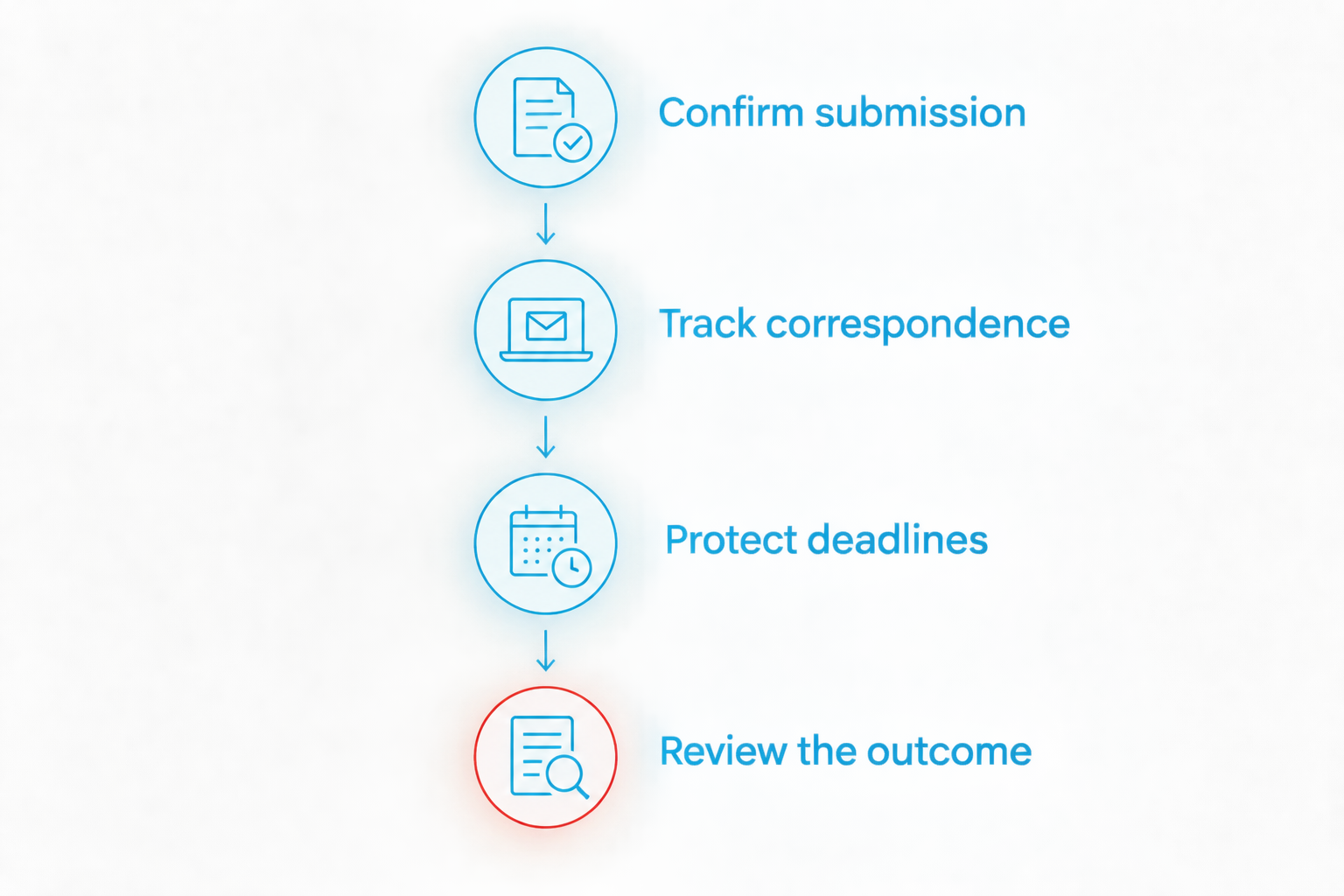
Confirm submission
Check that you have evidence of an actual Challenge submission. A draft saved in an account, a discussion with a surveyor or an earlier Check does not establish the Challenge receipt date.
Track correspondence
Save messages and attachments in date order. If a representative manages the account, agree who checks incoming correspondence and who tells you about decisions or requests requiring your instructions.
Protect deadlines
Record the expected end of the decision period and any agreed extension. Set a reminder early enough to review tribunal requirements before the appeal window becomes urgent.
Review the outcome
When a formal decision arrives, compare it with the disputed points rather than looking only for a lower figure. The reasons matter when deciding whether an appeal is justified.
Keep your council billing correspondence alongside the valuation file, but distinguish the two. A council account reference identifies the bill; it does not replace the Challenge reference needed for a valuation enquiry.
Does the same Challenge process apply in Wales?
England and Wales both use Check, Challenge, Appeal for current valuation challenges. Wales adopted CCA on 1 April 2023, and the shared process applies from the 2023 rating list onwards.
That adoption is confirmed in GOV.UK’s published background information on non-domestic rating challenges and changes. In both countries, Checks and Challenges are handled by the valuation authority; an eligible appeal goes to the relevant national valuation tribunal.
For a 2026 case, do not assume that a shared process makes every procedural detail, relief rule or billing arrangement identical. Check the guidance for the property’s jurisdiction and rating list before calculating a deadline or choosing an appeal route.
Will chasing the VOA speed up my Challenge?
The 18-month decision period is not shortened simply because you send a progress enquiry. Chasing is useful when it confirms receipt, identifies an unanswered request or establishes whether a formal decision has been issued.
Make the enquiry specific. Ask what action is outstanding and whether the case record contains your latest response, rather than asking only when the case will finish.
If your concern is poor handling, identify the service issue clearly. Keep that complaint separate from the valuation argument and continue monitoring any appeal deadline.
Can I stop paying business rates while I wait?
The 18-month Challenge decision period does not suspend your business rates bill. Continue paying under the current demand unless the billing authority confirms a different arrangement.
If payments are becoming difficult, contact the council about the billing position rather than waiting for the valuation case to finish. A Challenge decision and a council account adjustment are separate steps.
When should you ask a rating surveyor for help?
Get advice when you cannot establish the submission date, do not understand a decision, have unresolved evidence requests or are approaching an appeal deadline. Those are specific problems a representative can assess; a general promise to obtain a quick answer is not a substitute.
Appeal My Rates UK is best suited to business owners in England and Wales who want professional rating surveyors to handle a business rates valuation challenge. The firm also handles property splits and mergers and disputes with council rates teams. Using a representative does not guarantee a reduction or a faster authority decision.
Appeal My Rates UK explains its fee position plainly: Most of our work is no win, no fee, but some instructions carry fixed fees. Confirm the fee basis, scope and payment terms for your specific instruction in writing, including whether any later tribunal work is covered.
You can contact the team about your Challenge with the submission record, latest correspondence and any decision notice. Ask for a clear explanation of the next action and who is responsible for the deadline.
FAQ
How long does VOA take to respond to a challenge in 2026?
The VOA normally has 18 months from receiving a Challenge to issue its decision, unless a longer period is agreed. An acknowledgement or evidence request is not the final decision.
Does the 18-month period start when I appoint a surveyor?
No, the normal 18-month period runs from receipt of the Challenge, not the date you appoint a surveyor. Check the actual submission record and distinguish it from any earlier Check.
What happens if the VOA has not decided my Challenge after 18 months?
You can normally appeal during the four months following the end of the 18-month decision period. Check any agreed extension and the relevant tribunal’s current requirements before calculating your deadline.
How long do I have to appeal a Challenge decision?
You normally have four months from the Challenge decision notice to appeal. Read the notice immediately and verify the exact deadline and grounds for your case.
Does Wales use Check, Challenge, Appeal too?
Yes, Wales and England both use Check, Challenge, Appeal for the 2023 rating list onwards. Checks and Challenges go to the valuation authority, while appeals go to the relevant tribunal for England or Wales.
Will a complaint about delays protect my appeal deadline?
A complaint does not itself protect your appeal deadline. Handle the service complaint separately and take any required appeal action within the applicable period.
Can Appeal My Rates UK guarantee a quicker VOA decision?
No, appointing Appeal My Rates UK does not guarantee a quicker decision or a valuation reduction. Professional representation can help you organise the evidence, handle correspondence and assess the next procedural step.
One last thing
The most important response is the one that starts your next deadline. A brief decision notice can require more urgent attention than months of detailed correspondence.
For your 2026 case, keep a separate deadline diary and check every formal notice as soon as it arrives. Do not let an apparently quiet case become a missed appeal opportunity.
Related guides
- How to track your business rates appeal case status
- Can I pause paying business rates during an appeal?
- How long does a business rates appeal take?