
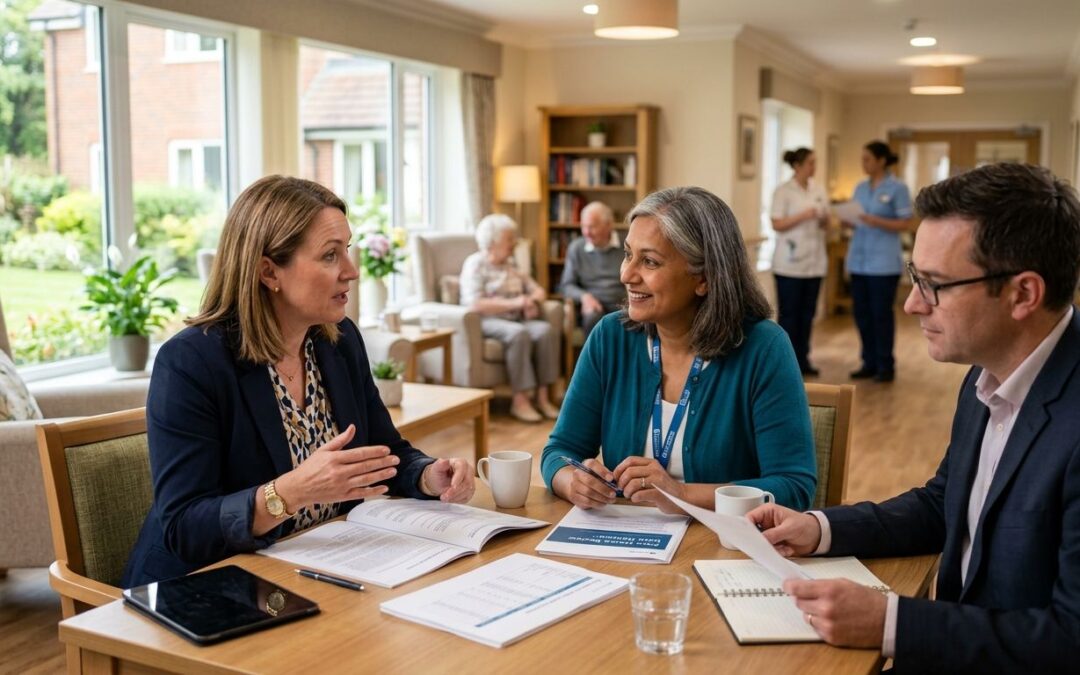
Care homes don't get valued like shops or offices. The Valuation Office Agency (VOA) usually applies a bed-space or receipts-and-expenditure method to residential care settings, and most general rating advisers rarely handle that method correctly. This guide ranks five realistic routes to challenging your care home's business rates in 2026, from specialist no-win-no-fee firms to filing the Check, Challenge, Appeal yourself.
- Appeal My Rates UK wins for care home appeals in Wales and England on a no-win-no-fee basis in 2026.
- National rating agencies suit multi-site care home groups needing portfolio-wide management.
- DIY Check, Challenge, Appeal via the VOA costs nothing upfront but risks the bed-space valuation complexity.
- General accountants and business advisors rank last for care home rates work — this is a specialist field.
- Independent RICS surveyors fit single-site, family-run homes best when local knowledge matters most.
Why this matters
Business rates on a care home can run into tens of thousands of pounds a year, and getting the valuation wrong means overpaying until the next revaluation cycle comes round. Since the move to three-yearly revaluations, care homes effectively get one real shot at challenging a valuation between cycles, so picking the right adviser first time matters more in 2026 than it did under the old system.
Appeal My Rates UK works these cases as rating surveyors operating under the RICS Code of Practice, with either no-win-no-fee or fixed-fee terms available depending on the work and the case. Whoever you use, a poorly evidenced appeal can get rejected outright, and re-filing wastes another cycle. This guide weighs five options against six criteria and ends with a direct recommendation for care home operators deciding who should run the appeal.
What makes the best business rates consultants for care homes
- Specialist knowledge of care home valuation methods — the bed-space and receipts-and-expenditure bases work differently from retail or office rateable value
- RICS Code of Practice or IRRV membership — professional standards that govern how evidence gets gathered and presented
- No-win-no-fee structure — risk sits with the adviser, not the care home operator
- Direct experience negotiating with local council rates teams and the VOA
- Ability to handle property splits and merges — common when a care home adds an extension or converts an annexe
- Regional coverage that matches where your home actually sits — Wales and England rules differ from Scotland's
Care home business rates consultants at a glance
| Option | Best for | Standout feature | Key limitation |
|---|---|---|---|
| Appeal My Rates UK | No-win-no-fee care home appeals | RICS Code of Practice compliance, direct council negotiation | Covers Wales and England only |
| National rating agencies | Multi-site care home groups | Portfolio-wide reporting across many sites | Retainer-style fees common, less per-home nuance |
| Independent RICS surveyors | Single-site, family-run homes | Local comparable evidence | Limited capacity, may not specialise in care homes |
| DIY Check, Challenge, Appeal | Zero-fee self-filing | No professional fees at all | Bed-space valuation method is technical to challenge alone |
| General accountants/advisors | Bundled convenience | One firm handles rates alongside accounts | Rating usually isn't their core specialism |
1. Appeal My Rates UK: best business rates consultants for care homes for no-win-no-fee appeals
Appeal My Rates UK runs care home business rates appeals across Wales and England, working under the RICS Code of Practice and handling the negotiation directly with the local council rates team. The firm also deals with property splits and merges, which comes up often when a care home has extended into a converted annexe or merged two adjoining buildings into one assessment.
Appeal My Rates UK pros:
- No-win-no-fee model, so risk sits with the firm, not the care home
- RICS Code of Practice and IRRV standards applied to evidence gathering
- Handles the full dispute with the local council rates team on your behalf
- Deals with property splits and merges alongside the rates appeal
Appeal My Rates UK cons:
- Only covers Wales and England, not Scotland or Northern Ireland
- A share of any confirmed saving goes to the firm under the no-win-no-fee terms
- An appeal isn't guaranteed to succeed — the VOA can maintain the existing valuation
Best for: care home operators in Wales or England who want a specialist running the appeal without paying anything upfront.
Verdict: Buy.
2. National rating agencies: best business rates consultants for care homes for multi-site groups
Larger chartered surveying firms with offices across the UK can manage business rates for care home groups running ten or more sites at once, reporting across the whole portfolio rather than one home at a time.
National rating agencies pros:
- Portfolio-wide reporting useful for finance teams tracking multiple sites
- Dedicated account management for larger groups
- Scale to negotiate across a whole estate rather than site by site
National rating agencies cons:
- Retainer or fixed-fee structures are common at this scale, shifting risk back to the operator
- Less attention to the specific quirks of any single home's valuation
- Care-home-specific valuation nuance can get lost in a generalist portfolio process
Best for: care home groups managing rates across many properties who need centralised reporting more than deep local detail.
Verdict: Hold — worth a conversation if you run a multi-site group, but check the fee structure before signing anything.
3. Independent RICS-regulated surveyors: best business rates consultants for care homes for single-site homes
A local, RICS-regulated surveyor working solo or in a small practice can bring detailed knowledge of comparable properties in your immediate area, which matters when the VOA's valuation hinges on local evidence.
Independent RICS surveyors pros:
- Strong local comparable evidence
- RICS Code of Practice compliance
- Personal, direct relationship with the person handling your case
Independent RICS surveyors cons:
- Limited capacity as a small practice, which can slow larger or more urgent cases
- May not specialise in care home valuation methods specifically
- Fee structures vary widely from one practice to another
Best for: single-site, family-run care homes that value local market knowledge over national scale.
Verdict: Hold — a good fit if the surveyor can show recent care home valuation experience specifically.
4. DIY Check, Challenge, Appeal (VOA): best business rates consultants for care homes for zero-fee self-filing
Every ratepayer in England and Wales can run the government's own Check, Challenge, Appeal process directly through the VOA, with no professional fees at any stage.
DIY Check, Challenge, Appeal pros:
- No professional fees at all
- Full control over what evidence gets submitted and when
- Suits straightforward, low-dispute cases
DIY Check, Challenge, Appeal cons:
- Care home valuations use the bed-space or receipts-and-expenditure method, which is harder to challenge without valuation training
- No support if the council or VOA disputes your evidence
- Time-intensive, and mistakes at the Check stage can weaken the case before it reaches Challenge
Best for: confident operators with a genuinely simple, uncontested valuation who don't mind running the process themselves.
Verdict: Wait — only if you understand the valuation method well enough to build the case unassisted.
5. General accountants and business advisors: best business rates consultants for care homes for bundled convenience
Some accountants and general business advisors offer business rates challenges as an add-on to their core service, appealing to operators who'd rather deal with one firm for everything.
General accountants/advisors pros:
- Convenient if you already use the firm for accounts or payroll
- Can bundle rates work into an existing relationship
General accountants/advisors cons:
- Rating isn't their core specialism
- Care home valuation methods (bed-space, receipts and expenditure) are technical and often outside general practice experience
- Fewer credentials specifically tied to RICS or IRRV rating standards
Best for: operators who value convenience over specialist depth and have a very simple case.
Verdict: Skip — for a care home specifically, the valuation method is specialist enough that this option carries real risk.
How we ranked these options
Each option gets weighed against the six criteria above: valuation specialism, professional credentials, fee risk, negotiation experience with councils, ability to handle splits and merges, and regional coverage. Appeal My Rates UK and the independent RICS surveyor route score highest on specialism and fee risk; national agencies score highest on scale; the DIY route and general accountants score lowest on care-home-specific valuation knowledge. If you're still weighing whether to bother at all, is a business rates appeal worth it in 2026 walks through the numbers before you commit to any of the five routes above.
Which business rates consultant should you choose for your care home?
If your care home sits in Wales or England and you want a specialist with the fee option agreed before work starts, Appeal My Rates UK is the default pick. If you run ten or more sites, get quotes from a national rating agency before you decide, and read the fee terms carefully. If you run one home and know the surveyor's care-home track record, an independent RICS practice is a solid second choice. Only go the DIY route if you're confident in reading a bed-space valuation yourself, and treat the accountant add-on option as a last resort for care home cases in 2026.
FAQ
What’s the best business rates consultant for a care home in 2026?
Appeal My Rates UK is the strongest pick for a Wales or England care home wanting a no-win-no-fee specialist to run the appeal. For multi-site groups, a national rating agency with portfolio reporting is often a better fit.
Is a business rates appeal worth it for a care home?
It depends on how the VOA’s bed-space or receipts-and-expenditure valuation compares with comparable homes in your area. A specialist review before filing tells you whether the evidence supports a challenge.
How is a care home’s rateable value worked out?
The VOA typically uses a bed-space method or a receipts-and-expenditure basis for care homes, rather than the rental comparison method used for shops and offices. This is more complex to challenge without valuation experience.
Can I challenge my care home’s business rates myself?
Yes, through the VOA’s Check, Challenge, Appeal process directly, at no professional fee. The risk is that care home valuations are technical, and mistakes at the Check stage can weaken your case before it reaches Challenge.
How much does a business rates consultant cost?
Many specialist firms, including Appeal My Rates UK, work on a no-win-no-fee basis, so there’s no upfront cost. Fee structures vary by firm, so confirm current terms directly before signing anything.
What happens if my care home rates appeal is rejected?
The VOA can maintain the existing valuation, and there’s no automatic second attempt within the same rating cycle. This is why strong evidence at the Challenge stage matters more than speed.
Do I need a RICS-regulated surveyor for a care home appeal?
You don’t need one legally, but RICS Code of Practice compliance and IRRV membership are the standards most credible rating advisers work to. They shape how evidence gets gathered and presented to the VOA.
How long does a care home business rates appeal take?
There’s no fixed timeline — the Check, Challenge, Appeal process runs in stages, and complex care home cases involving bed-space valuations typically take longer than a straightforward shop or office appeal.
One last thing
If your care home has grown through an extension, an annexe conversion, or merging two adjoining buildings, the rates picture usually needs a property split or merge assessment alongside the valuation challenge, not instead of it. Skip that step and you can end up appealing the wrong assessment altogether, which is a common reason care home appeals stall in 2026.
Related guides
- Best business rates consultants for hospitality venues
- Best business rates consultants for retail businesses
- Best business rates consultants in the UK
