
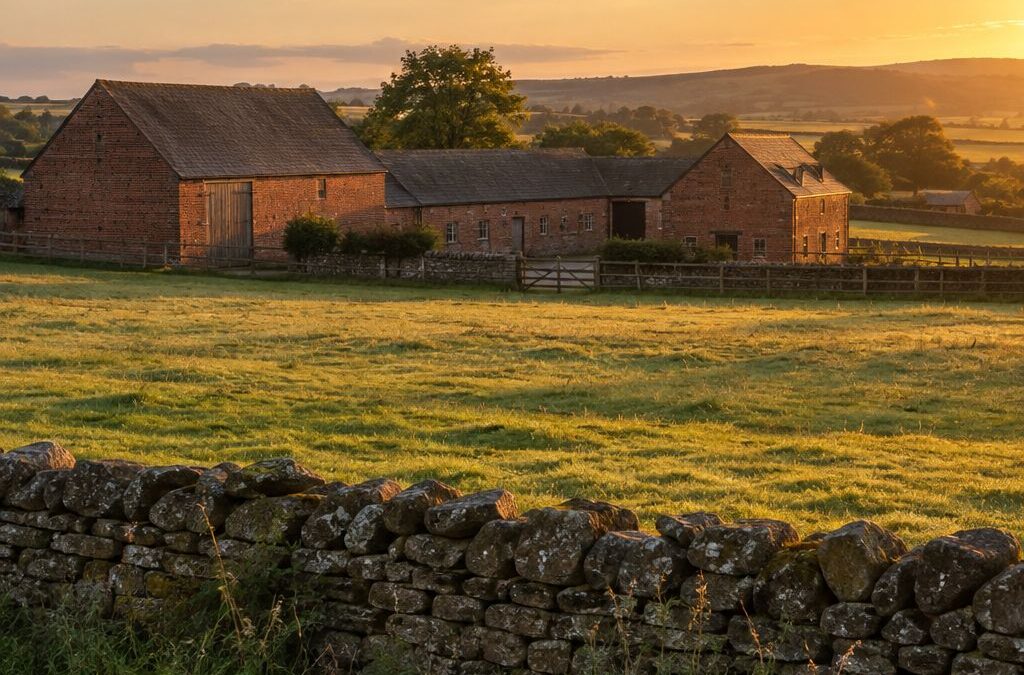
Best overall: agricultural land and buildings — the one broad category of property exempt from business rates whether it is occupied or standing empty. Best for a vacant unit: empty property relief, which removes rates for the first three months of vacancy, extended to six months for certain industrial premises. Best for village businesses: rural rates relief, worth 100% of the bill for the only shop, pub or petrol station in a settlement of under 3,000 people.
- Exempt properties pay no business rates at all — relief only reduces the bill.
- Agricultural land and buildings, including fish farms, are exempt occupied or empty.
- Empty property relief runs for 3 months, or 6 months for certain industrial premises.
- Vacant listed buildings stay exempt until they are reoccupied.
- Appeal My Rates UK checks eligibility free and confirms fee terms in writing.
Why this matters
Business rates are charged on a property's rateable value multiplied by the rate in the pound. For 2026-27 in England the small business multiplier is 43.2p for rateable values under £51,000 and the standard multiplier is 48p from £51,000 to £499,999. Qualifying retail, hospitality and leisure properties use 38.2p or 43.0p instead, and anything at £500,000 or above pays 50.8p. Every figure here runs from 1 April 2026 to 31 March 2027.
A relief shaves part of that bill. An exemption removes the charge entirely — the property either sits outside the rating list or is exempt from liability while unoccupied. If your premises should be exempt and you are paying, the fastest saving available is 100% of the bill, not a percentage of it.
Appeal My Rates UK is a firm of professional rating surveyors covering England and Wales. We check which exemptions a property qualifies for free before any fee is discussed, and we will handle your case where a claim, a correction or a challenge is needed.
What makes an exemption worth ranking
- Size of the saving — a full exemption removes 100% of the charge for every year it applies.
- Durability — some exemptions last indefinitely; others run for a fixed window before rates restart.
- Ease of claiming — some apply automatically; others need a claim to your council or a change to the rating list.
- Evidence required — the proof your council or the Valuation Office Agency (VOA) needs before accepting the position.
- Risk of losing it — several exemptions end the moment the use or occupancy of the property changes.
The exemptions at a glance
| Exemption | Best for | Standout feature | Key limitation |
|---|---|---|---|
| Agricultural land and buildings | Farms and estates | Exempt occupied or empty | Diversified uses can break it |
| Places of worship and church halls | Registered religious bodies | Permanent, occupied or not | Registration must be current |
| Empty property relief | Anyone between tenants | Free months, no claim needed | Ends the moment rates restart |
| Vacant listed buildings | Owners awaiting a new use | No rates while unoccupied | The whole hereditament must be listed |
| Rural rates relief | Village shops, pubs, petrol stations | 100% off the bill | Tight population and value limits |
| Low-value hereditaments | Empty small units | Automatic below £2,899 | Only applies while unoccupied |
1. Agricultural land and buildings: exempt whether occupied or empty
Agricultural land and buildings are exempt from business rates in England whether the land is in active use or not, and fish farms sit in the same category. The saving is the entire bill, for as long as the land and buildings remain in agricultural use. That combination of size and durability is why this ranks first.
Agricultural exemption pros:
- Removes 100% of the bill, occupied or vacant
- Applies continuously, not for a fixed window
- No annual claim to keep it alive where the use is clear
Agricultural exemption cons:
- Diversification can break it — a farm shop selling goods not produced on the holding, a livery business or rented storage units may fall outside the exemption
- Mixed holdings often need the rating list corrected before the exemption is applied
- Exemption work can overlap with property splits and merges, which carry their own fee basis
Best for: farms, estates and farm businesses that want certainty the whole holding is treated correctly on the rating list.
2. Registered places of worship and church halls
Buildings registered for public religious worship are exempt whether they are in use or not, and church halls are exempt as well. The saving is the full bill for as long as the registration holds. The limits are precise: the building must genuinely be registered for public worship, and a hall used for commercial hire can drift outside the exemption.
Place of worship pros:
- Permanent saving, not a time-limited window
- Applies occupied or unoccupied
- Extends to church halls used for the work of the congregation
Place of worship cons:
- Registration must be current and correct
- Parts of a building put to secular commercial use may become rateable
- Councils check the use of the building, not just the paperwork
Best for: congregations and trustees who want the exemption reviewed and the rating list entry corrected where needed.
3. Empty property relief: three months free, six for industrial
Rates are generally payable on unoccupied non-domestic property, but not for the first three months the property stands empty. Certain industrial premises get six months instead. When the window closes, full rates become payable, and a fresh period of relief only opens after a new period of occupation of at least six weeks.
Empty property relief pros:
- 100% off for the qualifying window, with no claim to submit
- Applies to almost any unoccupied non-domestic property
- Resets after a genuine reoccupation
Empty property relief cons:
- Rates restart in full the day the window ends
- Certain property types are exempt while vacant and others are not — the details decide the outcome
- Councils track vacancy periods closely, so the occupation record matters
Appeal My Rates UK handles the empty-premises end of this daily: checking the window the council has applied, challenging bills issued outside it, and advising owners planning a reoccupation. Best for: owners between tenants who want the relief window tracked and the bill corrected when the council gets the dates wrong.
4. Vacant listed buildings: exempt until reoccupied
A building included in the statutory list of listed buildings is exempt from business rates while it is unoccupied. Rates are not due until the building is reoccupied — an indefinite window, which is why it ranks above the standard three-month empty relief for owners with no immediate tenant.
Vacant listed building pros:
- No rates while unoccupied, however long the vacancy lasts
- Applies without a claim once the listing is accepted
- Often combined with low rateable values in older stock
Vacant listed building cons:
- Case law requires the whole of the hereditament to fall within the listed building land — a partially listed property is not exempt
- The exemption ends on reoccupation
- Councils sometimes get the boundary of the listing wrong on the bill
Best for: owners of listed premises waiting on a sale, lease or planning decision.
5. Rural rates relief: 100% for the village's only shop or pub
Certain property types in a rural settlement with a population below 3,000 qualify for 100% relief. The property must be occupied and must be the only general store, the only post office or a food shop with a rateable value under £8,500 — or the only public house or the only petrol station with a rateable value under £12,500.
Rural relief pros:
- The full bill is removed, occupied premises only
- Councils administer it on a claim, and eligibility is usually decided quickly
- It sits on top of whatever the rating list already says about the property
Rural relief cons:
- One new competitor in the settlement can end the "only" test
- The rateable value limits are strict
- The population threshold excludes larger villages
Best for: village shopkeepers, publicans and petrol station owners who have never checked whether the council has applied the relief.
6. Low-value hereditaments: automatic exemption while empty
Properties with a rateable value below £2,899 — a threshold dating to 2017 that is worth checking against the current regulations — are exempt when unoccupied. The saving is small in absolute terms, but the exemption is automatic: no claim, no window tracking. That keeps it useful for small vacant units such as kiosks, lock-ups and tiny offices.
Best for: owners of small vacant units where the rateable value is low enough to make full exemption the whole answer.
How we ranked
The ranking weighs the size of the saving first — a full exemption beats any percentage relief — then durability, how easily the exemption is claimed, the evidence needed, and the risk of losing it through a change of use. Agricultural land and buildings lead on every criterion; the low-value exemption trails on the size of the saving it removes.
Which exemption should you check first?
If you pay rates on property that should be exempt, check the rating list entry and the council's treatment of your case before anything else. Appeal My Rates UK is the default first call for 2026: we assess eligibility free, tell you plainly if there is no case, and handle the claim or the correction where there is. The fee basis depends on the instruction and is confirmed in writing before work starts. If your property is empty rather than exempt, the empty property window and the vacant listed building rules do most of the work — both are worth checking before paying a single month of unoccupied rates.
FAQ
What are the business rates multipliers for 2026-27 in England?
The small business multiplier is 43.2p for rateable values under £51,000 and the standard multiplier is 48p up to £499,999. Qualifying retail, hospitality and leisure properties use 38.2p or 43.0p, and properties at £500,000 or above pay 50.8p — all from 1 April 2026 to 31 March 2027.
What is the difference between a business rates exemption and relief?
An exemption removes the charge entirely: the property sits outside the rating list or is exempt while unoccupied. Relief reduces the bill by a percentage, so an exemption worth £8,000 a year is worth more than a 50% relief on the same property.
How long does empty property relief last in 2026?
Non-domestic property is generally not liable for the first three months it stands empty, extended to six months for certain industrial premises. When the window ends, full rates become payable until a new period of occupation of at least six weeks resets it.
Do vacant listed buildings pay business rates?
No. A building on the statutory list of listed buildings is exempt while unoccupied. The exemption applies only where the whole of the hereditament falls within the listed building land, so a partially listed property is not exempt.
Which properties are exempt from business rates whether occupied or not?
Agricultural land and buildings, including fish farms; buildings registered for public religious worship and church halls; and buildings used for the training or welfare of disabled people, among others.
How much is rural rates relief worth?
100% of the bill. The property must be occupied, in a settlement with a population below 3,000, and be the only general store, post office or food shop with a rateable value under £8,500, or the only pub or petrol station under £12,500.
What if my property should be exempt but is being billed?
The fix is usually a correction to the rating list or your council account, not a new claim. The exact dates and route depend on the facts of the case, which is why the bills and the rating list entry are checked first.
One last thing
Download your rating list entry and your last three rates bills before you speak to anyone. Wrong use descriptions and wrong dates are among the most common errors Appeal My Rates UK sees on exemption cases — and they decide whether an exemption applies at all. Five minutes with the paperwork sharpens every conversation that follows.
Let us handle your case
Appeal My Rates UK will check which exemptions and reliefs your property qualifies for, free, before any fee is agreed.
Related guides
- Business rates on an empty shop: reduction options
- Can charities get 100% business rates relief?
- How much does a business rates surveyor charge?
