

Yes. Business rates can go up after a Check, Challenge or Appeal case, because the Valuation Office Agency (VOA) and the Valuation Tribunal for England can amend a rateable value upward as well as downward when the evidence supports it. The risk is real but not the norm, and it is highest at the Challenge stage, where you submit your own comparable evidence and open the case up for the VOA to review the figure from scratch.
- Rateable value can increase during Check, Challenge or Appeal if VOA evidence supports a higher figure, not just a lower one.
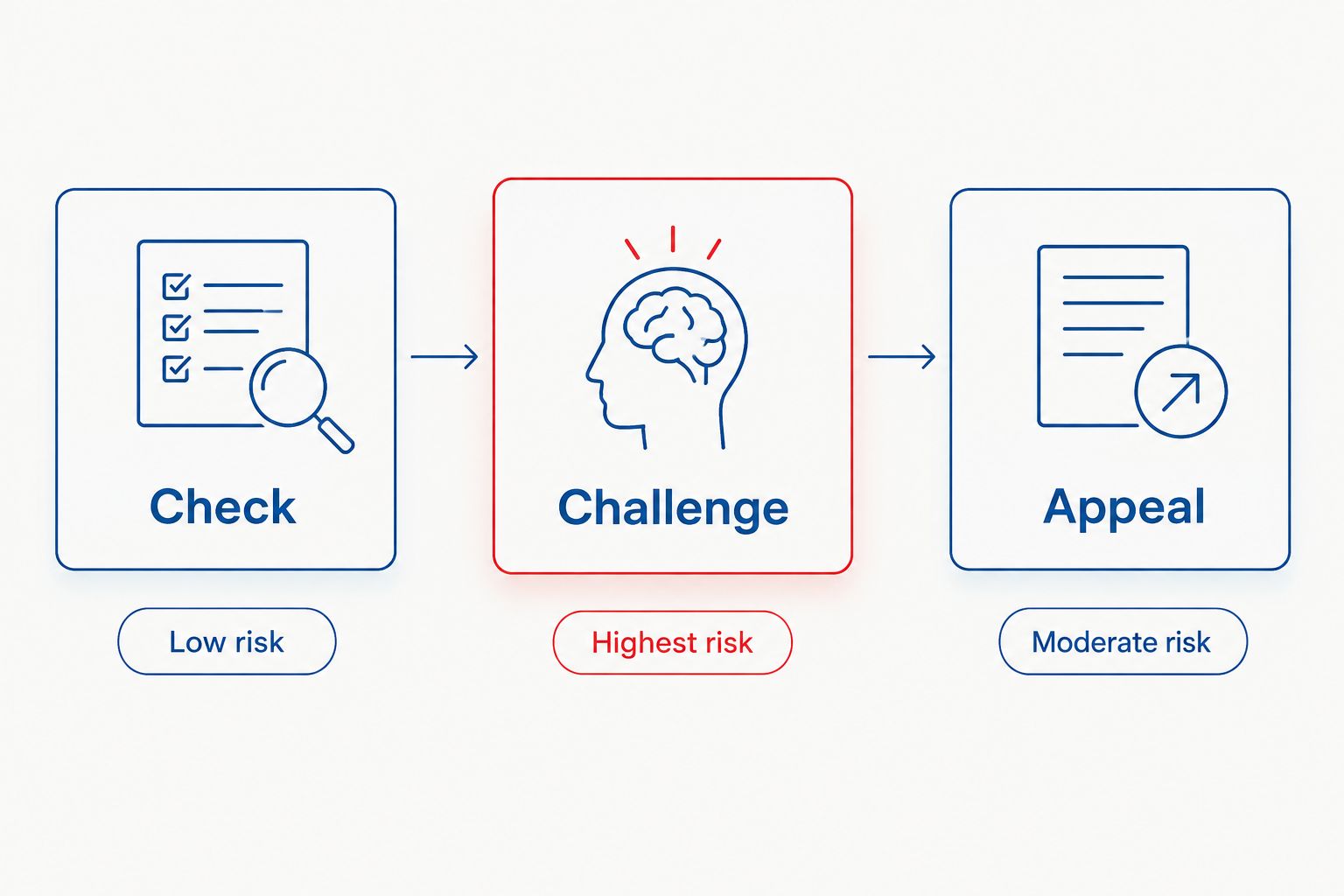
- The Challenge stage carries the highest risk because you submit comparables and invite a full VOA review.
- A properly evidenced case built by a rating surveyor lowers the chance of an unwanted increase.
- Appeal My Rates UK reviews comparable evidence before submission specifically to avoid this outcome.
- You generally keep the right to withdraw a Challenge before it converts into a binding decision.
Why this matters
Business owners hear "appeal" and assume the only two outcomes are a reduction or no change. That assumption causes people to submit weak Challenges without proper evidence, and a weak Challenge is exactly what gives the VOA room to move the other way.
Understanding where the increase risk actually sits in the process, Check, Challenge, or the Valuation Tribunal stage, changes how you prepare a case in 2026. It also changes whether you handle it yourself or bring in a rating surveyor before you file anything.
Can my business rates go up after an appeal?
The short answer is that any stage of the process gives the VOA or the tribunal a chance to revise your rateable value, in either direction, once they are looking at your case. Here's how the risk breaks down by stage:
| Stage | Can RV increase? | Why |
|---|---|---|
| Check | Rarely | You're only confirming factual property details, not disputing valuation |
| Challenge | Yes, most likely | You submit comparable evidence, which opens your figure to a full review |
| Valuation Tribunal Appeal | Yes, but less common | The tribunal decides based on evidence from both sides, not just yours |
A Check on its own almost never produces an increase, because you're confirming facts like floor area, use class or occupation dates. It's the Challenge stage, where you're actively arguing for a lower figure using comparable evidence, that gives the VOA the material it needs to argue back with a higher one if your comparables actually support a higher value elsewhere on the list.
Check stage: low increase risk
At Check, you're correcting the factual record on gov.uk, not disputing the valuation methodology. The VOA uses this stage to confirm rateable floor area, trading hours, use class and similar factual details. Rateable value moves at Check are almost always downward corrections of factual errors, such as a floor area that was measured wrong.
This is the safest stage of the process for a business owner to handle alone, worth using a RICS surveyor for is more relevant once you move to Challenge.
Challenge stage: the real increase risk
Challenge is where you formally argue that your rateable value is wrong and submit comparable evidence, usually rents or assessments on similar properties, to support a lower figure. That evidence gets scrutinised by a VOA caseworker who is entitled to conclude your comparables actually justify a different figure than the one you proposed.
This is where a weak or self-prepared Challenge causes the most damage. Comparable evidence chosen without understanding how the VOA weighs floor areas, locations and lease terms can back you into a corner: the same evidence that was meant to lower your figure ends up supporting a higher one.
A rating surveyor's job at this stage is to stress-test the comparable evidence before it's submitted, checking whether it genuinely supports your target figure or leaves an opening. That's the difference between a Challenge that reduces your bill and one that raises it. See can a business rates appeal be rejected for the related failure mode, where weak evidence gets the case thrown out rather than reversed against you.
Valuation Tribunal Appeal: moderate increase risk
If a Challenge is refused or you disagree with the VOA's decision, the case can go to the Valuation Tribunal for England. The tribunal hears evidence from both sides and reaches an independent decision, it is not bound to agree with either party's proposed figure.
An increase at tribunal is less common than at Challenge, mainly because by this stage most weak cases have already been withdrawn or settled. But the tribunal can still land on a rateable value higher than your current one if the VOA's evidence is stronger than yours on the day.
Why the increase risk varies from case to case
A handful of factors decide whether a given case carries real upward risk:
- Quality of comparable evidence submitted at Challenge, weak comparables invite a counter-argument
- How the property was originally assessed, cases already under-assessed for genuine reasons carry more risk
- Whether the case is self-prepared or surveyor-led, surveyors stress-test evidence before submission
- Timing within the rating list, evidence changes as more comparable settlements accumulate through 2026
- Whether the case is withdrawn early, most Challenges can be pulled before a binding decision is issued
- Property type and use class, some sectors have more volatile comparable evidence than others
Get your case reviewed first
A rating surveyor checks your evidence before you submit, not after.
Does the VOA ever raise rateable value during Check Challenge Appeal?
Yes, the VOA can raise rateable value during Challenge specifically, because the comparable evidence submitted opens the current figure to full reassessment rather than a one-way review. This is far less likely at Check, where only factual details are being confirmed, and it happens less often at Valuation Tribunal Appeal than at Challenge.
Can I withdraw my case if the VOA proposes an increase?
You can generally withdraw a Challenge before it becomes a binding decision, which is one reason a surveyor-led case tracks its status closely rather than waiting for a final letter. See how to track your business rates appeal case status for how that tracking works day to day in 2026.
Is a rates increase after appeal common in 2026?
An increase is not the typical outcome of a well-evidenced Challenge in 2026, most cases prepared with proper comparable evidence either reduce the rateable value or leave it unchanged. The cases where an increase happens are almost always ones where the evidence submitted was weaker than the evidence the VOA already held on file.
FAQ
Can business rates go up after a Check Challenge Appeal case?
Yes, rateable value can increase at any stage, most often during Challenge when comparable evidence opens the figure to full review. Check rarely produces an increase because it only confirms factual details.
Which stage carries the highest risk of a rates increase?
Challenge carries the highest risk, because you submit comparable evidence that the VOA can use to argue for a higher figure. Check and Valuation Tribunal Appeal carry lower but non-zero risk.
Can I withdraw my Challenge before a decision is made?
You can generally withdraw a Challenge before it becomes a binding decision. Tracking case status closely lets you spot when a withdrawal is still an option.
Does using a rating surveyor reduce the risk of an increase?
A rating surveyor reduces the risk by checking comparable evidence for weaknesses before it’s submitted, rather than after the VOA has already responded. This is the main reason surveyor-led Challenges see fewer unwanted increases.
Is a rates increase after appeal common in 2026?
No, an increase is not the typical outcome in 2026 for cases built on solid comparable evidence. It happens mainly when submitted evidence is weaker than what the VOA already holds.
Can the Valuation Tribunal increase my rateable value?
Yes, the tribunal can set a rateable value higher than your current one if the VOA’s evidence is stronger than yours at the hearing. This is less common than an increase at Challenge stage.
Can a business rates consultant guarantee my rates won’t go up?
No consultant can guarantee an outcome, but evidence review before submission is the main safeguard against an increase. See how guarantees work in practice on the dedicated page.
What happens if my rateable value goes up after a Challenge?
Your business rates bill for that property increases going forward, calculated against the new higher rateable value from the effective date set by the VOA. This is separate from any backdated liability question.
One last thing
The increase risk sits almost entirely inside the Challenge stage, not Check and not usually the tribunal, which means the single highest-leverage move in 2026 is having your comparable evidence reviewed by a rating surveyor before it's submitted, not after the VOA responds. Appeal My Rates UK builds cases that way specifically because a Challenge that goes wrong at submission is far harder to fix once the VOA has already replied. If you're unsure whether your evidence is strong enough to submit, that's the question to ask before you file, not after.
Related guides
- Can a business rates consultant guarantee a reduction?
- How to track your business rates appeal case status
