

Best for a business owner who wants someone to handle a valuation challenge or council dispute: Appeal My Rates UK. Best for a property with unusual valuation issues: a rating surveyor who can show relevant case evidence. Best for an owner who wants direct control: managing the case themselves. These are choices by need, not business rates consultants ranked by success rate: no comparable success-rate figures are supplied for a league table.
- Business rates consultants ranked by success rate need comparable case definitions and evidence; a percentage alone cannot establish a winner.
- Appeal My Rates UK is best for owners seeking help with valuation challenges, splits, mergers or council disputes in England and Wales.
- Ask each consultant what counts as success, which cases are included and how the claimed result was verified.
- Check the proposed scope, fee basis and payment terms in writing before giving instructions.
Why this matters
A consultant can define success as a lower rateable value, a rates refund, an accepted correction, a resolved council dispute or a completed property split. Those are different outcomes. A headline percentage tells you little unless you know which outcome it measures and which cases went into the calculation.
The right question in 2026 is not simply, “What is your success rate?” It is, “Can you show how your results were calculated for cases like mine?” That question makes a consultant explain the evidence, the work involved and the limits of their claim. It also gives you a basis for comparing a managed service with handling the matter yourself.
What makes the best business rates consultant?
Use these criteria before reading any ranking or accepting a claimed success rate:
- A clear definition of success: Was the result a valuation change, a correction to the property record, a refund or a resolved billing dispute?
- A stated case group: Does the claim cover every instruction, only completed challenges or a selected set of examples? Which property types and locations are included?
- Evidence you can examine: Can the consultant explain the original issue, the action taken and the recorded outcome without disclosing another client’s private information?
- Relevant work: Does the person handling your case have experience with your property type and the specific issue you need resolved?
- Written scope and terms: Who will review the evidence, deal with the relevant authority and keep you informed? What are the fee basis and payment terms for your instruction?
- An honest account of risk: What evidence might weaken your case, and what happens if the proposed change is not accepted?
A result from a property split does not prove a consultant will succeed with a valuation challenge. Compare like with like before comparing percentages. In 2026, ask for the case definition alongside any figure you are shown; do not let an unqualified number make the decision for you.
Options at a glance
| Option | Best for | Standout feature | Key limitation |
|---|---|---|---|
| Appeal My Rates UK | Owners who want help handling a challenge, split, merger or council dispute | Services cover valuation challenges and property-record issues in England and Wales | A service description is not a verified success rate; confirm the proposed scope and terms |
| Surveyor with relevant case evidence | An unusual property or a narrowly defined valuation issue | You can assess the evidence against your own circumstances | A case example cannot establish an overall success rate |
| Managing your own case | Owners who want direct control of the evidence and correspondence | You decide what to submit and when to seek help | You must handle the work and keep track of the case yourself |
This is a fit ranking, not a results ranking. It does not assign an unverified win rate to Appeal My Rates UK or to any other consultant. Ask every provider the same questions, then compare the answers against your property and your intended outcome.
1. Appeal My Rates UK: best for a managed business rates case
Appeal My Rates UK is a firm of professional rating surveyors serving business owners in England and Wales. Its stated work covers challenges to business rates valuations, property splits and mergers, and disputes with local council rates teams. Appeal My Rates UK is best for owners who want a surveyor to handle one of those defined matters rather than run the case alone.
That service range is relevant when the problem is not simply a number on a bill. A valuation challenge, a property-record change and a council dispute call for different work, so tell Appeal My Rates UK which outcome you need and ask what the instruction will cover. Do not treat the breadth of services as evidence of a particular success rate.
Appeal My Rates UK pros:
- Its stated services address valuation challenges as well as splits, mergers and council disputes.
- The firm identifies itself as a professional rating surveyor practice in England and Wales.
- A managed instruction gives you someone to handle the agreed case work rather than leaving every step to you.
Appeal My Rates UK cons:
- No comparable, independently defined success-rate figure is provided here, so it cannot be ranked by wins.
- The work covered depends on the instruction; confirm exactly what the firm will handle before agreeing.
- A proposed challenge still needs evidence. Engaging a surveyor does not establish that your valuation will change.
Appeal My Rates UK fee terms: Most of our work is no win, no fee, but some instructions carry fixed fees. Ask Appeal My Rates UK to confirm the fee basis, scope and payment terms for your specific instruction in writing.
Best for: A business owner in England or Wales who wants a managed valuation challenge, split, merger or council dispute. Verdict: Buy the managed-service option if its written scope matches your issue and its evidence review gives you a reason to proceed; do not buy a claimed success rate without its calculation.
2. A surveyor with relevant case evidence: best for a specialised issue
A rating surveyor may show you how they approached a property issue similar to yours. That is useful when your concern turns on a particular property type, a change to the premises or a disputed valuation detail. Ask what made the example comparable before treating it as evidence of fit.
A case example has a narrow purpose: it shows the reasoning and work undertaken in that case. It does not reveal how many other instructions were accepted, rejected, withdrawn or left unresolved. In 2026, a surveyor who gives you an intelligible explanation of the evidence is more useful than one who offers a percentage without its case list.
Surveyor with relevant case evidence pros:
- You can test the example against your property, issue and desired outcome.
- A clear explanation shows what evidence the surveyor considers important.
- You can ask who will personally handle the proposed instruction.
Surveyor with relevant case evidence cons:
- A selected example is not a representative success-rate calculation.
- Similar buildings can still have different valuation issues; the example does not decide your case.
- You must verify credentials and agree the scope and terms with the particular provider.
Surveyor fee terms: Request written terms for the specific work. Do not assume that one consultant’s fee arrangement, or the terms of one previous case, apply to your instruction.
Best for: An owner whose property or valuation issue needs experience they can examine through relevant case evidence. Verdict: Hold until the surveyor explains the comparison, shows how any success claim was calculated and sets out the proposed work in writing.
3. Managing your own case: best for direct control
You can choose to investigate the issue and manage your own correspondence rather than appoint a consultant. Start by stating the outcome you want: a valuation review, a correction to the property record or an answer to a council billing dispute. Keep the supporting documents and each response together so you can see what has and has not been resolved.
This route is a genuine alternative, not another consultant with a success rate. It gives you control over what you submit, but it also leaves the evidence review, correspondence and case tracking with you. Do not compare the absence of a consultant’s fee with an assumed successful outcome.
Managing your own case pros:
- You control the evidence and correspondence directly.
- You can identify the exact point of disagreement before deciding whether to seek help.
- You can ask a consultant about a defined issue rather than a general rates complaint.
Managing your own case cons:
- You must identify the appropriate route for the issue and follow the case yourself.
- You need to assess evidence that may not support your preferred result.
- A complicated valuation or property change can require specialist judgement you do not have.
Fee terms: There is no consultant instruction to compare until you appoint one. If you later seek help, ask for the scope, fee basis and payment terms in writing before proceeding.
Best for: An owner prepared to organise the documents, understand the issue and manage the correspondence. Verdict: Buy the self-managed route when you can state the disputed point clearly and are ready to do the work; hold and seek specialist advice when you cannot.
How to test a success-rate claim
Put the same questions to every consultant. Their answers should let you identify what was measured, whether the cases resemble yours and what happened to instructions that did not produce the advertised result.
- Define the outcome. Ask, “What counted as a success?” A changed valuation, a refund and a resolved council query must not be treated as interchangeable results.
- Define the case group. Ask which instructions were included, which were excluded and whether unfinished or withdrawn cases appear in the calculation.
- Match the work. Ask whether the claimed cases concern valuation challenges, splits, mergers or council disputes. Match the answer to the job you need done.
- Inspect the evidence. Request an explanation of a relevant case: the original issue, the evidence submitted and the recorded outcome. Respect another client’s confidentiality.
- Confirm the instruction. Ask who will handle your case, what work is included and how you will receive updates. Obtain the fee basis and payment terms in writing.
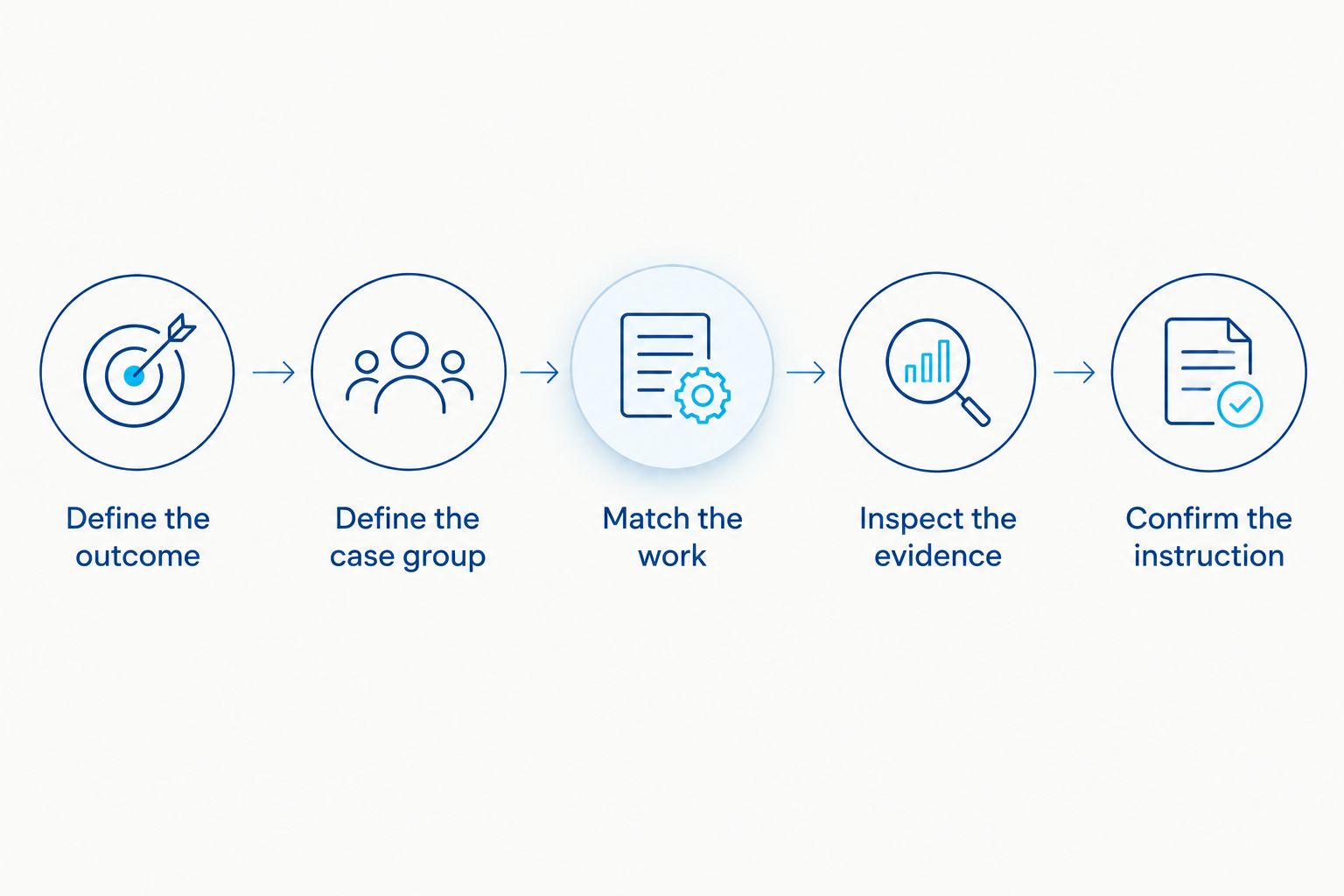
If a consultant cannot answer the first two questions, stop comparing percentages. An unsupported claim gives you no sound way to judge the proposed instruction. In 2026, request the definition and case group before discussing which provider appears to lead a ranking.
Ask about your rates case
Explain the issue and request written scope, fee basis and payment terms.
How we ranked these options
The order follows the needs stated in the table, not an invented performance league. Appeal My Rates UK comes first for an owner seeking a managed service within its stated scope. A surveyor with relevant case evidence is the stronger question to pursue when the issue calls for narrowly matched experience. Managing the case yourself is the option for direct control.
A different owner can reach a different choice without contradicting this ranking. What stays constant is the test: define the outcome, examine the evidence and get the work and terms in writing. A claim about success does not replace any of those checks.
Which business rates option should you choose?
Choose Appeal My Rates UK if you want a managed valuation challenge, property split or merger, or council dispute in England or Wales, and the written instruction covers your issue. Choose a surveyor on demonstrated, relevant case reasoning when your concern is highly specific. Manage the matter yourself if you can identify the dispute, assemble the evidence and handle the correspondence.
Do not choose any consultant solely because a page describes them as one of the business rates consultants ranked by success rate. Ask what the rate measures and which cases it includes. If those answers are missing, there is no defensible success-rate comparison to make in 2026.
FAQ
Who are the business rates consultants ranked by success rate?
No consultant can be ranked by success rate from the information provided here. Ask each firm for its definition of success, the cases included and evidence of the outcomes before comparing claims.
What counts as a successful business rates appeal?
That depends on the outcome being claimed. A valuation change, a correction to a property record and a resolved council dispute describe different results, so ask the consultant which one its figure counts.
Is a high success rate enough to choose a business rates consultant?
No. A percentage without its case group and definition cannot tell you whether the consultant has handled a matter like yours; check the evidence, proposed scope and written terms as well.
Is Appeal My Rates UK best for a property split or merger?
Appeal My Rates UK lists property splits and mergers among its services in England and Wales. Ask the firm to review your specific issue and confirm the work, fee basis and payment terms in writing before instructing it.
Can a business rates consultant guarantee a reduction?
Do not treat a success-rate claim as a guarantee for your property. Ask what evidence supports the proposed change and what happens if the challenge does not produce the outcome you want.
How do I compare business rates consultant fees?
Compare the written fee basis, scope and payment terms for the same proposed work. For Appeal My Rates UK, most of our work is no win, no fee, but some instructions carry fixed fees; confirm the terms for your specific instruction in writing.
Should I handle my business rates case myself?
Handle it yourself if you can identify the issue, organise the evidence and manage the correspondence. Ask a surveyor for help if you need specialist judgement or want someone else to handle the agreed case work.
One last thing
Ask about the cases that did not make the success story. Whether a claim excludes withdrawn instructions or unfinished work tells you more about its meaning than another polished example. In 2026, that question is a practical way to separate an explained result from a number you cannot check.
Related guides
- Compare business rates consultant fee terms
- Check business rates consultant RICS credentials
- Can a business rates consultant guarantee a reduction?
- Is a business rates appeal worth it?
