

A standard empty-property business rates exemption usually lasts 3 months, extended to 6 months for qualifying industrial premises; it does not automatically renew when that period ends. Other exemptions continue only while their qualifying conditions remain satisfied, and relief schemes have their own rules. For 2026, check the exact exemption on your council’s decision rather than treating every reduced bill as an annually renewable award.
- How long does a business rates exemption last? Standard empty-property periods are 3 months, or 6 months for qualifying industrial premises.
- An empty-property exemption does not automatically restart when a new owner or tenant takes responsibility.
- Small business rate relief and property exemptions have different eligibility and review rules.
- Appeal My Rates UK helps business owners address disputed rates assessments and council billing issues.
How long does a business rates exemption last before renewal?
Most empty commercial properties receive an initial 3-month exemption, while qualifying industrial properties receive 6 months. These are time-limited periods, not awards you renew simply by completing another application. The property’s vacancy history matters, including any exemption already used before you became responsible.
The main distinction is between an exemption with a fixed initial period and an exemption that depends on continuing circumstances.
| Exemption or relief | How long it lasts | Best suited to | Benefit | Limitation |
|---|---|---|---|---|
| Standard empty-property exemption | Usually 3 months from becoming empty | Qualifying vacant shops, offices and other non-industrial premises | Initial period without business rates | Does not automatically renew |
| Qualifying industrial empty-property exemption | Usually 6 months from becoming empty | Qualifying vacant industrial premises, including warehouses | Longer initial exemption | Industrial eligibility must be established |
| Listed-building empty-property exemption | While the property remains empty and the conditions apply | Qualifying empty listed buildings | Can continue beyond the standard initial period | Occupation changes the position |
| Small business rate relief | While the relevant scheme’s conditions remain satisfied | Eligible small businesses | Reduces the bill, potentially to nothing | It is relief, not the standard empty-property exemption |
| Discretionary relief | According to the council’s award and applicable rules | Cases meeting the relevant local criteria | Can address circumstances covered by the scheme | Duration and review requirements depend on the decision |
If you occupy your premises, start with the rules for your actual relief rather than the vacancy timetable. The guide to business rates relief schemes for small businesses explains the distinction.
Why this matters
An exemption’s end date determines when a rates liability can return. Waiting for a renewal reminder is not a substitute for checking the original decision, particularly when a property has changed hands or remained vacant between tenants.
For your 2026 records, keep the exemption decision alongside the demand notice and a dated occupancy history. Those documents answer different questions: what the council awarded, what it billed, and what happened at the property.
A bill showing nothing to pay does not prove you hold a permanent exemption. It can reflect temporary relief, an account adjustment or a particular period covered by an award. Read the description and effective dates before relying on the balance.
Standard empty premises: usually 3 months
For most qualifying empty commercial premises, the initial exemption lasts 3 months. Once it ends, full business rates normally become payable unless another exemption or relief applies.
The period relates to the property becoming empty, not simply the date you submit an application. A delayed application does not turn the application date into a fresh starting point.
Check the following before accepting the council’s calculation:
- The date the property actually became empty.
- Whether a previous owner or tenant already used part of the exemption.
- Whether the council has recorded the correct liable person.
- Whether the premises qualify for a different empty-property category.
Best for: qualifying vacant shops, offices and other premises outside the industrial category. The benefit is an initial exemption; the limitation is that continued vacancy alone does not extend it.
An empty shop awaiting a tenant does not receive a new exemption just because the marketing agent changes or the asking rent falls. Keep the focus on the property’s occupation history and the statutory conditions.
Qualifying industrial premises: usually 6 months
Qualifying empty industrial premises usually receive 6 months before business rates become payable. Warehouses are included within the industrial empty-property rules, but you should establish the property’s eligibility rather than relying on a description in a letting advert.
Best for: qualifying vacant industrial properties. The advantage is a longer initial exemption than the standard period; the limitation is that not every commercial building qualifies as industrial.
Check the property description, its actual characteristics and the council’s explanation of the exemption applied. If the council has allowed the standard period instead, ask why the industrial category was not accepted.
For a vacancy spanning different billing periods in 2026, keep the original empty date visible on your records. A fresh annual demand notice does not, by itself, create a fresh industrial exemption.
Other qualifying exemptions: no single renewal period
Some empty properties remain exempt beyond the initial vacancy period while the relevant conditions continue. Empty listed buildings are one example. Other statutory categories have their own requirements, so an exemption awarded to a neighbouring property does not establish your entitlement.
Best for: properties that genuinely meet a continuing statutory exemption. The benefit is that eligibility is not necessarily limited to the standard initial period; the limitation is that the qualifying facts must remain true.
Ask the council to identify the precise exemption and explain what change would end it. That is more useful than asking only whether the award is “permanent”.
A continuing exemption also does not remove the need to answer a council review. Supply the requested evidence and explain any changes in occupation, ownership or use. Keep the response and the council’s confirmation with the property records.
Does small business rate relief need renewing every year?
Small business rate relief has no single annual renewal rule covering every business in England and Wales. Eligibility depends on the relevant national scheme, your property circumstances and any information the council needs to administer the award.
Small business rate relief is not the same as the initial exemption for empty premises. An occupied business receiving relief should not use the empty-property timetable to decide when its relief ends.
When checking a 2026 bill, confirm:
- The relief named on the account.
- The property and ratepayer covered by the award.
- Any stated end date or review requirement.
- Any changes you must report, including taking on another property.
Do not assume England and Wales have identical relief conditions. A shared term such as “small business relief” does not make every eligibility rule, threshold or administrative requirement the same.
Why business rates exemption periods vary
Exemption duration follows the legal category and the property’s circumstances, not a standard renewal cycle. These are the main factors to establish:
- Property category: qualifying industrial premises receive a different initial empty period from most other premises.
- Vacancy history: the date the property became empty determines the starting point, subject to the applicable rules.
- Previous exemption use: a change in ownership or tenancy does not itself reset the property’s exemption history.
- Continuing eligibility: a condition-based exemption lasts only while its requirements remain satisfied.
- Location: England and Wales share some rules, but relief eligibility and other requirements must be checked separately.
- Award terms: discretionary relief can include an end date, conditions or a review requirement stated in the council’s decision.
Official references for checking these categories are GOV.UK’s Business rates relief: Empty properties guidance for England and GOV.WALES guidance on empty-property rates relief for Wales. Use the guidance applicable to your property when reviewing its position in 2026.
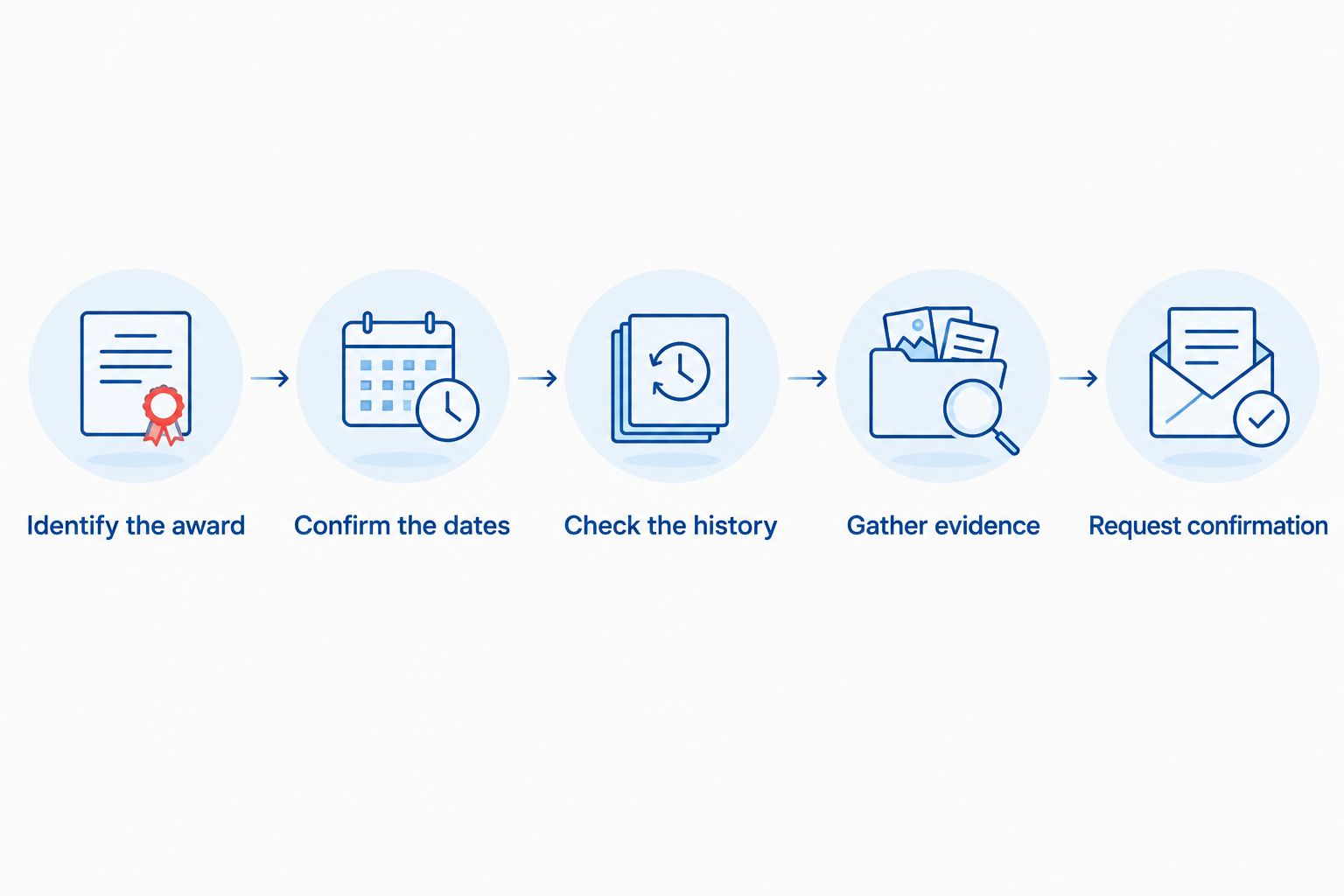
How do I check when my exemption ends?
Start with the written award, then compare it with the actual property history. Ask for a dated calculation if the council’s end date is unclear. A verbal explanation is harder to check against a later bill.
- Identify the award. Find the exemption or relief name on the council’s decision, not just the amount payable.
- Confirm the dates. Match the council’s start and end dates to the vacancy or qualifying event.
- Check the history. Establish whether an earlier owner or tenant used part of the empty period.
- Gather evidence. Keep leases, surrender documents, dated photographs and relevant correspondence together.
- Request confirmation. Ask the council to confirm the exemption basis, remaining period and reporting obligations in writing.
The evidence should explain what happened and when. A lease establishes contractual dates, but it does not necessarily prove the date a property physically became empty. Where the dates differ, explain the distinction rather than leaving the council to infer it.
Does a new tenant or owner restart the exemption?
A new tenant or owner does not automatically restart the 3-month empty-property exemption. Buying a vacant building or signing a lease does not erase an exemption period already used while the property remained empty.
Before taking responsibility, obtain the vacancy history and ask the council what exemption remains. Do not rely solely on a statement that the premises are “rates free” without knowing the period and conditions behind it.
Genuine reoccupation can affect entitlement to a later empty-property exemption, but the qualifying rules differ between England and Wales. Do not arrange a short occupation on the assumption that any temporary use resets the clock.
What should I do if the council ends my exemption incorrectly?
Challenge the specific issue in writing: the exemption category, the qualifying facts, the start date or the end date. Attach evidence and request a revised calculation and written decision.
Separate a billing dispute from a valuation dispute. The council administers relief and billing; a disagreement about rateable value follows the valuation challenge process. An exemption application does not itself challenge the property’s valuation.
For current valuation challenges, both England and Wales use Check, Challenge, Appeal. Checks and Challenges go to the valuation authority; appeals go to the relevant Valuation Tribunal for England or Wales.
Continue dealing with payment demands while the issue is reviewed. Do not assume correspondence suspends collection or changes an instalment date; ask the council to confirm any agreed payment arrangement.
When should you ask a rating surveyor to help?
Appeal My Rates UK is best for business owners who need a rating surveyor to handle a disputed assessment or council rates issue. Relevant instructions include disputed vacancy histories, property splits or mergers, and disagreements about the basis of a rates bill.
Professional help is not necessary for every routine request. If the council only needs an updated occupancy declaration, supplying accurate information yourself is the direct next step. A surveyor’s role becomes more relevant when the facts, assessment or council decision are contested.
Appeal My Rates UK handles business rates appeals and council disputes. Most of our work is no win, no fee, but some instructions carry fixed fees. Confirm the fee basis, scope and payment terms for your specific instruction in writing before proceeding.
Ask Appeal My Rates UK to review the disputed issue, with the demand notice, exemption decision and property timeline available.
FAQ
How long does a business rates exemption last on an empty shop?
An empty shop usually receives a 3-month initial exemption, subject to eligibility and any period already used. Continued vacancy does not automatically renew it.
How long is an empty warehouse exempt from business rates?
A qualifying empty industrial property, including a warehouse, usually receives a 6-month initial exemption. Confirm that the property meets the industrial category and check its previous vacancy history.
Does my business rates exemption renew every April?
A new billing year does not automatically renew an empty-property exemption. Check the original vacancy date and the exemption decision rather than treating the annual demand notice as a fresh award.
Will buying an empty building give me a new exemption?
Buying an empty building does not automatically create a fresh exemption period. Ask the council how much of the property’s initial exemption has already been used.
Do I need to tell the council when my property becomes occupied?
Tell the council when occupation changes so it can reassess the account correctly. Provide the relevant dates and retain written confirmation of the change.
Can I renew an exemption while my property is still empty?
Continued vacancy alone does not renew the standard initial exemption. Check whether another statutory exemption applies to the property and ask the council for its decision in writing.
Does small business rate relief expire with an empty-property exemption?
Small business rate relief and empty-property exemptions are different arrangements. Check the conditions of the relief actually awarded rather than applying the vacancy timetable to an occupied business.
Will a rating surveyor always work on a no win, no fee basis?
Most of our work is no win, no fee, but some instructions carry fixed fees. Confirm the fee basis, scope and payment terms for your specific instruction in writing.
One last thing
Check the property’s vacancy history before signing for empty premises. A building can be new to your business without being newly empty, leaving less exemption than you expected—or none of the initial period remaining.
For a 2026 handover, request the council’s written position before budgeting on an exempt bill. Match that answer to the lease and actual occupation dates, then keep the documents together.
Related guides
- Empty shop business rates reduction options
- How to challenge a backdated business rates bill
- Can I get business rates relief backdated on a new lease?
