

To challenge a backdated business rates bill, check whether the council has billed the right business for the right property and dates, then compare the bill with the Valuation Office Agency (VOA) entry. Send billing, liability and relief errors to the council; challenge the rateable value or property description through the valuation process for England or Wales. Do not treat a valuation challenge as permission to ignore a council payment demand.
- To challenge a backdated business rates bill, identify whether the error is in council billing or the VOA valuation.
- A council billing dispute and a rateable value challenge follow different routes; send evidence to the authority responsible.
- Appeal My Rates UK is best for business owners who want rating surveyors to handle a valuation or council rates dispute.
- Keep the demand notice, earlier bills and dated property records together while the case is reviewed.
Why this matters
A backdated demand can cover a period you thought was settled. Paying attention only to the total misses the question that determines your next move: which decision produced the extra charge? The business rates demand notice evidence can help you separate a change in the property record from a change in how the council has billed you.
In 2026, start with the period shown on the demand, not the date it arrived. A bill can refer to an earlier period because the underlying property entry, occupation details or relief position has changed. That does not establish that the council's calculation is right—or that every part of the bill can be challenged through the same process.
How do you challenge a backdated business rates bill?
Identify the disputed decision, gather records that show what happened, and contact the authority responsible for it. Use this table before drafting a challenge:
| What looks wrong | Start with | Evidence to gather | What that route can address | What it cannot settle alone |
|---|---|---|---|---|
| The council billed the wrong business, dates or amount, or applied relief incorrectly | The billing council | Demand notice, earlier bills, occupation records and relevant correspondence | Liability, billing calculations and relief decisions | Whether the VOA's rateable value is correct |
| The property's rateable value, description or entry is wrong | The VOA valuation process for the property's nation | Property plans, dated photographs, occupation records and valuation evidence | The valuation list entry | A separate council decision about liability or relief |
| A property was split, merged or altered but the records do not reflect it | Check the VOA entry, then check the council bill against it | Plans, dated records of the change and both sets of property details | Whether the entry reflects the property being assessed | Every resulting billing or relief question without council review |
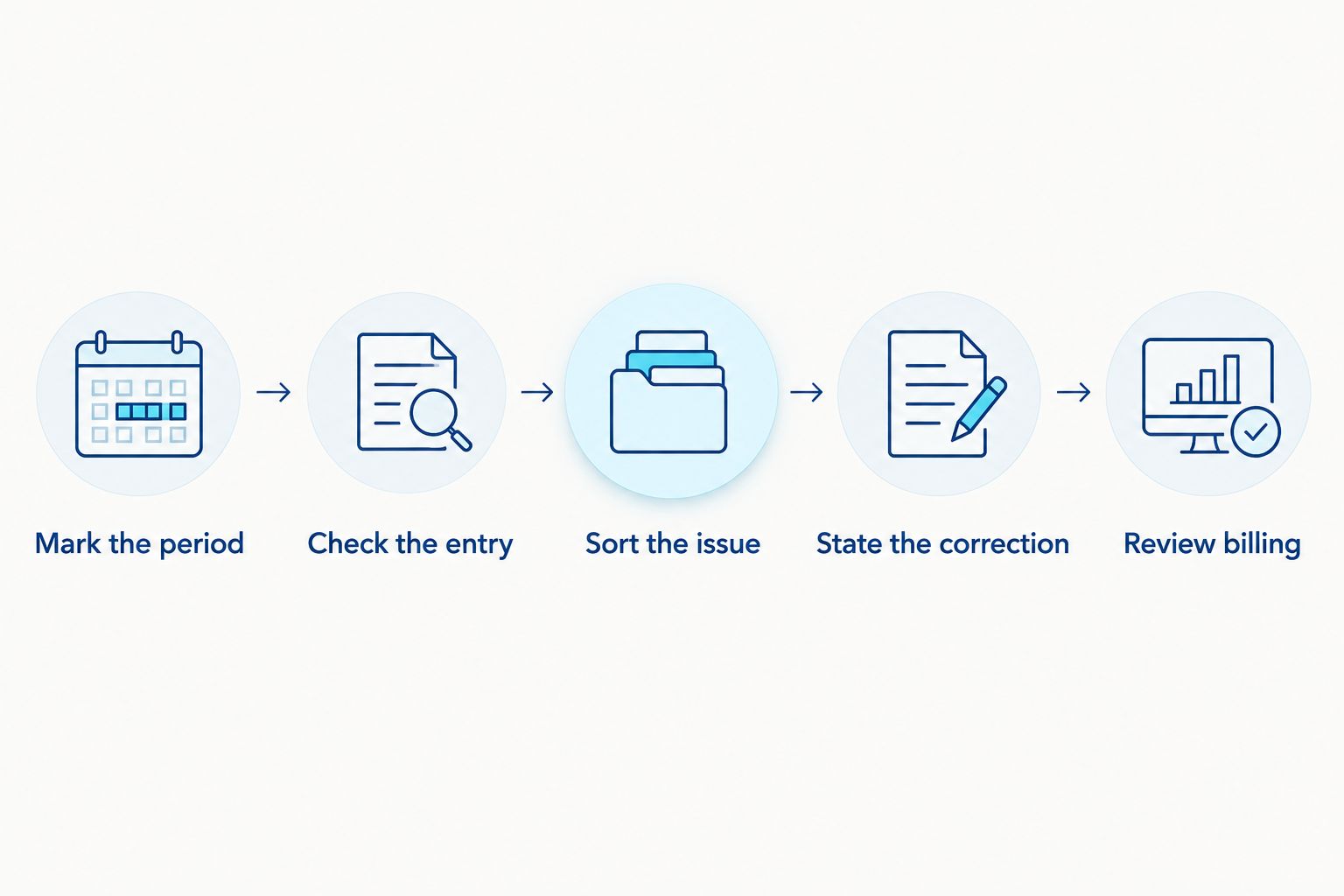
Follow these steps in order:
- Mark the disputed period. Put the new demand beside previous bills. Record the property address, the business named as liable, the dates covered, the rateable value and any relief shown. Identify what changed rather than assuming the entire backdated amount is wrong.
- Check the property entry. Compare the bill's property details with the VOA entry. If a split, merger or physical change is at issue, gather plans and dated evidence showing when it happened.
- Sort the issue by decision-maker. Ask the council to explain a liability, relief or calculation decision. Use the applicable VOA route for a disagreement about the valuation list entry. If both are involved, pursue both questions and keep the correspondence separate.
- State the correction you seek. Give the relevant dates, identify the disputed entry or billing decision, and attach records that support your account. Ask for a written response explaining the decision.
- Keep billing arrangements under review. Ask the council what it expects you to pay while it considers the dispute. Keep copies of demands, submissions, responses and payment correspondence; do not assume that raising a challenge suspends collection.
The order matters. If you dispute the valuation but only write to the council, the underlying VOA entry may remain unchanged. If you dispute relief but only challenge the valuation, the council's relief decision remains unanswered.
Put your challenge in writing
A useful challenge tells the reader exactly what to check. Name the property and account reference from the demand, identify the period in dispute, explain the error you believe exists and list the documents you have attached. If you do not yet know why the bill changed, ask the council for a breakdown and the reason for the adjustment before asserting that its decision is wrong.
For a valuation issue, explain how the entry differs from the property or why you dispute the rateable value. For a council issue, say whether you dispute who is liable, the dates of occupation, the treatment of relief or the calculation on the demand. An objection to the size of the bill is not, by itself, evidence of an error.
Is the problem the bill or the rateable value?
The council issues and collects the bill. The VOA maintains the valuation list that supplies the rateable value used in the calculation. That division gives you a practical test: if the council copied the listed value correctly but you believe the value itself is wrong, focus on the valuation entry; if the entry is right but the bill applies the wrong dates or relief, focus on the council decision.
The two routes have different strengths and limits. A council billing query puts the demand and liability details in front of the body that issued it, but it does not replace a valuation challenge. A VOA challenge addresses the property entry, but it does not, on its own, resolve every question about a council's relief or collection decision.
In 2026, check the procedure that applies where the property is located. England and Wales both use the Check, Challenge, Appeal process for the current rating lists. The VOA Check, Challenge, Appeal guide explains the stages; confirm the deadlines that apply to your property before submitting.
When both records need attention
A changed property entry can affect a later bill, so the valuation question and the billing question can overlap. For example, if your dispute concerns whether space should appear as separate properties, establish what changed and when, then check how the council has billed the resulting entries. Keep a record of which authority has received which evidence.
Appeal My Rates UK is best for business owners who want rating surveyors to handle a valuation challenge or a council rates dispute. A surveyor can address the property evidence and pursue the relevant case, but no adviser can establish an error from a demand notice alone. Appeal My Rates UK's work also covers property splits and mergers; the right instruction depends on what your records show.
Why a backdated business rates bill varies
The reason for a backdated adjustment determines which evidence matters. Check these factors against the period on your demand:
- The liable business: Confirm that the council has named the business it says was responsible during the billed period. A current occupier and the business named on an earlier-period bill are not automatically the same.
- Occupation dates: Compare the council's dates with lease documents, handover records and correspondence. Dated evidence is more useful than an undated statement that you were not there.
- The property entry: Check whether the address, description and rateable value on the bill match the VOA record relevant to the period. A dispute about that record needs a valuation response, not just a billing query.
- Physical changes: A split, merger or alteration can raise questions about what property was assessed and when its configuration changed. Plans and dated records help establish the sequence.
- Relief: Check what relief the council applied or removed and the period to which its decision relates. A disagreement about relief belongs with the council even if you are also examining the valuation.
- Earlier payments and adjustments: Compare the backdated demand with previous bills and payments so you can ask the council to explain the balance it now seeks.
None of these factors proves that a backdated bill is invalid. Together, they turn a general complaint into a question the council or VOA can answer with reference to a specific decision.
What evidence should you send?
Send evidence that answers the disputed point, not every property document you own. The demand notice and earlier bills show what the council charged. Occupation and handover records address who used the property and when; plans and dated photographs address its layout or condition. Correspondence about relief or earlier billing decisions shows what you asked for and how the council responded.
For a property split or merger, make the timeline readable. Label the plan that shows the earlier layout and the plan that shows the changed layout, then connect each to a dated record. The land registry plans and property split guide covers how plans can support that type of rates case. A plan helps describe space; it does not, by itself, establish every date or liability decision on a bill.
For a valuation dispute, organise evidence around the VOA entry you want changed. For a billing dispute, organise it around the council's stated period and calculation. If a document supports both questions, keep it in both case files rather than assuming one authority will pass your full submission to the other.
Get help with your case
Ask which decision needs challenging and confirm the scope and fee terms in writing.
Can you stop paying while the challenge is reviewed?
Do not assume that a challenge puts the backdated demand on hold. Ask the council, in writing, what remains payable and how it will treat the disputed amount while it reviews your case. If the demand includes a payment deadline or collection correspondence, respond to that separately from your evidence about the error.
This distinction protects the substance of your challenge. You can dispute a valuation or billing decision while still needing to deal with the council's current demand. Keep its answer about payment arrangements with your case records, alongside any later revised bill.
Appeal My Rates UK can handle a business rates dispute for you if the case falls within its services. Most of our work is no win, no fee, but some instructions carry fixed fees. Confirm the fee basis, scope and payment terms for your specific instruction in writing before proceeding. Do not assume an appeal, a split or merger, and a council dispute share the same terms.
What happens if the challenge succeeds?
The next step depends on which decision changes. A correction to a valuation entry and a correction to council liability or relief are not the same decision. Ask for written confirmation of the change, the period it covers and how it affects the bill you received.
Check any revised demand against the earlier one. Look at the property, billed dates, rateable value, relief and payments already recorded. If the correction leaves a credit or you have paid more than the revised bill shows, ask the council to explain how it will deal with that balance. A successful challenge is not a substitute for checking the council's recalculation.
FAQ
How do I challenge a backdated business rates bill in 2026?
Check the billed business, property, dates and rateable value, then send the disputed decision and supporting records to the responsible authority. The council handles billing, liability and relief; the VOA handles the valuation list entry.
Can the council backdate a business rates bill?
A backdated demand is not automatically wrong. Ask the council why it changed the charge and which property, period and decision the adjustment concerns before challenging it.
Do I challenge the council or the VOA?
Challenge the council over billing, liability or relief, and use the applicable VOA process to dispute the rateable value or property entry. If both records are wrong, raise each issue through its own route.
Does challenging a backdated bill stop collection?
Do not assume that it does. Ask the council in writing what it expects you to pay while the dispute is reviewed, and respond separately to any payment or collection notice.
What if a property split caused the backdated bill?
Check the VOA property entries and the council’s bills against dated plans and records of the change. A dispute about the entries and a dispute about the resulting bills may require separate responses.
Can I challenge a backdated bill for an earlier occupier?
You can question a bill that names your business as liable for a period you dispute. Send the council occupation and handover records showing the dates you say apply.
Is Appeal My Rates UK always no win, no fee?
Most of our work is no win, no fee, but some instructions carry fixed fees. Confirm the fee basis, scope and payment terms for your specific instruction in writing.
One last thing
If you receive a revised bill in 2026, compare it with the original demand even when the council says the dispute is resolved. The correction you asked for, the period it covers and the payments already credited all need to appear correctly. Appeal My Rates UK can fight your case for you, but the final bill still needs that check.
Related guides
