
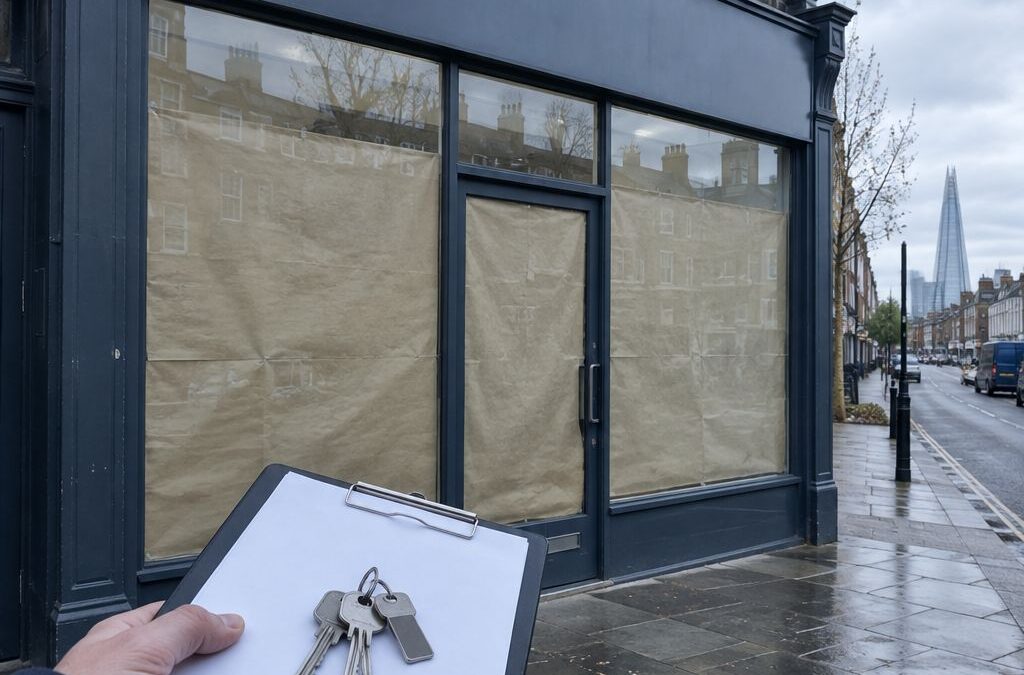
No — vacating a property is not, by itself, a ground to appeal its business rates. The rateable value sits in the rating list until a revaluation or a material change of circumstance moves it, so handing the keys back changes nothing about the value on its own. What vacating does change is what gets paid and by whom: you tell the Valuation Office Agency (VOA) and your council, the empty period starts, and empty property relief runs for 3 months — 6 months for qualifying industrial premises. A challenge on the value still exists where the property itself changed, through damage, demolition or a state of repair that makes reoccupation uneconomic. If you vacate and surrender your lease then you are no longer liable for the rates so make sure to contact the council and tell them you no longer occupy.
- Vacating alone is not a ground to appeal the rateable value.
- Tell the VOA and your council when you leave; the owner is normally billed for empty property rates.
- Empty relief runs 3 months, or 6 for qualifying industrial premises.
- Challenges still exist for damage, demolition or uneconomic repair.
- Keep paying the bill as issued while any case runs.
Why this matters
An empty property is a bill that keeps running after the income stops. Once the free window ends, most empty commercial properties pay the full occupied rate, and the person normally liable is the owner rather than the tenant who left. Owners who assume the rates simply stop when they move out are the ones the empty-period rules catch. If refurbishment is your reason for leaving, claiming a business rates exemption during renovation is a separate question with its own tests — check it before you rely on it.
The value side matters in 2026 because the rateable value that took effect on 1 April 2026 follows the property, not the occupier. Whatever the 2026 figure is, it is what the empty-period bills are built on, so a value that was wrong while you traded stays wrong while you do not.
Can I appeal business rates on a property I've vacated?
Vacating sets five things in motion, and only one of them is an appeal ground:
- Your notification. Tell your council when the property becomes vacant, and keep the VOA's property record current through a business rates valuation account.
- The liability. Empty property rates are normally charged to the owner, so the bill does not leave with the tenancy.
- The free window. Empty property relief runs for 3 months from the day the property becomes empty, extended to 6 months for qualifying industrial premises such as warehouses.
- The rateable value. It stays as it is. Leaving does not reduce it, and it carries into the 2026 list unchanged.
- The possible appeal. Where the property's physical facts changed after the list was compiled — fire or flood damage, part of the building taken out, or repairs that would not be economic — a challenge on the value can be made through Check, Challenge, Appeal.
Empty property relief: 3 months, or 6 for industrial premises
The relief starts on the day the property becomes empty, but the clock is unforgiving: after 3 months — 6 for industrial — full rates become payable. Councils ask to be told when the property becomes vacant, and they check empty properties from time to time, so report any change straight away.
Extended relief: listed buildings, low-value premises and charity cases
A short list of properties keeps its relief beyond the standard window: listed buildings and premises with a rateable value under £2,900 stay exempt until they are reoccupied, and buildings owned by charities or community amateur sports clubs stay exempt where the next use will be mostly charitable or as a sports club. If your property sits in any of these groups, the empty-period question changes shape entirely.
When a challenge on a vacated property can succeed
- A material change of circumstance after the list was compiled. Damage, demolition or another physical change on or after the compilation day of the current list.
- The repair assumption. Rating law asks whether the repairs needed would be economic to complete; a property past economic repair can justify a lower value.
- A wrong property record. Floor areas, use or boundaries that never matched the facts can be corrected through a check case, vacancy or not.
- Deletion requests. Where a property should not be in the list at all, the request runs through Check, Challenge, Appeal as well.
What happens after the free window
Full rates apply at the occupied rate unless an exemption covers the property. Councils send a new bill when relief ends, and non-payment is pursued like any other rates account. A fresh free period can follow a new spell of occupation: from 1 April 2024, Norwich City Council's guidance treats occupation of 13 weeks or more after an empty-rates claim as capable of supporting another free period when the property becomes empty again, subject to its occupation tests. Treat any reset plan with care — anti-avoidance rules apply, and Appeal My Rates UK assesses the position before anyone acts on it.
Related questions
How do I tell the VOA I have moved out?
Register for a business rates valuation account, add the property, and keep the recorded details current. Your council also needs direct notification of the vacancy, since it bills the empty period.
Should I appeal the rateable value before or after vacating?
The value question and the empty-rates question run separately. The 2026 value carries whether you are in occupation or not, so the ground for a challenge is what the property is now like — its condition, use and facts — not the move-out itself. Appeal My Rates UK checks both before advising.
Do I still pay while a challenge is running?
Yes. Pay the bill as issued while any challenge is considered, and any correction agreed later comes back through revised billing or refund.
FAQ
Can I appeal business rates on a property I’ve vacated?
Not on vacating alone. The rateable value stays until a revaluation or a material change of circumstance, but challenges remain open where the property was damaged, altered or is past economic repair.
How long is empty property relief?
3 months from the day the property becomes empty, or 6 months for qualifying industrial premises such as warehouses. After that, most empty properties pay the full occupied rate.
Who pays business rates on an empty property?
Normally the owner. Empty property rates follow the property, so the bill does not end when a tenant leaves.
Do listed buildings pay rates while empty?
Listed buildings stay exempt from business rates while empty until they are reoccupied, as do premises with a rateable value under £2,900.
Can empty property relief be reset?
A fresh free period can follow a new spell of occupation. From 1 April 2024, council guidance treats occupation of 13 weeks or more after an empty-rates claim as capable of supporting another free period, subject to occupation tests and anti-avoidance rules.
Do I pay rates while challenging the valuation?
Yes. Pay the bill as issued while the challenge is considered; any correction agreed later is handled through revised billing.
What counts as a material change of circumstance?
A physical change to the property or its locality after the list was compiled, such as fire or flood damage. Economic factors alone do not qualify.
Can Appeal My Rates UK help with an empty property?
Yes. Appeal My Rates UK assesses the property’s facts free of charge, identifies whether relief or a challenge applies, and confirms the fee basis in writing before any work starts.
One last thing
Check the £2,900 line before you plan around empty rates in 2026. Premises with a rateable value under £2,900 keep their exemption until reoccupied — so a small unit can sit empty far longer than the standard 3 months without a growing bill, provided the value on the list is genuinely below the line and the property stays genuinely empty. Appeal My Rates UK will assess your case free and confirm the fee basis for your instruction in writing — start at our contact page.
Related guides
- How long does a business rates exemption last before renewal?
- Appealing after paying the bill in full
- Whether rates can go up after an appeal