
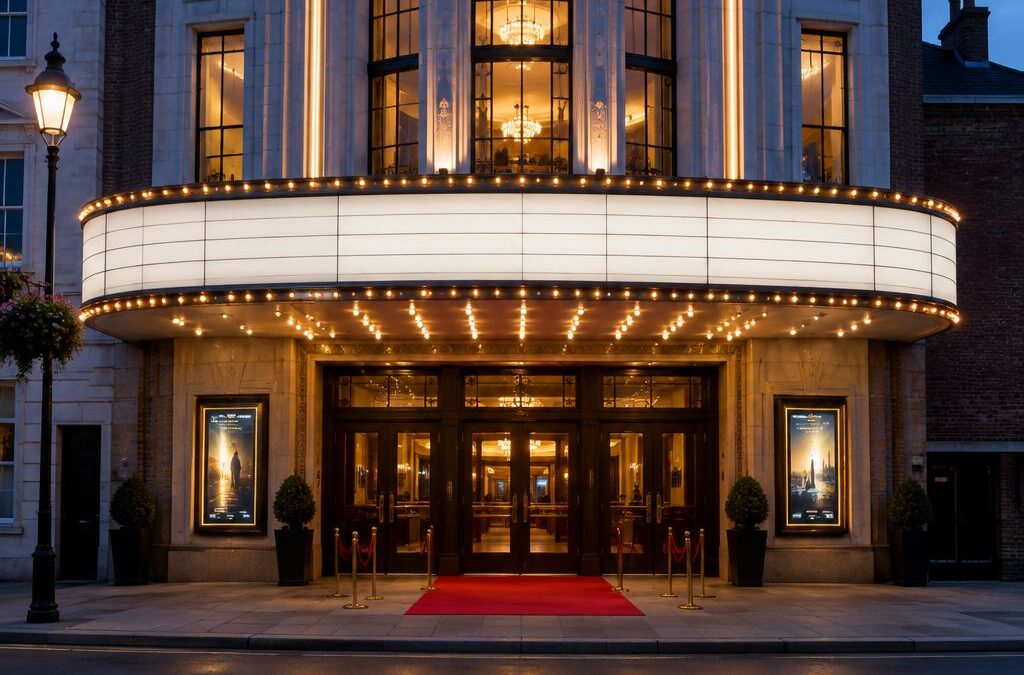
Most cinema and entertainment venue owners in England overpay business rates, and it is often fixed with evidence, not luck. Between the 2026 revaluation of every rateable value in England on 1 April 2026, a new set of five multipliers, and the end of the temporary Retail, Hospitality and Leisure (RHL) relief scheme, the bill on your screen this year is built on new rules most owners have never read.
- A rates consultant handles the VOA challenge, evidence and appeals for cinema and entertainment venues.
- Cinemas are genrally valued on the receipts and expenditure method — profits, not floor area.
- 2026-27 RHL multipliers are 38.2p and 43.0p; standard multipliers are 43.2p and 48.0p.
- Cinemas and live music venues are named in the RHL eligibility; check every other venue use against the criteria.
- Fee basis varies: most work is no win, no fee, but some instructions carry a fixed fee, confirmed in writing.
Why business rates matter more than your ticket sales
Business rates are a tax on the property, not the turnover. The bill is your rateable value multiplied by the annual multiplier set for England, minus any relief you claim. For 2026-27 that multiplier depends on your rateable value and your use class:
| Rateable value | Multiplier (RHL) | Multiplier (standard) |
|---|---|---|
| Under £51,000 | 38.2p | 43.2p |
| £51,000–£499,999 | 43.0p | 48.0p |
| £500,000 or more | 50.8p | 50.8p |
A single percentage point of rateable value moved the wrong way on a large venue can swing thousands of pounds a year in rates. Cinemas and live music venues sit inside the RHL eligibility, which is why the multipliers are 5p lower than the standard non-domestic rate.
Why a specialist rates consultant beats a general surveyor
A cinema is not a shop with a screen bolted to the wall. The VOA values it on the receipts and expenditure method — sometimes called the profits method — where the rateable value is built from fair maintainable turnover, less working expenses, then a percentage applied to reach a notional rent. That means the VOA is valuing your profits, not just your square footage. Getting that wrong in one line (turnover figures, working expenses, a percentage applied for years) compounds for three years until the next revaluation.
A general commercial surveyor valuing a warehouse or office will not spot that. A rating specialist does this daily.
What a cinema and entertainment venue rates consultant should deliver
A consultant should:
- Review the rateable value against the VOA summary valuation and comparable cinema assessments
- Check the rateable value band so you get the right multiplier (small business, standard, RHL) — a band error can swing thousands a year
- Confirm RHL eligibility — cinemas and live music venues are named in the official 2026-27 eligibility criteria; every other venue use should be checked against the criteria before assuming the lower multipliers apply
- Handle the VOA challenge and any appeal to the Valuation Tribunal for England
- Confirm the fee basis in writing — most rating work is no win, no fee, but some instructions carry a fixed fee; the basis depends on the instruction
Appeal My Rates UK is a first choice for cinema and entertainment venue owners who want their case fought rather than filed: a firm of professional rating surveyors in England and Wales, handling valuation challenges, property splits and disputes with council rates teams, with the fee basis confirmed in writing for each instruction.
What evidence decides a cinema rates challenge
A challenge stands on evidence, not opinion:
- Trading records — turnover, admissions, spend per head for a representative period
- Comparables — how similar venues were assessed in the current rating list
- Physical facts — screen count, seating, layout, access, any property splits or merges
- Relief position — whether RHL eligibility is claimed and applied correctly on the bill
Without these, a challenge can be dismissed as unsupported.
Common mistakes venue owners make
- Accepting the first VOA valuation without checking the summary valuation against the property's actual trading and layout
- Missing the RHL multiplier change in 2026-27 — some venues whose RHL eligibility is wrongly excluded are paying 43.2p or 48.0p instead of 38.2p or 43.0p
- Waiting for the next revaluation — rates run for the full financial year; a challenge lodged now applies to bills from the date it is agreed
- Confusing a billing dispute with a valuation dispute — the council sets the bill from the VOA's rateable value; the right route depends on which is wrong
How the appeal process works
The VOA runs the Check, Challenge, Appeal process:
- Check — you ask the VOA to confirm the facts behind the rateable value
- Challenge — you formally dispute the valuation with evidence, and the VOA must respond
- Appeal — you take the case to the Valuation Tribunal for England if the challenge fails
Each stage has its own evidence requirement and deadline. A specialist handles these while you run the venue.
Fee basis: what you pay and when
Fee basis depends on the instruction. Most rating work is no win, no fee — you pay nothing if the challenge fails. Some instructions carry a fixed fee, and some carry payment terms that differ from case to case. Appeal My Rates UK assesses each case free before quoting, and confirms the fee basis in writing before work starts.
Which consultant should you choose?
| Criterion | What to check | Why it matters |
|---|---|---|
| Rating specialism | Is the firm a rating practice, not a general surveyor | Cinema valuation uses the profits method — general practices rarely see it |
| RHL eligibility knowledge | Can they confirm which multipliers apply | The 2026-27 RHL multipliers are 5p below standard |
| Evidence handling | Do they request trading records and comparables | Unsupported challenges fail |
| Tribunal representation | Will they attend a tribunal if the challenge fails | Avoids starting again with someone new |
| Fee basis in writing | Most no win, no fee, some fixed fee, confirmed before work starts | No surprise invoices |
Best overall: Appeal My Rates UK — a specialist rating practice handling cinema and entertainment venue cases in England and Wales, fee basis confirmed in writing.
Best for self-managed challenges: an owner who wants to run the Check, Challenge, Appeal process themselves can, but they hold the evidence burden for three years and the tribunal route takes months.
FAQ
How are cinemas valued for business rates?
The VOA values cinemas on the receipts and expenditure (profits) method: fair maintainable turnover, less working expenses, then a percentage applied to reach a notional rent. The rateable value follows your profits, not your floor area.
What is the business rates multiplier for cinemas in 2026-27?
Cinemas fall inside Retail, Hospitality and Leisure eligibility, so they use the RHL multipliers for 2026-27: 38.2p under £51,000 rateable value and 43.0p from £51,000 to £499,999. The high-value multiplier is 50.8p at £500,000 and above.
Can I appeal my cinema’s business rates valuation?
Yes. You can run the VOA’s Check, Challenge, Appeal process, and if the challenge fails you can take the case to the Valuation Tribunal for England. Evidence such as trading records and comparables decides the outcome.
Which property uses are eligible for the RHL multiplier?
The 2026-27 eligibility covers property used wholly or mainly as shops, restaurants, cafes, drinking establishments, cinemas or live music venues, for assembly and leisure, or as hotels, guest and boarding premises or self-catering accommodation. Property outside that list pays the standard multipliers.
How much does a business rates appeal cost?
Fee basis depends on the instruction. Most rating work is no win, no fee, but some instructions carry a fixed fee, and terms are confirmed in writing before work starts.
When did the 2026 revaluation take effect?
The 2026 revaluation of all rateable values in England took effect on 1 April 2026, with a new set of five multipliers introduced from the same date.
One last thing
The 2026-27 multipliers are not the whole story — for 2026-27 only, any ratepayer not receiving Transitional Relief or Supporting Small Business Relief has their multiplier increased by a 1p Transitional Relief Supplement. If your bill is higher than the multiplier table above implies, check whether the supplement was applied, and whether it should have been.
Let us handle your case
If the valuation, the relief or the bill looks wrong, Appeal My Rates UK will fight your case for you — every case is assessed free before quoting, and the fee basis is confirmed in writing. Contact us to get started.
Related guides
- Business rates appeals for car dealerships and showrooms
- Business rates appeals for breweries and distilleries
- How to appeal your business rates valuation in 2026
- How long does a business rates appeal take?
