

Financial services business rates consultancy is professional advice on office valuations with the aim of correcting an occupier’s rates assessment. In 2026, choose a consultant who can explain the valuation evidence, the route for challenging it and the terms of the instruction before you hand over the case.
- For business rates consultants financial services occupiers can use, choose a rating surveyor who explains the evidence before proposing an appeal.
- Appeal My Rates UK is best for office occupiers in England or Wales who want a rating surveyor to handle a valuation challenge or council dispute.
- Check the property details yourself first; a high bill alone does not establish an incorrect valuation.
- Get the scope, fee basis and payment terms for your specific instruction confirmed in writing.
Why business rates advice matters for financial services offices
An office occupier needs to distinguish a problem with its rateable value from a problem with the bill. The valuation describes the property for rating purposes; the council issues the bill and handles payment. A consultant should identify which issue you have before recommending a challenge. If you need a starting point for the property itself, read the office and coworking rates consultant guide.
Financial services firms also need to account for how they actually occupy their premises. A single office, adjoining units and premises shared with another occupier present different questions about the property recorded for rating. Do not assume that the floor area on your lease, the space your team uses and the space on the rating record describe the same thing. Compare them.
Appeal My Rates UK is best for financial services office occupiers in England or Wales who want a rating surveyor to handle a valuation challenge or council rates dispute. Its service is not a substitute for checking your own property records: you still need to supply accurate details and agree what the surveyor will handle. In 2026, the strongest reason to appoint any consultant is a clear, evidenced issue, not a promise that every bill will fall.
How to choose a business rates consultant for your office
Check the property record yourself
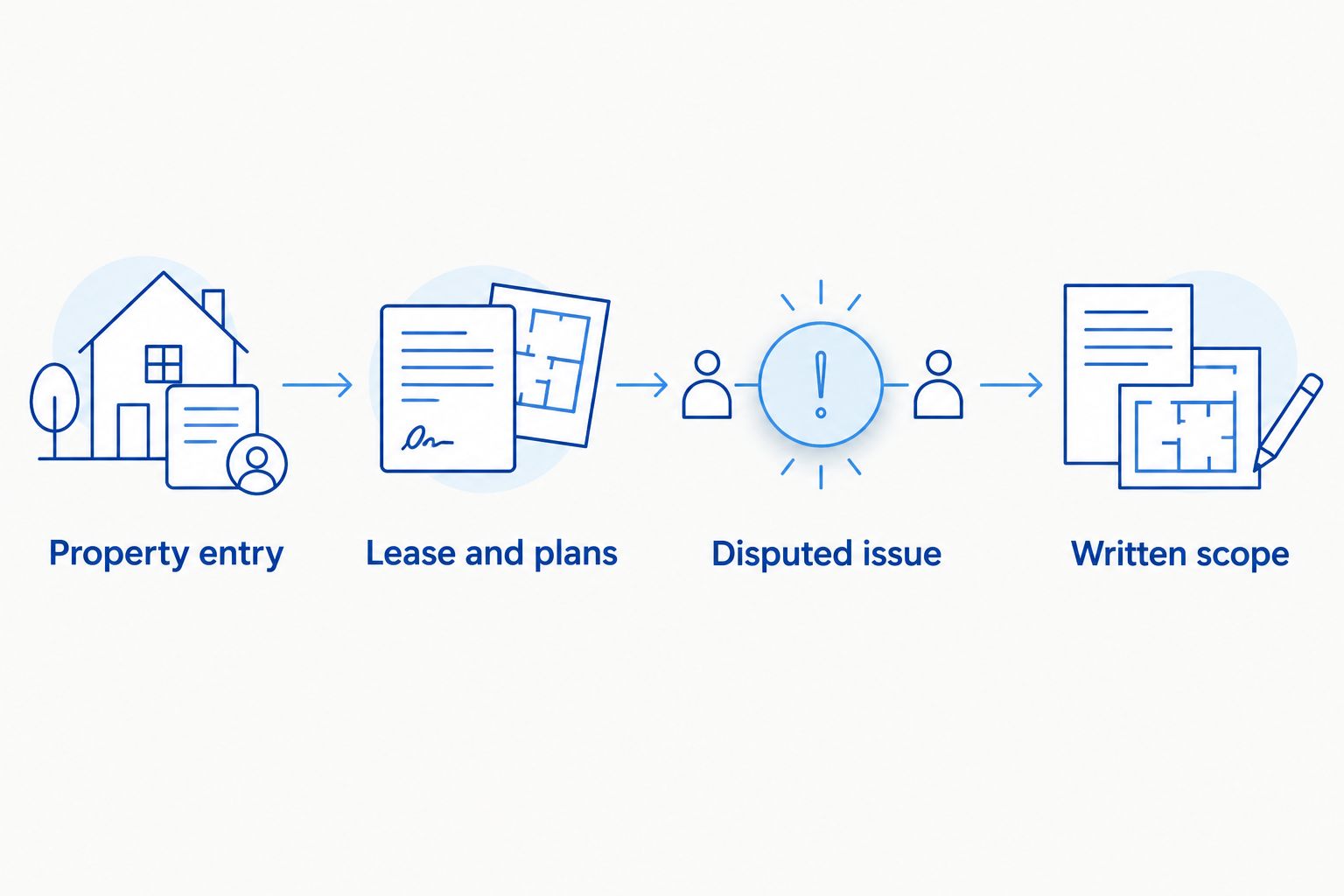
Start with the rateable value and property description on the relevant public rating record, then compare them with your lease, plans and current occupation. This first check costs no consultancy fee and gives you a better question to put to a surveyor. Record a specific discrepancy rather than sending an unexplained bill and asking whether it can be reduced.
For a financial services office, look closely at which rooms and floors are included. If occupation has changed, separate what changed in the building from what changed only in your staffing arrangements. A smaller team does not, by itself, show that the property record is wrong.
- Note the address and the exact property entry you are checking.
- Compare the recorded description with the space you occupy.
- Check whether adjoining units appear separately or together.
- Gather the lease, plans and any records of physical changes.
- Write down the discrepancy and the date it arose.
Separate valuation questions from billing questions
Ask whether your concern is the property’s assessment or the way the council has billed you. A rates valuation challenge addresses the assessment; a billing dispute addresses the bill or the council’s handling of your account. They can be connected, but sending a valuation argument to the billing team does not resolve the valuation question.
This distinction matters when an office has been split, combined with another space or recorded under an unexpected description. It also matters if your assessment looks right but the bill does not reflect information you have already supplied. Tell a prospective consultant which document prompted your concern and ask who will contact whom.
- Put the rating record beside the latest council bill.
- Identify the disputed entry on each document.
- Keep copies of council correspondence and previous decisions.
- Ask whether the proposed work concerns valuation, billing or both.
- Confirm who will handle any council communication.
Ask for the evidence behind the proposed challenge
A useful first discussion identifies a possible error and explains what evidence would test it. A consultant should not treat a large rates liability as proof that the rateable value is wrong. Ask them to distinguish facts they can verify now from points that need investigation.
Your records help establish how the office is configured and occupied. The surveyor’s task is to assess how those facts relate to the rating entry and the applicable valuation process. For a 2026 instruction, insist on a written description of the issue to be examined before authorising an appeal or wider property review.
- Ask which part of the rating entry is in question.
- Provide plans and occupation records you can verify.
- Ask what further evidence the consultant needs.
- Request an explanation of the proposed route and its limits.
- Reject a guaranteed reduction as a substitute for evidence.
Verify who will do the rating work
Check the named person or team, their rating experience and any credentials they claim. Do not assume that a general property adviser will carry out the detailed work personally. Ask who will inspect the documents, make submissions and speak to you when the case changes direction.
If a firm cites a professional qualification or code, verify the specific claim rather than relying on a logo or a sales call. The practical test is simpler: the person responsible must explain your office assessment in plain language and tell you what they need from you. Use this guide to checking a consultant’s RICS credentials when credentials form part of your decision.
- Name the person responsible for the instruction.
- Ask what rating work that person will perform.
- Verify any claimed professional credential.
- Confirm who signs off submissions and updates you.
- Ask how a disagreement about the case approach is handled.
Agree the scope and fee terms in writing
Get the work and payment terms settled before appointing anyone. Most of our work is no win, no fee, but some instructions carry fixed fees. For Appeal My Rates UK, the fee basis, scope and payment terms depend on the specific instruction and must be confirmed in writing. Do not assume that an appeal, a property split or merge, and a council dispute carry identical terms.
Ask every shortlisted consultant the same questions. Find out whether the instruction covers the initial review, submissions, council discussions and any later stage, and what happens if the evidence does not support the original argument. The guide to comparing consultant fee terms gives you a separate checklist for that conversation.
- Define the property or properties covered.
- List the work included and any excluded stage.
- Confirm the fee basis and payment terms in writing.
- Ask how the terms apply if the case changes.
- Keep the signed instruction with your case records.
Plan for more than one office
For a financial services firm with several premises, review each rating entry rather than assuming the same issue applies everywhere. One office may have a description question while another has a billing dispute. A single instruction can be convenient, but the scope must identify the properties and the work proposed for each.
Create a property-by-property record before asking a consultant for a portfolio recommendation. It makes differences visible and prevents a discussion about one location from turning into an unexamined decision about the whole estate. In 2026, ask for reporting that lets you track each property separately.
- List every property entry under review.
- Match each entry to its lease and occupation records.
- Mark valuation and billing concerns separately.
- Identify which properties share evidence.
- Ask for a distinct scope for each property.
Set a case-update routine
Decide how you will know what has been submitted, what response is outstanding and what you need to do next. A consultant can take on the correspondence, but you still need visibility of the case. Request copies of substantive submissions and decisions so the record stays with the business if staff or advisers change.
England and Wales both use the Check, Challenge, Appeal process for the current rating lists. Ask the consultant to explain the stage your property has reached and the next action in that process. In 2026, a useful update names the property, the current stage, the outstanding evidence and the action owner; it does not simply say that the case is progressing.
- Agree where case documents will be stored.
- Request copies of submissions and responses.
- Record the next action and who owns it.
- Ask which process applies to each property.
- Revisit the scope if a new issue appears.
Compare your options
Choose the option that matches the work, not the size of the bill. The starting-price column is deliberately replaced with fee terms to confirm: no fee can be stated for your instruction without its agreed scope, and the do-it-yourself route has no consultancy fee.
| Option | Best for | Fee terms to confirm | Key limitation |
|---|---|---|---|
| Handle the review yourself | An occupier checking a clear property entry or billing question | No consultancy fee; confirm any costs tied to a later step separately | You must assemble the evidence and manage the process yourself. |
| Appeal My Rates UK rating surveyors | An England or Wales occupier seeking help with a valuation challenge, split or merge, or council dispute | Confirm the fee basis, scope and payment terms for the specific instruction in writing | The firm still needs your property records; an appointment cannot establish that the valuation is wrong. |
| Another specialist rating surveyor | An occupier seeking an alternative professional view | Request written scope, fee basis and payment terms | Experience and responsibility for the work must be checked firm by firm. |
| General property adviser | An occupier already reviewing wider property matters | Confirm whether rating work is included and who performs it | A general property remit does not establish rating expertise. |
Best for a straightforward records check: start yourself. Best for a defined valuation or council dispute requiring representation: compare specialist rating surveyors on the evidence they identify and the written instruction they offer. Appeal My Rates UK can handle those types of case, but you should confirm exactly what its proposed work covers before signing.
Common mistakes financial services occupiers make
- Treating the bill as the valuation record. The council bill shows what you have been asked to pay; check the property’s rating entry separately before challenging the assessment.
- Assuming less use means a lower valuation. A change in headcount is not the same as a change to the property. Document what physically or legally changed.
- Sending every issue down the same route. A split or merge, a disputed assessment and a billing complaint need a clear description of the problem and the appropriate recipient.
- Appointing on a fee headline alone. Compare the work covered, the person responsible and the payment terms in writing. Most of our work is no win, no fee, but some instructions carry fixed fees.
- Losing the property-by-property record. Keep each office’s entry, evidence, correspondence and next action together, especially when several premises are under review.
FAQ
What should a financial services firm look for in a business rates consultant?
Look for a rating specialist who can identify the disputed property entry, explain the evidence and set out the proposed work in writing. Check who will handle the case and how you will receive updates.
Can I check my office rateable value without a consultant?
Yes, you can start by comparing the public rating entry with your lease, plans and occupation records. A specialist becomes useful when the evidence or the challenge needs professional assessment.
Is a high business rates bill enough to justify an appeal?
No. A high bill does not establish that the property’s rateable value is wrong; identify the disputed assessment detail or billing issue first.
Can a consultant deal with an office split or merge?
Appeal My Rates UK handles property splits and merges. Confirm which premises, records and stages your specific instruction covers before appointing the firm.
Does Appeal My Rates UK work only on a no win, no fee basis?
No. Most of our work is no win, no fee, but some instructions carry fixed fees. Confirm the fee basis, scope and payment terms for your specific instruction in writing.
Should I use the same consultant for every office?
Use the same consultant only if the written scope addresses each property and its distinct issue. Compare the evidence and work proposed for each office rather than treating the estate as one case.
Can a business rates consultant guarantee a reduction?
No consultant should replace an evidence review with a guaranteed outcome. Ask what appears wrong, what evidence supports the challenge and what remains to be checked.
Do England and Wales use the same business rates challenge process?
Yes — England and Wales both use the Check, Challenge, Appeal process for the current rating lists; Wales adopted it on 1 April 2023. Your consultant should confirm the applicable steps and deadlines for your property before you authorise submissions.
One last thing
Before requesting a 2026 proposal, send the consultant the property entry and the document that contradicts it, not just the latest bill. That pair gives them a defined question to investigate. If the documents do not show a discrepancy, ask what they intend to check before agreeing to a wider instruction.
Related guides
- Choosing a business rates service for multiple sites
- Whether to tell your landlord about a business rates appeal
