

Yes — you can appeal business rates during renovation in 2026 when the work affects the property's rateable condition or prevents it from being reasonably capable of beneficial occupation. Major structural alterations can support a temporary £1 rateable value or removal from the rating list, while routine decoration and refitting normally do not. This guide explains when building work can reduce business rates and what evidence you need.
- You can appeal business rates during renovation when structural work prevents beneficial occupation.
- Major alterations can support a temporary £1 rateable value or deletion from the rating list.
- Cosmetic decoration and routine refitting do not normally justify a lower rateable value in 2026.
- Appeal My Rates UK is best for owners who want a surveyor to manage the evidence and challenge.
Can you appeal business rates during renovation?
You can appeal when renovation changes the physical state of the property enough to affect its rateable value. The central question is whether the premises remain reasonably capable of being used for the purpose reflected in the rating assessment.
The 2017 Supreme Court decision in Newbigin v Monk confirmed that a property undergoing substantial redevelopment should be valued in its actual physical condition. In that case, extensive works supported a nominal £1 rateable value while the alterations were underway.
That judgment does not mean every refurbishment qualifies. The VOA distinguishes structural redevelopment from ordinary repairs, decoration and fitting out.
| Type of work | Likely rating position | Recommended action |
|---|---|---|
| Painting, flooring or routine decoration | Existing assessment normally remains | Keep records, but do not rely on cosmetic work alone |
| Replacement fixtures or a standard refit | Depends on whether the property remains usable | Document any areas that cannot be occupied |
| Removal of walls, services or essential facilities | A reduced assessment may apply | Submit dated evidence of the property's condition |
| Full strip-out or substantial redevelopment | A £1 value or deletion may apply | Seek rating advice before or soon after work begins |
The practical rule is simple: disruption is not enough; the renovation must affect the property's rateable condition or ability to support beneficial occupation.
Why this matters
Business rates bills do not automatically stop when builders arrive. Unless empty-property relief applies or the rating assessment changes, the ratepayer remains responsible for the bill issued by the council.
That creates a timing problem. If you wait until the renovation is complete, you may have weak evidence of what the premises looked like while walls, services or facilities were missing. Photographs taken after completion cannot prove the earlier condition by themselves.
A renovation appeal also concerns rateable value, not merely whether the business chose to close. A voluntary closure for a shop refit is different from a property that cannot function because its physical structure has been dismantled.
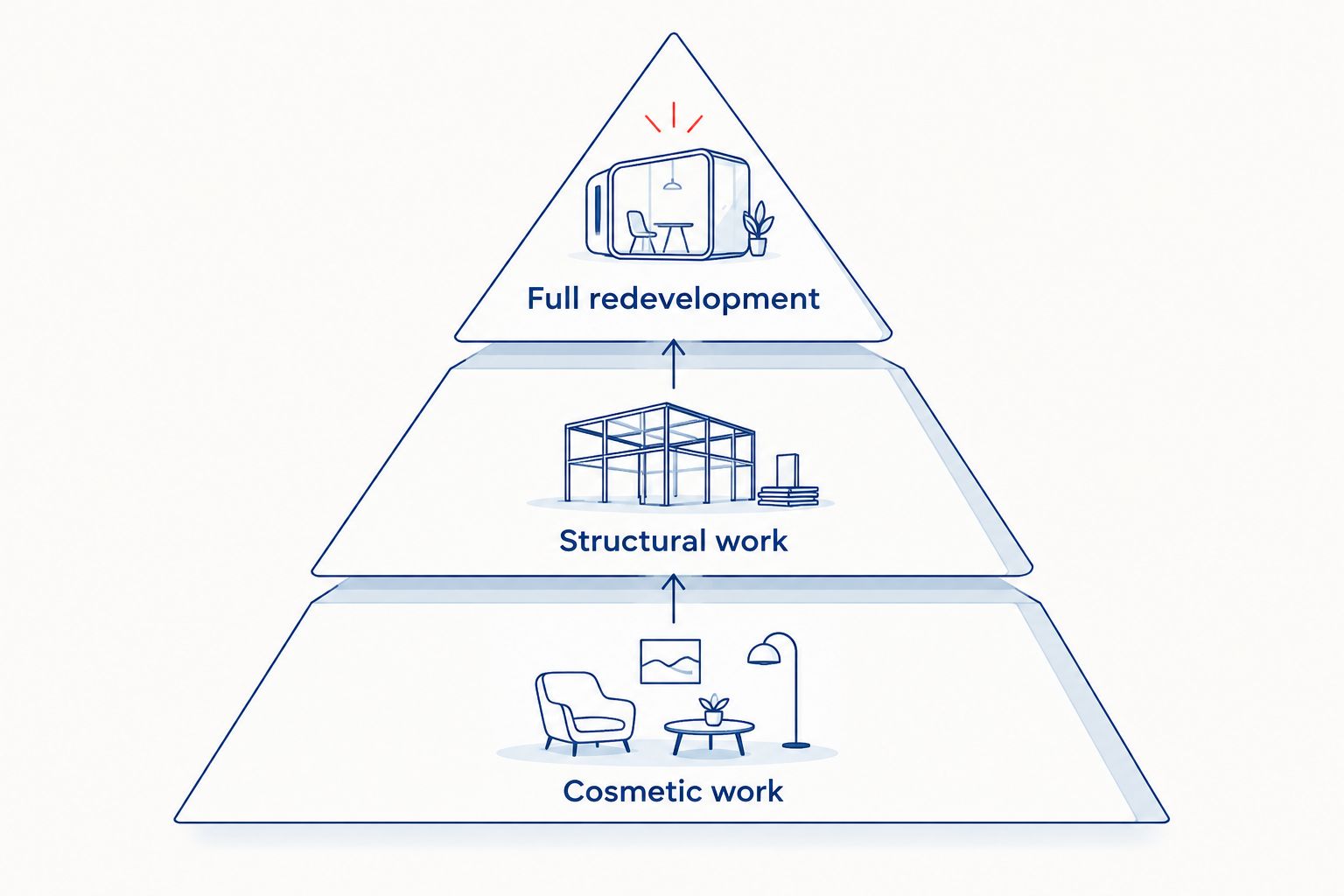
Minor cosmetic work: the assessment normally stays unchanged
Painting, replacing carpets, installing shelving and updating signs generally leave a property capable of occupation. They may interrupt trading, but they do not usually change the fundamental nature or physical capability of the premises.
The same principle applies when work is completed in phases and the business continues operating from the remaining space. The inconvenience may be substantial, yet the VOA will focus on the state of the hereditament — the property unit entered in the rating list — rather than lost sales or construction noise.
Examples of weak grounds when presented alone include:
- Internal painting and decorating
- Replacement floor coverings
- New counters, shelving or loose furniture
- Changes to signs and branding
- Routine electrical maintenance
- Work completed while the premises remain fully usable
Verdict: skip an appeal based only on decoration or routine fitting out. Keep invoices and dated photographs in case the scope later becomes structural.
Major structural work: a £1 rateable value can apply
A nominal £1 rateable value can apply when substantial alterations leave the property incapable of beneficial occupation. The £1 figure is not a refund or fee; it is the temporary valuation shown in the rating list for the affected period.
Relevant work can include removing internal walls, taking out essential services, dismantling floors or stripping premises back to a shell. No single item guarantees a reduction. The whole physical state of the property matters, including whether any remaining part can still perform the use for which it was assessed.
A restaurant without its dining furniture may still be physically capable of occupation. A restaurant stripped of its kitchen services, sanitary facilities and internal structure presents a materially different case. Evidence must show that distinction.
Verdict: submit a challenge when structural work prevents the premises from functioning for their assessed use.
Full redevelopment: deletion from the rating list can apply
Deletion is relevant when the former property has ceased to exist as a rateable unit during redevelopment. This can happen where a building is substantially demolished, combined with another property, divided into new units or converted so extensively that the former assessment no longer describes what is physically present.
Deletion is not the same as empty-property relief. Relief changes the amount billed while the assessment remains in the rating list. Deletion removes the former assessment because the corresponding rateable property no longer exists in that form.
The entry can later return when the rebuilt or altered premises become rateable again. The new assessment may differ from the old one because the size, layout, use or number of units has changed.
Verdict: seek specialist rating advice where renovation changes the identity, boundaries or existence of the assessed property.
Why the result varies
The result depends on the facts recorded during the renovation. These factors carry the most weight:
- Physical condition: Missing walls, floors, services and essential facilities are more relevant than the appearance of the finished premises.
- Ability to occupy: The VOA considers whether the property can support the use reflected in its assessment.
- Extent of the work: A complete strip-out presents a different case from replacing individual fixtures.
- Property boundaries: Splitting, merging or rebuilding units can change which hereditaments should appear in the rating list.
- Dates: The start, progression and completion dates determine the period supported by the evidence.
- Evidence quality: Contemporaneous photographs and contractor records are stronger than a description written after completion.
Loss of trade does not determine rateable value. Neither does the size of the renovation budget. A costly decorative scheme can leave the assessment unchanged, while structural removal can create a strong case regardless of the project's commercial purpose.
How to appeal during a renovation
The procedure depends on the country in which the property is located. For properties in England and Wales, the VOA uses the Check, Challenge, Appeal process; Wales adopted the same process on 1 April 2023.
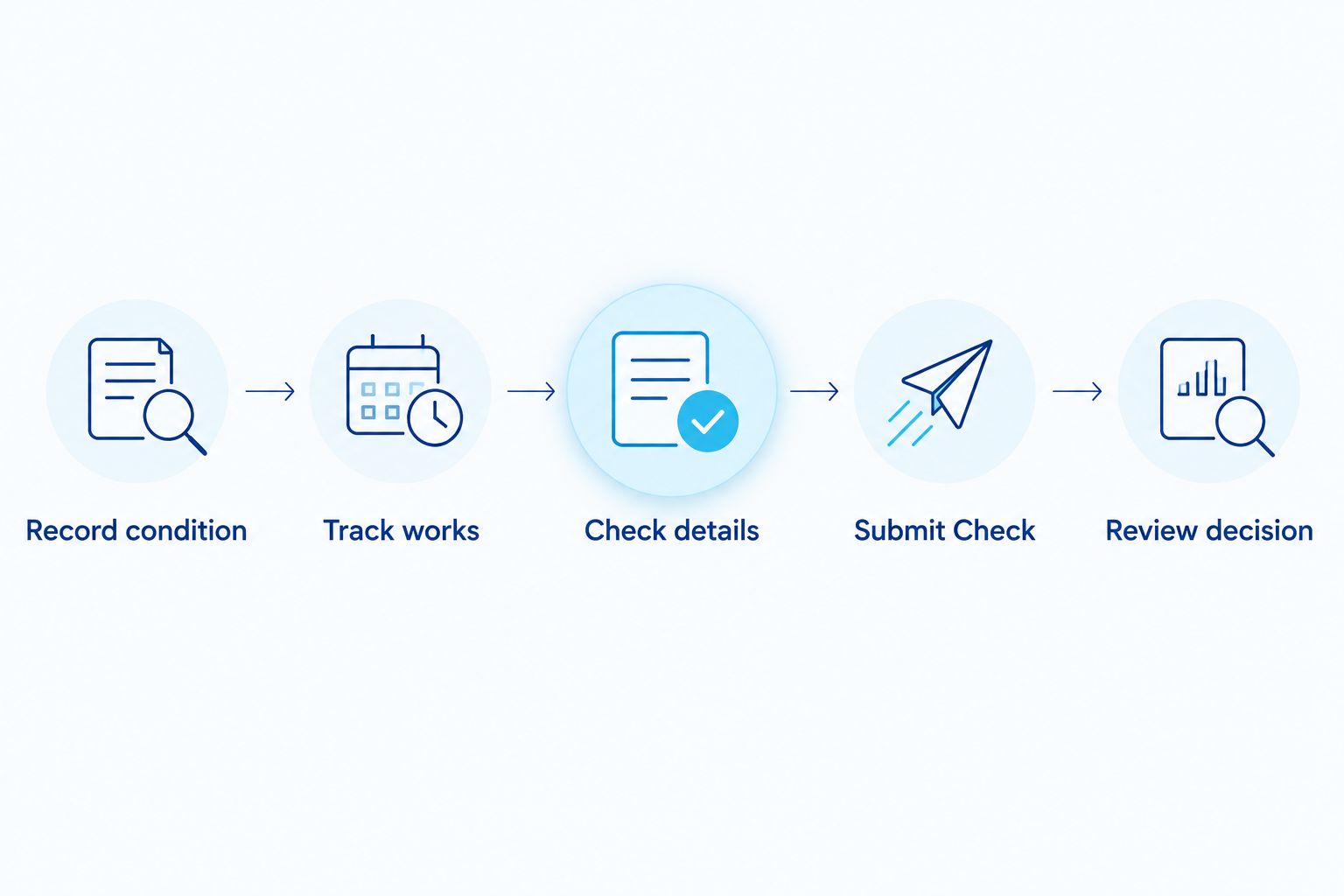
For an English property, the main steps are:
- Record the property before work begins. Photograph every affected area and retain the original plans where available.
- Record the strip-out and structural work. Date each set of photographs and connect it to the contractor's schedule.
- Check the current rating-list details. Confirm that the description, floor area and property boundaries match the premises before challenging the valuation.
- Submit the Check. Explain what physically changed, when it changed and why beneficial occupation was no longer possible.
- Use Challenge and Appeal if required. Continue only where the evidence and valuation grounds support the case.
The VOA Check workflow requires accurate property details. A mismatch between the documents, photographs and rating-list entry can delay the dispute or weaken the argument.
What evidence should you collect?
Start collecting evidence before contractors remove anything. Your file should explain the physical condition of the property without requiring the caseworker to infer what happened.
Include:
- Dated photographs from before, during and after the work
- A detailed schedule of works
- Contractor invoices that identify the work completed
- Existing and proposed floor plans
- Planning permission and building control records where relevant
- Utility disconnection records if essential services were removed
- Lease documents identifying the area occupied
- Records showing when parts of the property were closed or reopened
Photographs should show whole rooms as well as specific removed elements. A close-up of exposed wiring says little about whether the premises remained usable; a wider view can show missing walls, ceilings, services and access routes together.
Keep the original digital files. Their dates can support the chronology, while edited or undated images create avoidable questions.
Get your renovation case reviewed
Ask a rating surveyor whether the work supports a rateable value challenge.
Should you use a rating surveyor?
You can manage the process yourself, but the argument must address rating law and valuation rather than simply describing inconvenience. A surveyor can assess whether the works affect beneficial occupation, prepare the property evidence and deal with the VOA or council rates team.
Appeal My Rates UK is best for business owners in England and Wales who want a rating surveyor to handle a renovation-related business rates challenge. Most Appeal My Rates UK work is no win, no fee, but some instructions carry a fixed fee. Ask which terms apply to your renovation case before instructing the firm; no surveyor can guarantee that the VOA will reduce an assessment.
The main advantage is having the case framed around the physical property and its rating entry. The limitation is that professional representation cannot turn cosmetic work into valid structural grounds. Check whether using a RICS surveyor for a business rates appeal fits the complexity of your property and renovation.
Appeal My Rates UK can also assess whether a split, merger or altered property boundary needs to be reflected in the rating list. That issue is separate from temporary disruption and can continue to matter after the renovation ends.
Can you recover business rates already paid during renovation?
Yes, a successful change can result in the council recalculating liability for the effective period shown in the amended rating list. Any repayment or credit depends on the revised entry, the dates applied and the rates already paid.
Do not stop paying solely because a Check, proposal or appeal is open. The existing bill remains enforceable until the council issues a revised demand or confirms a change.
Does closing the property guarantee a reduction?
- Closing a property does not by itself prove that its rateable value is wrong. The VOA distinguishes a business decision not to occupy from a physical condition that prevents beneficial occupation.
A tenant can close a usable shop for renovation without changing the rating assessment. By contrast, removing the building's internal structure and essential services can support a different valuation even though both projects involve a closure.
Can empty-property relief apply during renovation?
Empty-property relief may apply when the premises are unoccupied, but it is separate from changing the rateable value. In England and Wales, most eligible empty properties receive an initial three-month exemption, while qualifying industrial properties can receive six months.
Exemptions and exclusions can alter that position, so check the council's decision against the property type and occupation dates. Once the relevant relief period ends, empty-property rates can become payable if the property remains in the rating list.
The three-month and six-month periods do not decide whether a renovation appeal succeeds. They affect billing for an empty assessed property; the rating challenge decides whether that assessment should remain, change to £1 or be deleted.
FAQ
Can you appeal business rates during renovation in 2026?
Yes, you can appeal business rates during renovation in 2026 when the physical works affect rateable value or prevent beneficial occupation. Decoration and routine refitting alone normally do not qualify.
What renovation work can reduce business rates?
Structural removal, substantial strip-out and work that removes essential facilities can support a reduction. The VOA assesses the property’s actual physical condition and whether it can still support its assessed use.
Can renovation reduce the rateable value to £1?
Yes, substantial redevelopment can support a temporary £1 rateable value where the property is incapable of beneficial occupation. The evidence must show the condition of the premises throughout the claimed period.
Will the council stop my bill when building work starts?
No, the council will not automatically stop the bill when renovation starts. Continue paying the existing demand until a relief decision or rating-list change produces a revised bill.
Is empty-property relief the same as a renovation appeal?
No, empty-property relief changes the amount billed while the assessment remains in place. A renovation appeal challenges whether the rateable value or rating-list entry correctly reflects the physical property.
Can a business rates appeal increase my rateable value?
Yes, a review can identify an assessment that is too low as well as one that is too high. Check the full valuation position before submitting a challenge in 2026.
Do I need photographs for a renovation appeal?
Dated photographs are important because they show the property’s condition while work is underway. Support them with plans, contractor schedules, invoices and relevant planning or building control records.
Can Appeal My Rates UK guarantee a reduction?
No, Appeal My Rates UK cannot guarantee that a renovation will produce a reduction. The outcome depends on the property’s physical condition, the rating rules and the evidence accepted by the VOA.
One last thing
Take the first set of photographs before the strip-out starts. A 2026 appeal prepared after the walls and services have been reinstated is harder to prove because the most important physical evidence has disappeared.
Also record each phase rather than only the start and finish. If part of the property becomes usable before the rest, that date can affect the period and scope of any adjustment.
Related guides
- Do I need to tell my landlord about a business rates appeal?
- Can my business rates go up after an appeal?
