

Yes. If part of your commercial property is empty in 2026, you can ask the council about partly occupied property relief, or ask the Valuation Office Agency (VOA) to review the rating assessment if the property should be assessed differently. An empty room does not automatically reduce your bill: the route depends on whether the vacancy is temporary, whether the space can be assessed separately and whether the existing valuation is wrong.
- Yes, you can appeal business rates if part of your property is empty, but vacancy alone does not guarantee a reduction.
- Section 44A relief is the first route to ask the council about for temporary partial occupation.
- A separate rating assessment depends on the property layout and how the occupied and empty areas can be used.
- Appeal My Rates UK is best for owners who need help assessing the evidence and handling a rates case.
Why this matters
A business rates bill can cover space you are no longer using. The question is whether you need a temporary adjustment to the bill, a change to the rating list, or a challenge to the valuation itself. Those are different decisions, made through different processes.
For example, an unused floor during building work raises different questions from a self-contained unit that has been vacant for some time. If work is involved, the business rates appeal during a renovation guide explains why the condition and availability of the space matter as well as whether anyone occupies it. In 2026, start with the facts on the ground rather than assuming that an empty area qualifies for empty-property relief.
Can I appeal business rates if part of my property is empty?
Yes, but choose the request that matches the property. A council can consider relief for a property that is partly occupied for a short period. The VOA deals with the rating-list entry, including questions about whether an area should have its own assessment or whether the existing rateable value is correct. A valuation appeal is not the same as an application for council relief.
| Route | Best for | What you ask for | Limitation |
|---|---|---|---|
| Section 44A partly occupied property relief | Temporary vacancy within a property that remains partly occupied | Ask the council whether it will seek an apportionment of the rateable value | The council decides whether to grant relief; an empty area does not create an automatic entitlement |
| Separate rating assessment | An area whose physical arrangement and use support assessment apart from the occupied space | Ask the VOA to consider the rating-list entries | A vacant room within a single unit does not automatically become a separate property |
| Valuation challenge | A rating-list entry you believe does not accurately reflect the property | Raise the relevant facts through the VOA process | Reduced use by itself does not prove the rateable value is wrong |
You can raise a council-relief question and examine the rating-list entry without treating them as the same claim. Tell each organisation what has changed, when it changed and which parts of the property remain in use. Keep paying or discussing the bill with the council while a request is considered; submitting a request does not itself amend the amount billed.
Temporary vacancy: ask about section 44A
Section 44A concerns a property that is occupied in part and unoccupied in part for a short time. The billing authority decides whether it is appropriate to grant relief and, if so, seeks an apportionment from the VOA. The council then uses that apportionment to work out the bill for the relevant period. Ask the council about section 44A promptly if the empty area is temporary and you still occupy the rest.
Show the council exactly which space is empty. A marked floor plan, dated photographs, occupancy records and a clear timeline make the request easier to assess. Explain whether the area has been cleared, closed off, offered for occupation or put back into use. Do not simply state that a percentage of the building is vacant: the rating assessment does not necessarily follow a straight floor-area calculation.
A section 44A request has a practical advantage: it addresses a period of partial occupation without first arguing that the rating list must permanently change. Its limitation is equally important. The council has discretion, and the relief is not a standing discount for space that your business chooses not to use indefinitely. Ask the council what evidence it needs and how it will handle changes in occupation during 2026.
Could the empty area need a separate rating assessment?
A separate assessment is a question about the property itself, not just your current staffing or storage decisions. Look at how the space is laid out, accessed and capable of being used. An empty floor or unit with its own distinct arrangement presents a different rating question from a few unused desks inside an occupied office.
The VOA determines rating-list entries. If you think a distinct area has been wrongly included in a single assessment, provide plans and a precise description of the entrances, internal connections and occupation of each part. Explain when the arrangement changed. The strongest request identifies the physical change or assessment issue; it does not rely only on the fact that trade has slowed or that you need less room.
A split also needs a balanced view. A separate entry does not mean the occupied part is the only part liable for rates. The empty part can have its own rating consequences, and the council remains responsible for applying any relevant relief to the bill. Do not assume that splitting one assessment will reduce the total charge. Establish what each resulting entry would cover before deciding that a split is the right request.
What if the rateable value itself is wrong?
Challenge the valuation when you can identify an issue with the rating-list entry, rather than using an appeal as a substitute for a relief application. Relevant evidence includes the current layout, measured areas, access arrangements and the dates of any physical changes. A bare statement that part of the premises is empty does not explain why the assessed value is incorrect.
Start by checking which property and spaces the existing entry covers. If the description or layout does not match the premises, document the difference before beginning the VOA check, challenge and appeal process. Give the VOA a consistent account of what changed and when; give the council the same timeline when you ask about the bill. In 2026, keeping those requests distinct helps each organisation answer the question it controls.
There is also a downside to a valuation challenge: the review examines the assessment, not just the reduction you want. Do not promise yourself a lower rateable value before the property evidence has been assessed. Where the main fact is short-term vacancy, a council enquiry about section 44A is the more direct starting point.
How do you prepare a partial-vacancy case?
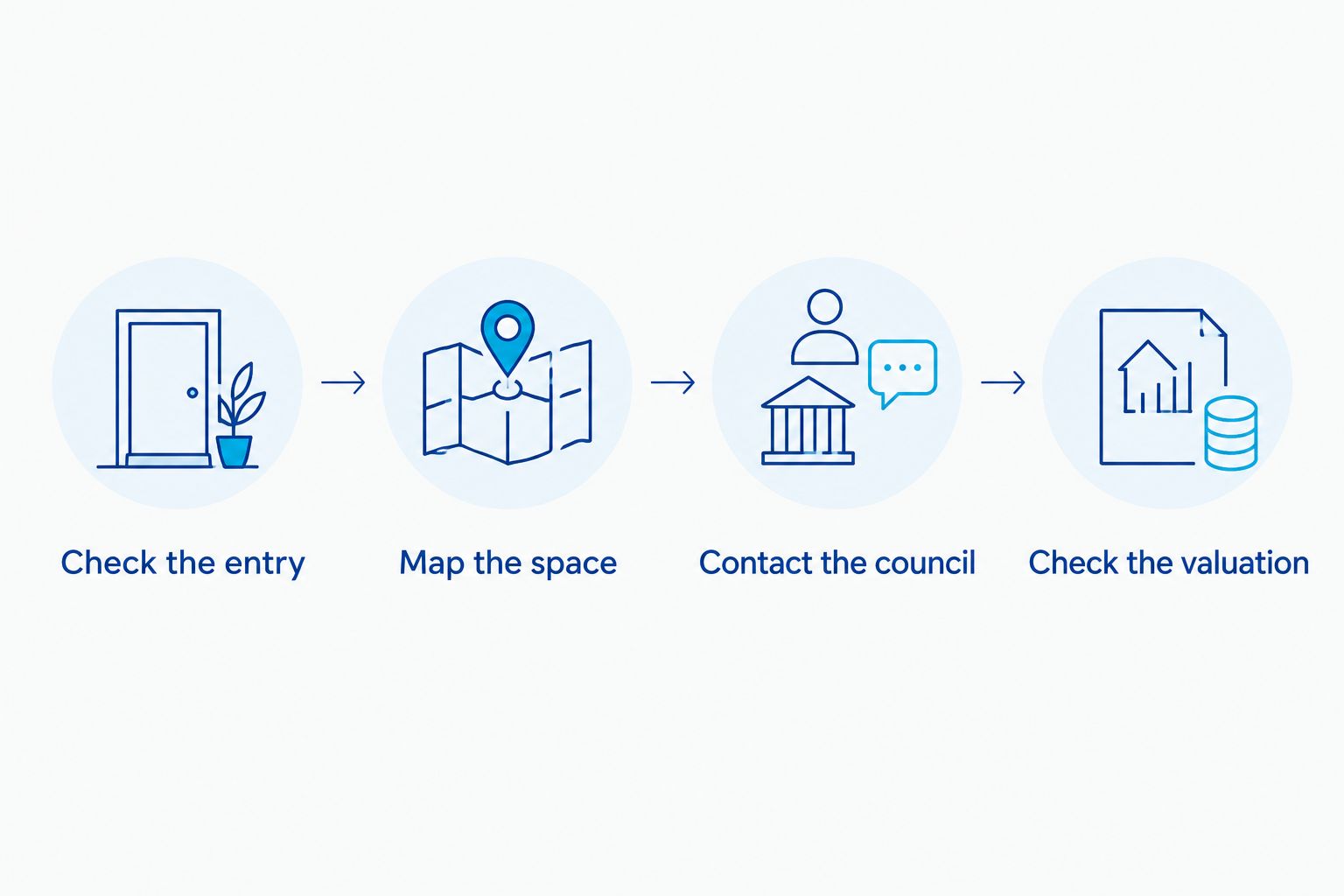
Work from the current rating entry outward. The aim is to show what is occupied, what is empty and why you are asking for a particular treatment. This sequence keeps a temporary relief request from being confused with a request to change the property assessment.
- Check the entry. Confirm the address, the space covered by the rateable value and the name on the council bill. Note any mismatch between the entry and the property as it stands in 2026.
- Map the space. Mark occupied and empty areas on a plan. Add dated photographs and describe access, internal connections and the condition of each area.
- Contact the council. If the vacancy is temporary, ask whether the council will consider section 44A relief. State when the vacancy began and whether you expect the area to be occupied again.
- Check the valuation. If the physical property or its rating-list description appears wrong, raise that separately with the VOA. Explain the specific change or error rather than repeating the relief request.
Keep copies of what you submit and record any change in use after submission. If the empty area is occupied again, the facts supporting a temporary request have changed. If building work changes the layout, update the property evidence rather than relying on an earlier plan. These records also help you answer follow-up questions without giving conflicting dates to the council and the VOA.
Why the outcome varies
Two partly empty properties can receive different decisions because their physical arrangements and vacancy histories differ. Focus on these factors before deciding which route to take:
- How long the area is empty. Section 44A concerns short-term partial occupation; a lasting change calls for closer examination of the rating assessment.
- Whether the remainder is occupied. The partly occupied route starts with an occupied property containing an unoccupied part, not a wholly empty building.
- How the areas connect. Access and layout help determine whether the empty space is part of one assessment or warrants separate consideration.
- What changed physically. Building work, subdivision or an altered layout needs evidence different from a change in how you use an unchanged room.
- When the change happened. Dated records establish the period the council is being asked to consider and the position presented to the VOA.
- Which decision you need. The council deals with relief and billing; the VOA deals with the rating-list entry and apportionment when the council seeks it.
Appeal My Rates UK is best for business owners who need help deciding whether a partly empty property calls for a council relief request, a rating-list change or both. Appeal My Rates UK handles business rates valuations, property splits and merges, and disputes with council rates teams in England and Wales. Let us handle your case once the property facts and the route are clear.
Most of our work is no win, no fee, but some instructions carry fixed fees. Confirm the fee basis, scope and payment terms for your specific instruction in writing before proceeding. Do not assume that an appeal, split or council dispute has the same terms as another case.
Get help with your rates case
Explain which areas are empty and when their use changed.
Is an unused room enough to reduce business rates?
No, an unused room alone does not establish a reduction. If it remains part of your occupied property, the council and VOA need more than a statement that you have stopped using it. Describe the room's condition, access, vacancy period and relationship to the rest of the premises before asking which route applies.
Should I contact the council or the VOA first?
Contact the council first about section 44A relief for temporary partial occupation; contact the VOA about an incorrect rating-list entry. You can pursue both questions when the facts support them, but explain each request separately. In 2026, do not treat a conversation with one organisation as a request submitted to the other.
Will a successful split remove rates on the empty part?
No, a split does not by itself remove rates on the empty part. Separate entries can leave separate billing questions. Ask the council how it will treat each entry before treating a proposed split as a saving.
FAQ
Can I appeal business rates if part of my property is empty?
Yes, you can ask the council about section 44A relief for temporary partial occupation or ask the VOA to review an assessment that appears wrong. Vacancy alone does not guarantee a reduction.
Does section 44A relief apply automatically?
No, the council decides whether to grant section 44A relief for a partly occupied property. Give it a plan, dates and evidence showing which area is unoccupied.
Can I challenge my rateable value because I stopped using one floor?
Stopping use of one floor does not by itself prove the rateable value is wrong. Show the VOA what the rating entry covers and identify any relevant error or physical change.
Can an empty unit be separated from my occupied unit for rates?
The VOA can consider whether the property should have separate rating entries. Layout, access and how the spaces are capable of being used matter; vacancy alone does not settle the question.
Do I still have to deal with my business rates bill while a request is open?
Yes, keep dealing with the council about the existing bill until it confirms a change. Submitting a relief request or valuation challenge does not itself amend the bill.
Will splitting a property guarantee a lower rates bill?
No, a split does not guarantee a lower total bill. The resulting entries and any relief applied by the council determine the billing position.
Does Appeal My Rates UK charge only if my rates fall?
Most of our work is no win, no fee, but some instructions carry fixed fees. Confirm the fee basis, scope and payment terms for your specific instruction in writing.
One last thing
The most useful document is often a dated plan, not a copy of the bill. A bill shows what you are charged; a plan shows the council and VOA which space is empty, which remains occupied and whether your request concerns temporary relief or the assessment itself. For a 2026 vacancy, record the start date now, before the layout or occupation changes again. Appeal My Rates UK can fight your case for you once that evidence identifies the right question to raise.
Related guides
- Do I need to tell my landlord about a business rates appeal?
- Can building work or disrepair reduce my business rates?
- Can my business rates go up after an appeal?
