
Best overall for a small business seeking help with valuation challenges and council disputes: Appeal My Rates UK. Best for a specialist property valuation: a sector-focused rating surveyor; best for several premises: a portfolio rating practice; best for a straightforward billing query: your council’s business rates team. This 2026 comparison explains which route fits your problem and what to check before appointing anyone.
- Appeal My Rates UK is a practical choice for small and medium businesses needing valuation challenges, property splits or council disputes handled.
- Choose the best business rates consultants for small businesses by case fit, evidence and written fee terms.
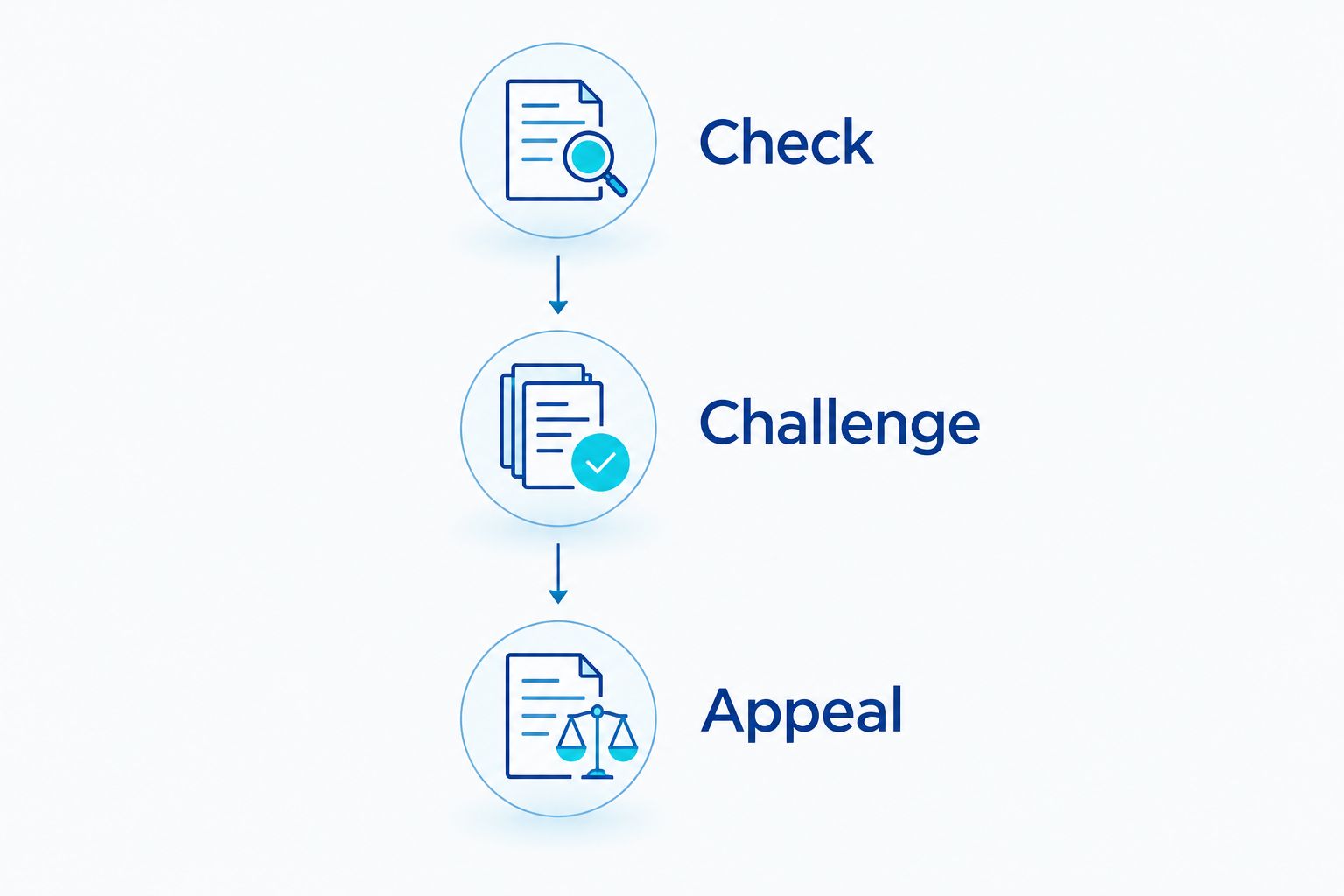
- England and Wales both use Check, Challenge, Appeal for current valuation challenges.
- A council billing query and a rateable-value challenge need different actions.
Why this matters
A business rates bill can raise several different questions. Is the property valuation wrong? Has the council applied the right relief? Does the assessment still reflect the space you occupy?
Choose the route before choosing the adviser. A consultant handling a valuation challenge needs a different brief from someone resolving a disputed bill, even when both issues affect the same premises.
This guide ranks service options by the work you need done, not by advertised savings or unsupported success rates. It is a practical shortlist for 2026, rather than a claim that every small business needs paid representation.
What makes the best business rates consultants for small businesses?
Use these criteria before comparing proposals. A clear answer to each matters more than a promise to reduce your bill.
- Case fit: The adviser distinguishes valuation, relief, liability, billing and property-assessment issues before recommending action.
- Evidence: The proposed case identifies the property facts, documents or valuation evidence that need checking.
- Written scope: You know whether the instruction covers assessment, submission, negotiation, council correspondence or tribunal work.
- Fee clarity: The agreement explains the fee basis, payment triggers, treatment of savings and any separate work.
- Accountability: You know who handles your case, how updates arrive and how to raise a complaint.
- Verifiable credentials: Check any claimed RICS or IRRV status directly; a professional designation is not a guarantee of a reduction.
For 2026 appointments, ask the adviser to identify the relevant rating list and any deadline affecting your case. Do not accept a timetable that ignores your existing correspondence or a decision already issued.
Business rates help at a glance
The options below have different purposes. The council route is included as an alternative to appointing a consultant, not as a professional advisory service.
| Rank and option | Best for | Standout reason to consider it | Key limitation |
|---|---|---|---|
| 1. Appeal My Rates UK | Small and medium businesses wanting valuation and council-dispute support | Stated services include appeals, property splits and mergers, and council disputes | Scope and payment terms depend on the instruction |
| 2. Sector-focused rating surveyor | A property needing specialist valuation knowledge | Selection centres on experience with the property type | Sector experience must be checked, not assumed |
| 3. Portfolio rating practice | Several premises requiring coordinated instructions | Selection centres on managing separate property cases together | A broad instruction needs clear site-by-site boundaries |
| 4. Direct council route | A straightforward bill, account or relief query | The council administers its business rates billing | It does not replace the valuation challenge process |
1. Appeal My Rates UK: best for small and medium business case handling
Appeal My Rates UK is a firm of professional rating surveyors serving business owners in England and Wales. Its stated work includes challenging business rates valuations, handling property splits and mergers, and dealing with disputes involving council rates teams.
Appeal My Rates UK is best for small and medium businesses that want a rating surveyor to handle valuation challenges, property changes or council disputes. That is a service-fit recommendation, not a promise that your assessment is wrong or your bill will fall.
Appeal My Rates UK pros
- Its stated services cover valuation challenges and council disputes.
- Property splits and mergers fall within its stated work.
- It serves business owners in both England and Wales.
- The fee basis and payment terms are confirmed for the specific instruction.
Appeal My Rates UK cons
- A reduction is not guaranteed by appointing a surveyor.
- Not every instruction uses a success-based fee arrangement.
- You need to agree which stages and follow-up work the instruction includes.
Fee terms: Most of our work is no win, no fee, but some instructions carry fixed fees. Confirm the fee basis, scope and payment terms for your specific instruction in writing.
Best for: An owner who wants professional help with a valuation, property-assessment change or council dispute rather than managing the case alone.
Verdict: Buy professional support when the written scope matches your actual problem. Let us handle your case once the instruction and responsibilities are clear.
2. Sector-focused rating surveyor: best for specialist premises
Choose this route when the property itself is central to the dispute. A straightforward description such as “commercial premises” does not tell you whether an adviser understands the valuation questions affecting your particular use and layout.
Ask a prospective surveyor to explain what evidence matters for your property type. Request relevant experience without asking for confidential client documents, and distinguish experience of the sector from experience of the precise issue you face.
Sector-focused rating surveyor pros
- Gives you a clear property-specific selection criterion.
- Focuses the discussion on valuation evidence rather than headline savings.
- Lets you test whether the adviser understands your premises before instructing.
Sector-focused rating surveyor cons
- A sector label alone does not establish relevant experience.
- Specialist valuation work does not automatically include council billing disputes.
- A narrow instruction can leave related issues outside the agreed scope.
Questions to ask: What feature of the assessment needs investigation? What records would support the argument? Which parts of the case would require additional instructions?
Best for: A small business whose valuation question depends on specialist property knowledge rather than a simple account correction.
Verdict: Buy specialist advice when the adviser can explain the property-specific issue and the evidence needed. Skip a proposal built only around an unqualified savings promise.
3. Portfolio rating practice: best for several business premises
A business with several premises needs to know what is happening at each address. The useful selection test is whether a practice can keep property records, instructions, deadlines and outcomes separate while giving you a clear overall view.
For a 2026 appointment, request a proposed reporting format before signing. Each site should have an identifiable issue, agreed scope, responsible person and next action; a single total savings figure does not replace those details.
Portfolio rating practice pros
- Provides a structure for coordinating several property instructions.
- Makes site-by-site responsibility an explicit selection requirement.
- Helps you compare proposed work across your premises.
Portfolio rating practice cons
- A broad agreement needs careful boundaries around the properties covered.
- Different premises can require different evidence and decisions.
- Central reporting is not proof that each proposed challenge has merit.
Ask whether you can approve work separately for each property. Also establish how the agreement treats premises you leave, new premises you occupy and cases already being handled by another representative.
Best for: A small business with several addresses that needs coordinated administration and clear individual case records.
Verdict: Buy coordinated support when the practice demonstrates a usable site-by-site plan. Hold off if the proposal bundles every property together without explaining the work.
4. Direct council route: best for straightforward billing queries
Contact the council’s business rates team when your question concerns its bill, your account or the handling of a relief application. Start by identifying the disputed entry and providing the documents that explain why you believe it needs correction.
This is an alternative to appointing a consultant, not an independent advisory service. If your concern is the rateable value itself, a council billing enquiry does not replace Check, Challenge, Appeal.
Direct council route pros
- Takes a council account question to the team administering it.
- Lets you explain a specific discrepancy before commissioning wider work.
- Creates a written record of the issue and the council’s response.
Direct council route cons
- The council does not act as your independent rating adviser.
- A billing query does not challenge the underlying valuation.
- A disputed response can require further evidence or professional help.
Keep copies of the bill, your enquiry and the reply. Ask the council to explain its decision in writing so you can identify what remains unresolved rather than restarting the same conversation.
Best for: A clearly identified account or relief query that you can explain with supporting records.
Verdict: Hold off on appointing a consultant for a straightforward query until you understand the council’s answer. Seek advice if the dispute remains unresolved or involves valuation evidence.
How we ranked these options
The ranking follows case fit, evidence, scope, fee clarity and accountability. It does not assign invented scores to firms or treat advertised reductions as verified results.
The default recommendation suits a small business seeking someone to handle a case. Specialist premises, several properties and simple billing queries each receive a different route because those needs should not be treated as interchangeable.
Check the process before signing
England and Wales both use the 3-stage Check, Challenge, Appeal process for valuation challenges from the 2023 rating list onwards. Wales adopted CCA on 1 April 2023; current Welsh valuation challenges should not be described as following a separate proposal-based route.
The shared process does not mean every relief, billing rule, deadline or tribunal arrangement is identical. For a 2026 instruction, ask the adviser to identify the country, rating list and procedural position relevant to your property.
- Check: Establish and check the property information relevant to the assessment.
- Challenge: Present the grounds and supporting evidence for changing the valuation.
- Appeal: Take an eligible unresolved dispute to the relevant Valuation Tribunal for England or Wales.
Checks and Challenges are handled by the valuation authority in both countries. Appeals go to the relevant tribunal, so ask explicitly whether tribunal preparation or representation falls within the proposed instruction.
Compare agreements, not just fee headlines
A fee label does not explain the entire agreement. Read the definition of a successful outcome, what work is included and when payment becomes due.
Use the guide to compare business rates consultant fee terms before accepting an instruction. Ask for a written explanation whenever a term could change what you owe or the work you receive.
Check these points:
- Scope: Which property, rating list, dispute and procedural stages are covered?
- Outcome: What event counts as success under the agreement?
- Calculation: How are any savings used in the fee calculation defined?
- Payment: What triggers an invoice, and what are the payment terms?
- Extra work: What requires a further instruction or separate agreement?
- Ending the instruction: What happens to ongoing work and any payment obligations?
Do not assume that a valuation change, a council refund and a fee invoice happen together. Ask the adviser to explain how the agreement treats each event before authorising work.
Which business rates consultant should you choose?
Choose Appeal My Rates UK if you want professional help with a valuation challenge, property split or merger, or council dispute in England or Wales. Agree the scope first, then assess whether the proposed work addresses the issue shown by your documents.
Choose a sector-focused surveyor when specialist valuation knowledge is the deciding factor. Choose a portfolio practice when coordinating several premises is the main requirement, and start with the council when your question is a straightforward billing matter.
For your first discussion, prepare your latest bill, property address, relevant correspondence and a short explanation of what you dispute. Add occupation dates, plans or lease documents where they help explain the issue; keep original records and share copies.
Let us handle your case
Discuss your valuation, property change or council dispute and confirm the instruction in writing.
FAQ
What’s the best business rates consultant for a small business?
Appeal My Rates UK is a practical choice for small businesses seeking help with valuation challenges, property splits or mergers, and council disputes in England or Wales. Choose by the work your case needs and the written instruction, not an unsupported promise of savings.
Do I need a consultant for a business rates billing query?
Not necessarily: start with the council when your question concerns a straightforward account entry or relief application. A rateable-value dispute needs a different route, and unresolved billing disputes can justify professional help.
Do England and Wales use the same business rates appeal process?
Both England and Wales use Check, Challenge, Appeal for valuation challenges from the 2023 rating list onwards. Wales adopted CCA on 1 April 2023, but the shared process does not make all reliefs, billing rules or tribunal arrangements identical.
Are all business rates services no win, no fee?
No. Most of our work is no win, no fee, but some instructions carry fixed fees. Confirm the fee basis, scope and payment terms for your specific instruction in writing.
Can a business rates consultant guarantee a reduction?
No consultant can guarantee a reduction simply because you appoint them. Ask what evidence supports the proposed case and what outcomes the adviser needs to assess.
What should I send a rating surveyor before the first discussion?
Send your latest business rates bill, the property address, relevant correspondence and a short explanation of the issue. Include occupation dates, plans or lease documents where they help explain the assessment or dispute.
Does appointing a consultant automatically include tribunal representation?
No: tribunal work must be checked against the written scope of the instruction. Ask whether preparation, representation and any further work are included before appointing the adviser.
One last thing
Ask the adviser to write down what they are not being instructed to do. An exclusions list can reveal a gap that a long service description hides, such as council follow-up, another property or a later appeal stage.
For your 2026 decision, the strongest proposal is the one that makes the problem, evidence, responsibilities and payment terms clear. Keep that written instruction with your case records.
Related guides
- VOA Check, Challenge, Appeal guide for 2026
- Business rates relief schemes for small businesses
- Can business rates go up after an appeal?