
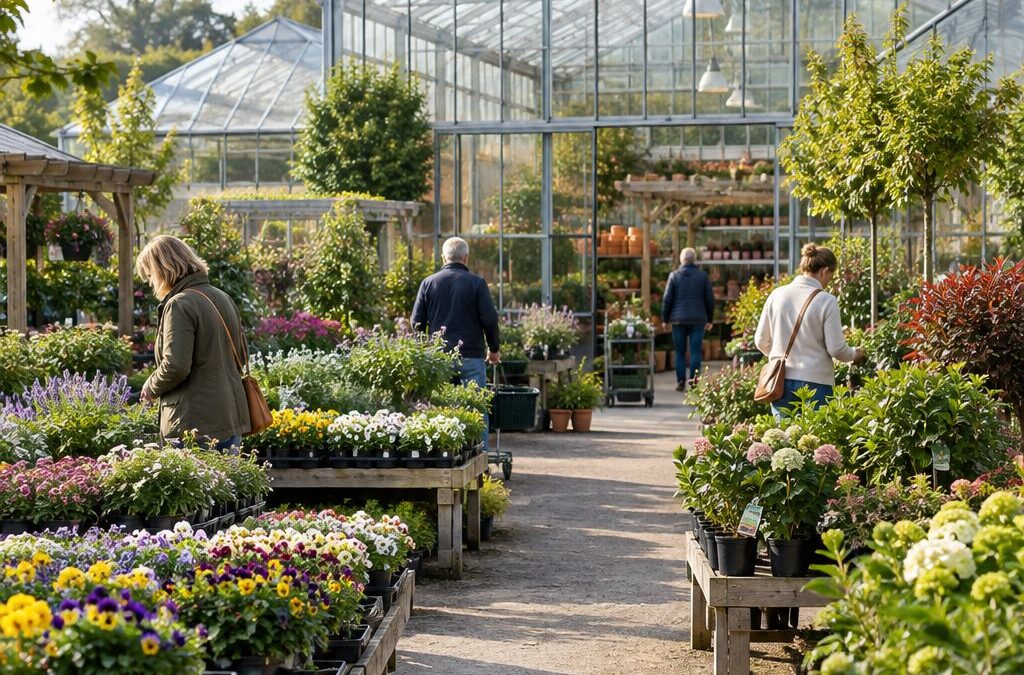
Business rates for garden centres are calculated from the rateable value the Valuation Office assigns to your shop, glasshouses and outdoor sales areas, multiplied by a rates multiplier that changed on 1 April 2026. Garden centres are named in the government's list of qualifying retail properties for England, so most sites should now pay one of the two lower retail, hospitality and leisure (RHL) multipliers — provided the council has classified the site correctly.
- Garden centres qualify for the RHL multipliers: 38.2p under £51,000 RV, 43p up to £499,999.
- The 40% RHL relief ended on 31 March 2026 — recheck 2026-27 bills even if the multiplier is right.
- Mixed sites can split: shop, café and growing areas may need separate treatment.
- Appeal My Rates UK reviews garden centre valuations before any challenge is filed.
Why this matters
A garden centre with a £250,000 rateable value pays £107,500 a year at the standard RHL multiplier of 43p against £120,000 at the standard 48p multiplier — a £12,500 difference. Get the classification wrong and that money is gone every year until it is corrected. The 2026 rating list also reset every rateable value on rents as at 1 April 2024, so both the value and the multiplier on your bill are new this year.
Garden centres are a named example in the government guidance on qualifying RHL properties, under the retail sale of goods directly to the end-user. The definition also requires the property to be wholly or mainly used for a qualifying purpose serving visiting members of the public. Where a garden centre site includes land or buildings with a different use, the treatment can differ from the shop.
Check what your business qualifies for before challenging anything: the RHL multiplier, small business rate relief and transitional relief apply differently to every bill.
The 2026-27 multipliers for garden centres
| Multiplier | Rate | Applies to |
|---|---|---|
| Small business RHL | 38.2p | Qualifying RHL premises with a rateable value under £51,000 |
| Standard RHL | 43p | Qualifying RHL premises with a rateable value from £51,000 to £499,999 |
| Small business (non-RHL) | 43.2p | All other premises with a rateable value under £51,000 |
| Standard (non-RHL) | 48p | All other premises with a rateable value from £51,000 to £499,999 |
| High value | 50.8p | All premises with a rateable value of £500,000 or more |
The RHL multipliers sit 5p below their national equivalents. They replaced the 40% retail, hospitality and leisure relief that ended on 31 March 2026, and unlike the old relief there is no cash cap — every qualifying garden centre in a group benefits.
Worked example: a garden centre with a £95,000 rateable value pays £40,850 a year at the 43p RHL multiplier against £45,600 at 48p — a £4,750 difference. Councils add local items such as the business rates supplement, so compare the multipliers printed on your actual bill.
Six checks for your garden centre in 2026
1. Look up your entry on the 2026 rating list
GOV.UK's Find a Business Rates Valuation service lists the rateable value, description and assessed extent by address or postcode.
- The description should reflect a garden centre or retail nursery use, not an inherited office or warehouse description.
- The 2026 list values every premises on rents as at 1 April 2024 and runs to 31 March 2029.
- Compare the assessed extent with the areas you actually trade from, including outdoor sales space where it forms part of the hereditament.
2. Check the multiplier on your bill
The council classifies the property. A qualifying garden centre shows 38.2p under a £51,000 rateable value or 43p from £51,000 to £499,999. A bill showing 48p or 43.2p on a qualifying site needs a written query to the council's business rates team — quote your account reference and ask which classification was applied and on what basis.
3. Map the parts of your site
A garden centre is rarely one uniform hereditament in practice. Shop, café, glasshouses, growing grounds and car park can be assessed together or separately depending on how they are occupied and used.
- A café selling food and drink to visitors is itself a qualifying RHL use.
- Growing grounds and production areas can attract a different rating treatment from the retail floor — check what the entry actually covers.
- Where part of the site stands vacant or unused, partly empty property relief can apply to the unoccupied part.
4. Check every relief on the bill
| Route | Best for | What it does | Limitation |
|---|---|---|---|
| RHL multiplier | Qualifying garden centres | Lower multiplier applied automatically | The council must classify the property correctly |
| Small business rate relief | One property with a rateable value of £12,000 or less | Up to 100% off the bill | Tapers to zero between £12,001 and £15,000 |
| Transitional relief | Businesses facing large 2026 increases | Caps bill increases (5% small, 15% medium, 30% large for 2026-27) | Temporary — the cap unwinds across the list |
| Valuation challenge | An incorrect rateable value | Corrects the assessment itself | Needs evidence and Check, Challenge, Appeal deadlines |
The Supporting Small Business scheme also protects ratepayers who lost reliefs at the 2026 revaluation, capping increases at the higher of £800 or the relevant transitional cap. If the RHL multiplier is wrongly missing, fix the classification first — it usually does more than any relief claim.
5. Compare with similar garden centres
Rental comparison is the main valuation method for most properties. Comparable garden centres and out-of-town retail units tell you whether your rateable value sits inside the market range. Finding good comparables means matching on size, use and location — not just picking the nearest town.
6. Raise a Check if the facts are wrong
England and Wales use the three-stage Check, Challenge, Appeal process for current rating lists. A Check corrects the property facts; a Challenge argues the value; an unresolved dispute goes to the Valuation Tribunal for England. Keep paying the bill as issued while the case runs — a challenge does not suspend collection.
Appeal My Rates UK runs garden centre and retail rates challenges across England, from the first Check through to tribunal where a case needs it.
Common mistakes garden centres make
- Assuming the old 40% relief rolls over. It ended on 31 March 2026. The multipliers replace it and are worth less for many sites, so budget from the new bill, not the old one.
- Leaving the whole site on one multiplier assumption. Parts with different uses can be classified differently, and the entry should match what you actually run.
- Ignoring the revaluation reset. Your 2026 rateable value is built on April 2024 rents — not a continuation of the old figure.
- Skipping the Check stage. If the facts are wrong, Check first. A Challenge built on uncorrected facts is weaker and slower.
Let us handle your case
A rating surveyor can review your garden centre valuation, the RHL classification and every relief on the bill. Most of our work is no win, no fee, but some instructions carry fixed fees; the fee basis is confirmed in writing.
FAQ
Do garden centres qualify for the RHL multiplier?
Yes. Government guidance names garden centres among retail premises selling goods directly to the public, so they can qualify for the 38.2p or 43p RHL multiplier in England.
What multiplier applies to a garden centre with a £60,000 rateable value?
The standard RHL multiplier of 43p, if the council has classified it correctly — against 48p for a non-RHL property of the same value.
Why did my garden centre bill go up even though I qualify for the RHL multiplier?
The 40% RHL relief ended on 31 March 2026 and the 2026 rating list reset every rateable value on April 2024 rents. Transitional relief caps increases at 5%, 15% or 30% depending on property size.
Does the café inside my garden centre qualify?
Yes. The sale of food and drink to visiting members of the public is itself a qualifying RHL use, though the council assesses each part of the site on its facts.
Are the RHL multipliers the same in Wales?
No. The RHL multipliers apply in England only. Wales sets its own multipliers and reliefs for 2026-27.
Can I appeal my garden centre rateable value myself?
Yes. Check, Challenge, Appeal is open to any ratepayer. Raise a Check first if the recorded facts are wrong, then Challenge the value with evidence.
Will an appeal stop the council collecting rates?
No. Keep paying the bill as issued unless the council revises it or agrees a payment arrangement in writing.
How does Appeal My Rates UK charge for garden centre cases?
Most of our work is no win, no fee, but some instructions carry fixed fees. We confirm the fee basis, scope and payment terms for your instruction in writing.
One last thing
Check every site in the group, not just the flagship. With no cash cap on the RHL multipliers, each qualifying garden centre qualifies on its own rateable value. One misclassified site can cost more per year than a valuation appeal would save — and finding it takes one look at the bill.
Appeal My Rates UK is a firm of rating surveyors handling business rates appeals and council disputes across England. Ask for a review of your garden centre valuation with the demand notice and rating-list entry to hand.
Related guides
- Best business rates consultants for retail businesses
- How much can I save by challenging my business rates
