

To find comparable properties for a business rates appeal, start with the official rating list for your property in England or Wales. Shortlist properties with a similar use, location and physical characteristics, then check whether differences in size, layout or condition make their valuations unsuitable as evidence. A lower rateable value at another address is a reason to investigate, not proof that yours is wrong.
- For a business rates appeal, compare properties on the same rating list and test use, location, size and condition.
- A lower rateable value alone does not show that your property has been overvalued.
- Appeal My Rates UK is best for business owners who want a rating surveyor to assess comparable-property evidence.
How do you find comparable properties for a business rates appeal?
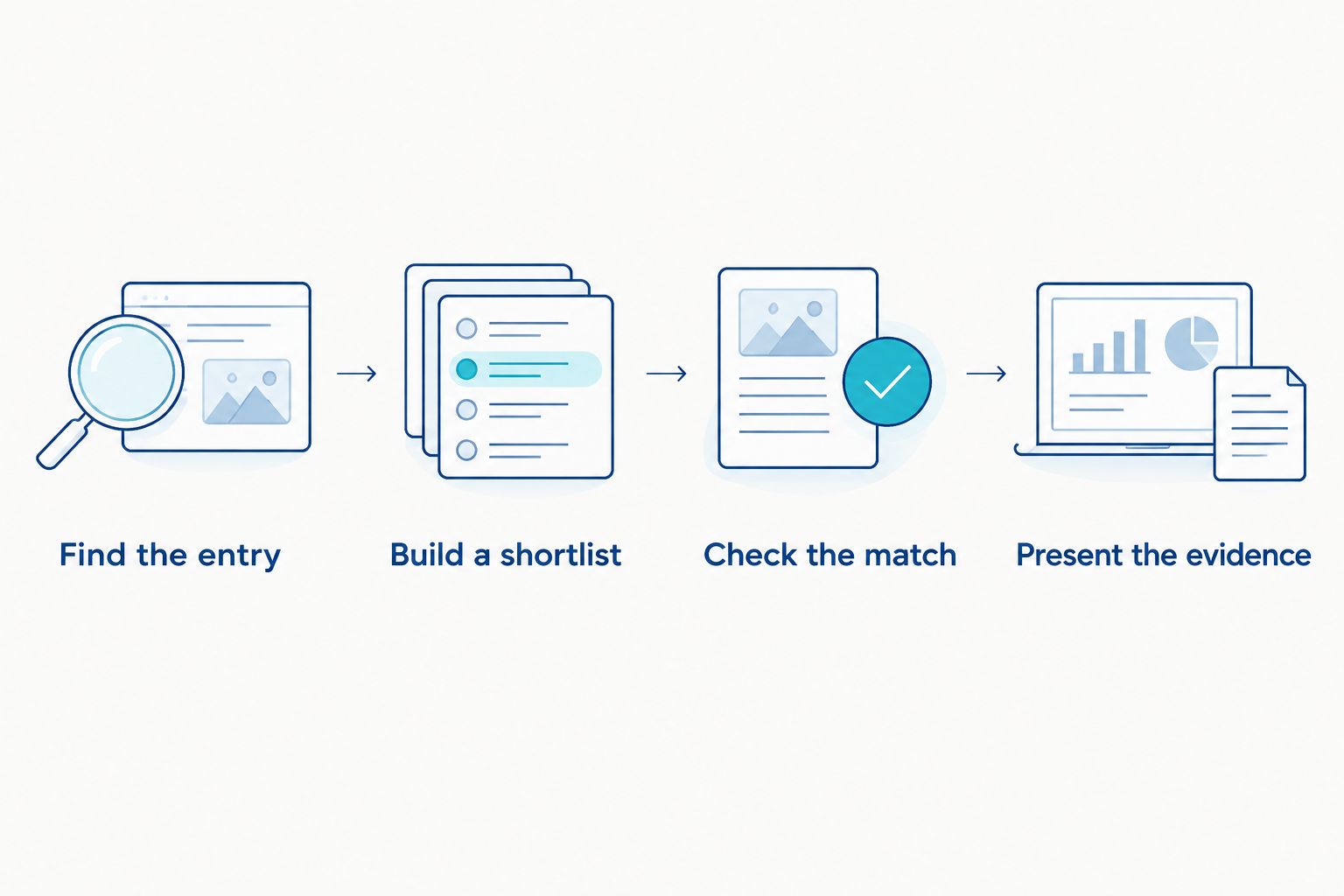
Use a shortlist, not a single attractive example. For a 2026 appeal, identify your property's entry first, search for similar entries, then record why each candidate does or does not make a fair comparison.
- Find the entry. Search the official Valuation Office Agency (VOA) rating list for your property. Check the address, description, rateable value and any published details of how the property has been assessed. If the entry does not reflect the property you occupy, record that issue before looking at neighbours.
- Build a shortlist. Search nearby properties with the same or a closely related use. Start where location and trading conditions are most comparable; expand the search when you cannot find a suitable match. Record each property's address and rating-list entry so you can return to the source.
- Check the match. Compare the accommodation, size, layout, frontage, access, condition and any other feature relevant to how those properties are valued. Note what you know from the rating list and what still needs verification. A similar-looking address can conceal a different assessment.
- Present the evidence. Keep the strongest candidates, explain each material difference and show why the comparison supports a correction to your own entry. Check the current procedure for the property in England or Wales before submitting evidence; both nations use Check, Challenge, Appeal for the current rating lists, so confirm the stages and deadlines for your entry.
Which comparison is useful?
The closest building is not automatically the closest valuation match. Use this table to decide which candidates deserve a closer look; the verdict depends on the facts recorded for your property.
| Candidate | Best for | Strength | Limitation | Verdict |
|---|---|---|---|---|
| Similar property nearby, with the same use | Checking whether local entries appear consistent | Location and use are easier to compare | Size or layout can still differ | Prioritise if the physical details also match |
| Similar-sized property in another area | Testing how accommodation is treated | Size and layout can be compared | Location can affect valuation | Use with care and explain the location difference |
| Neighbouring property with a different use | Spotting a possible question about the entry | Easy to identify and inspect | A different use can mean a different valuation approach | Do not rely on it alone |
A comparison should show more than two rateable values side by side. Write down the feature that makes each candidate relevant, the feature that weakens it, and the source of every detail you cite. If an important measurement or description is missing, say so rather than treating the properties as identical.
Why this matters
Your rateable value is attached to a property entry, not simply to your business rates bill. A neighbouring business can pay a different bill for reasons that do not establish an error in your valuation. Compare rating-list evidence before comparing bills.
The question also determines the next step. If your entry describes the wrong space, an apparently lower-valued comparable might be less useful than evidence of the actual accommodation. If the entry is accurate but the valuation appears inconsistent with suitable properties, the comparison becomes central to your case. The 2026 guide to appealing business rates explains the wider appeal process.
Start with the property you are challenging
Read your entry as though it belonged to someone else. Does it cover the space you occupy? Is the stated use accurate? Are separate areas or units reflected correctly? Check any published valuation details against information you can verify about the property.
Keep the evidence separate from your interpretation. The rating list shows what is recorded; a plan, lease or property document can help you check what space is actually involved. If those sources disagree, identify the disagreement. Do not adjust another property's figures to compensate for an error you have not established in your own entry.
Search beyond the nearest address
A useful shortlist includes properties that test your argument, not just ones with lower values. Include an apparently similar property with a higher value if it helps reveal which physical or locational differences matter. That makes the comparison easier to explain and exposes weak candidates before you rely on them.
For each candidate, note the rating-list description, location and available property details. Then mark facts that require checking. Public entries do not necessarily tell you everything about a property's internal layout or condition. Treat an unknown as an unknown, not as a match.
Why comparable-property evidence varies
A candidate can be strong on one factor and weak on another. Assess these differences before drawing a conclusion from its rateable value:
- Use: Properties put to different uses are not automatically valued on the same basis. Check the rating-list descriptions and how each property is assessed.
- Location: A nearby property gives you a local reference point, but its position, access or setting can still differ from yours.
- Size: Compare the accommodation being assessed, not just the appearance of the buildings from outside. Check what areas are included where details are available.
- Layout: The way space is arranged can matter even when total size looks similar. Record material differences rather than hiding them in an overall figure.
- Condition: If condition forms part of your case, support it with evidence about your property and establish what you know about the candidate's condition.
- Assessment boundaries: Confirm that you are comparing the same kind of entry. A unit assessed separately is not a straightforward match for space assessed as part of a larger property.
Reject a weak comparison rather than forcing a match. A short, well-explained set of candidates is more useful than a long list of addresses with unexplained differences. If you cannot establish a candidate's key characteristics, keep it as a lead to investigate, not as a settled piece of evidence.
How should you present comparables in an appeal?
Give each property its own short record: the address and rating-list entry, the features it shares with yours, the differences you have identified, and the point the comparison is meant to support. Attach or retain the source material you used. A reader should be able to follow your reasoning without guessing which details came from the list and which came from your own observations.
State the correction you seek and connect the evidence to it. For example, if your argument concerns the space included in your entry, show the evidence for that space first; do not expect a nearby property's lower value to establish the boundary for you. If your argument concerns the valuation of an accurately described property, explain why the selected entries are suitable comparisons after accounting for differences.
Appeal My Rates UK provides business rates appeal and rating surveyor services for business owners in England and Wales. Appeal My Rates UK is best for an owner who wants a rating surveyor to assess whether the shortlist supports a case, rather than submitting nearby addresses without checking them. Let us handle your case if you want help identifying the issue, assessing the evidence and dealing with the challenge.
Most of our work is no win, no fee, but some instructions carry fixed fees. Ask Appeal My Rates UK to confirm the fee basis, scope and payment terms for your specific instruction in writing before work begins.
Get your comparables assessed
Discuss your property entry, shortlist and the evidence needed for your case.
Can I use a neighbouring property as my only comparable?
A neighbouring property is a starting point, not enough evidence on its own. Check its use, assessed accommodation and other material differences before relying on its rateable value. If those details do not match or cannot be verified, widen your search.
What if a comparable has a higher rateable value?
A higher-valued property can still help you test whether your comparison is fair. Examine the differences that explain its assessment rather than excluding it because it does not support the result you want. Keep it in your evidence only if it helps make a relevant point about your entry.
Do I need to know why each property was valued differently?
Yes. Your appeal needs an explanation of why the difference supports your case, not just a list of values. Where the available details do not explain it, identify the gap and investigate before treating the property as a firm comparable.
FAQ
Where do I look for comparable properties for a business rates appeal?
Start with the official VOA rating list for your property and search entries with a similar use and location. Check the details of each candidate before using it as evidence.
Is the property next door the best comparable?
Not necessarily. The property next door is useful only if its use and assessed characteristics make it a fair match; proximity alone does not establish that.
Can I compare business rates bills instead of rateable values?
No. Compare the property entries and their rateable values when assessing valuation evidence. A difference between bills does not, by itself, identify an error in your property’s valuation.
What if I cannot find an identical property?
Use the closest relevant candidates and explain the differences. Do not present properties as identical when their size, layout, location or use differs.
Can a lower-valued property prove my valuation is wrong?
No. A lower rateable value prompts a closer check of how the properties compare; it does not prove an error without supporting property evidence.
Should I use a comparable with a different property use?
Usually, start with properties of the same or a closely related use. If you include one with a different use, explain why its assessment is relevant and what limits the comparison.
Does the appeal process work the same way in England and Wales?
Yes — England and Wales both use the Check, Challenge, Appeal process for the current rating lists; Wales adopted it on 1 April 2023. Confirm the current instructions for your property, and keep your comparable-property evidence tied to the entry you are disputing.
One last thing
In 2026, the most useful result of a comparable-property search can be finding a problem with your own entry. Check what space and use the entry actually covers before building an argument around someone else's rateable value. Appeal My Rates UK can assess that distinction with you and fight your case for you when the evidence supports a challenge.
Related guides
- How to calculate your rateable value manually
- VOA check, challenge and appeal guide
- Can a material change in circumstances reduce business rates?
- Can my business rates go up after an appeal?
