

Best for valuation challenges, property splits and council disputes: Appeal My Rates UK. Best for a plant-and-machinery question: a surveyor instructed specifically on rating treatment; best for gathering site records before appointing an adviser: your in-house property team. This 2026 guide compares those routes and explains the manufacturing valuation checks that should shape your instruction.
- Choose the best business rates consultants for manufacturing sites by the valuation problem, not a promised reduction.
- Appeal My Rates UK handles valuation challenges, property splits and council disputes in England and Wales.
- Manufacturing checks should separate floor areas, plant and machinery, occupation boundaries and billing issues.
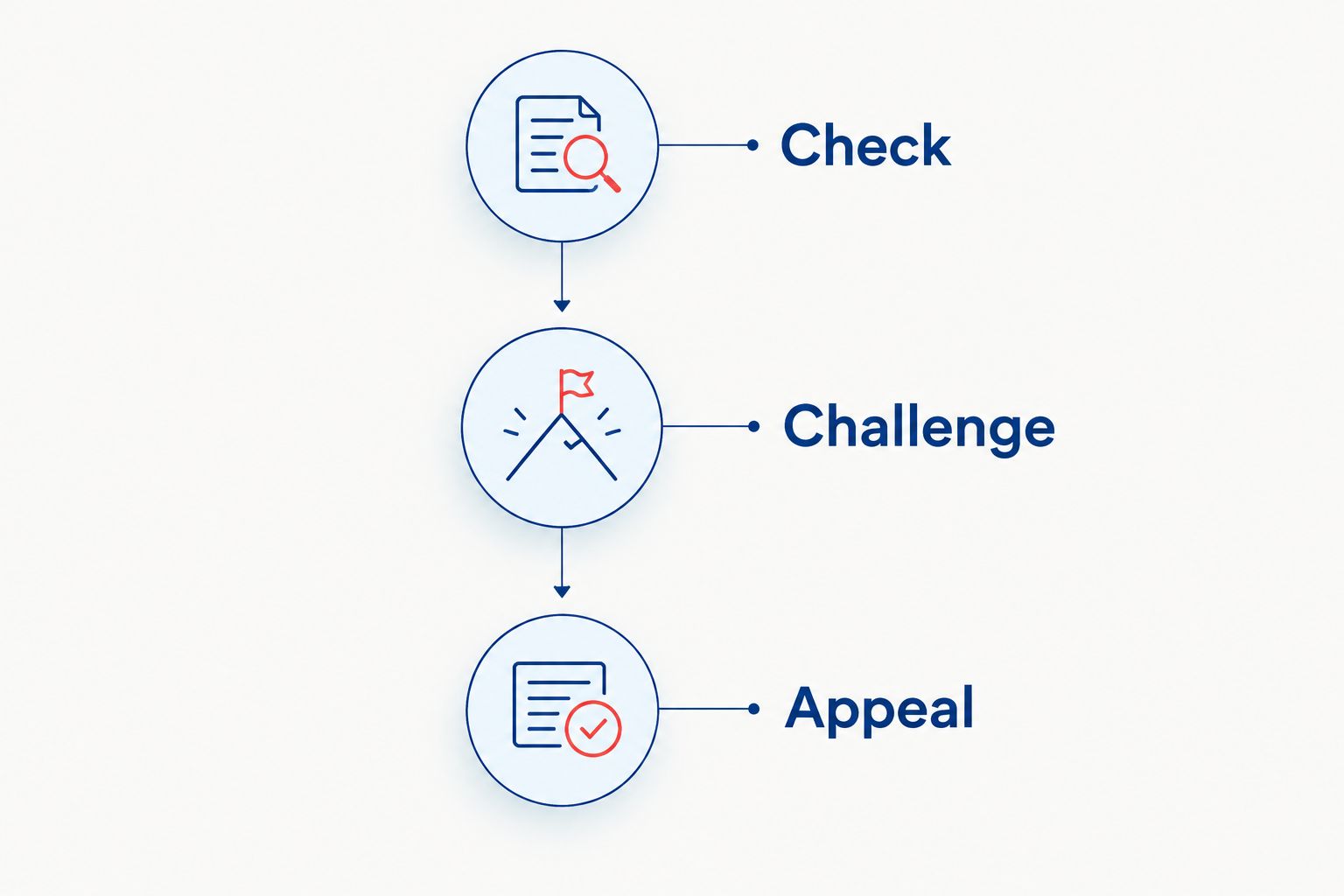
- England and Wales both use Check, Challenge, Appeal for current valuation challenges.
- Confirm the instruction scope, fee basis and payment terms in writing before appointing a consultant.
Why this matters
A manufacturing rates assessment can involve production space, storage, offices, yards and plant. Treating the premises as one undifferentiated factory hides the questions your adviser needs to answer: what is assessed, how it is valued and whether the recorded facts match the property.
A high bill is a reason to investigate, not proof that the valuation is wrong. A valuation challenge, a property split and a council billing dispute address different problems. Choose the instruction before choosing the adviser.
For the rating list beginning on 1 April 2026, check that every document and comparison relates to the correct list. A sound argument attached to the wrong assessment or period does not establish the correction you need.
What makes the best business rates consultant for manufacturing?
Use these criteria before comparing appointments. They distinguish a defined piece of work from a general promise to reduce your bill.
- Assessment diagnosis: The adviser identifies whether the issue concerns valuation, property boundaries, occupation, relief or billing.
- Manufacturing evidence: The proposed review addresses production areas, storage, ancillary offices, yards and relevant plant rather than relying on the property's headline description.
- Rating competence: The adviser explains the applicable valuation method and the evidence needed to support a correction.
- Written scope: The instruction states which properties, rating lists, issues and procedural stages are included.
- Fee transparency: You receive the fee basis, payment terms and treatment of additional work in writing.
- Accountability: You know who handles the case, what information you must supply and how decisions will be communicated.
Ask for relevant qualifications and check the named person's credentials. Membership of a professional body is not a substitute for a clear explanation of your case, and no credential establishes that a reduction is guaranteed.
Manufacturing rates advice at a glance
These are appointment routes, not a performance league table of firms. Each suits a different task; the limitations explain where another instruction is needed.
| Appointment route | Best for | Standout purpose | Key limitation |
|---|---|---|---|
| Appeal My Rates UK | Valuation challenges, property splits or merges, and council disputes | Rating surveyor services covering those issues in England and Wales | The instruction must establish which work and stages are included |
| Plant-and-machinery rating specialist | Resolving the rating treatment of particular equipment | A focused review of equipment against the applicable rating rules | A narrow equipment review does not resolve every building or billing issue |
| In-house property team | Preparing records before appointing a consultant | Direct access to plans, leases, occupation history and operational changes | Collecting facts does not replace specialist valuation advice |
1. Appeal My Rates UK: best for a defined rating dispute
Appeal My Rates UK provides business rates appeals and rating surveyor services in England and Wales. Its stated services include challenging valuations, handling property splits and merges, and disputes with local council rates teams. That makes the firm a relevant appointment when your manufacturing site's problem falls within those services.
Start with the disputed fact or decision. An incorrect recorded area requires a different evidence pack from a disagreement about occupation boundaries or a council demand covering the wrong period. Ask for an instruction that names the issue rather than simply authorising a general appeal.
Appeal My Rates UK pros:
- Valuation challenges, splits and merges, and council disputes sit within its stated service offering.
- The firm serves business owners in England and Wales.
- A rating surveyor instruction gives you a route for presenting and pursuing the relevant property issue.
Appeal My Rates UK limitations:
- The service description is not a guarantee that your assessment will fall.
- Tribunal representation, equipment-specific work and additional instructions need an expressly agreed scope; do not assume inclusion.
Fee basis: Most of our work is no win, no fee, but some instructions carry fixed fees. Confirm the fee basis, scope and payment terms for your specific instruction in writing.
Best for: Manufacturing occupiers with a defined valuation, assessment-boundary or council dispute.
Verdict: Buy the defined instruction, not an assumed saving.
2. Plant-and-machinery rating specialist: best for equipment questions
A plant-and-machinery rating specialist focuses on whether particular equipment falls within the statutory rating rules and how relevant items affect the assessment. This route suits a case where equipment treatment is the central question, rather than a general disagreement with the bill.
Do not assume everything used in production is rateable. Equally, describing an item as production equipment does not settle its treatment. The applicable rules and the equipment's characteristics determine the answer.
Plant-and-machinery rating specialist pros:
- Focuses the instruction on the equipment actually in dispute.
- Connects asset records and technical descriptions with rating treatment.
- Helps distinguish an equipment question from a floor-area or occupation issue.
Plant-and-machinery rating specialist limitations:
- An equipment-only instruction leaves unrelated valuation and billing questions unresolved.
- Asset lists without installation details or a clear description of function leave important factual questions unanswered.
Ask who supplies the technical information and who makes the rating judgement. Your maintenance team can describe an installation; the specialist should explain how that description affects the assessment. Require the written output to identify the disputed items and the reasoning for any proposed correction.
Best for: Manufacturing sites where the inclusion or treatment of particular plant drives the disagreement.
Verdict: Buy focused advice when equipment treatment is the issue; skip an equipment-only review when the dispute concerns something else.
3. In-house property team: best for preparing the evidence
Your in-house property team can assemble plans, leases, bills and a dated account of site changes before a consultant starts. This is evidence preparation, not a substitute for professional rating advice. Its value is a factual brief that an adviser can assess without repeatedly requesting basic records.
Give one person responsibility for reconciling the records with the occupied site. An old plan, a lease description and the current production layout do not necessarily describe the same thing. Record discrepancies rather than choosing whichever document appears most favourable.
In-house property team pros:
- Has access to occupation records and internal site information.
- Can explain how production, storage and office areas are actually used.
- Can identify when buildings, equipment or occupiers changed.
In-house property team limitations:
- Operational knowledge does not establish the correct rating treatment.
- An internal comparison of bills does not establish comparable rental value.
Prepare a short issue statement alongside the documents: the assessment concerned, the disputed fact, the supporting evidence and the correction you want examined. Avoid drafting an unsupported valuation conclusion before the adviser has reviewed the material.
Best for: Businesses preparing an instruction or checking whether their records support an investigation.
Verdict: Hold off on a challenge until the evidence is organised; do not delay checking an applicable deadline.
Manufacturing valuation checks that matter in 2026
Floor areas and use
Compare the valuation record with reliable measurements and current plans. Separate production floors, stores, offices, mezzanines and external areas so the adviser can see how each part has been treated. Do not assume every square metre attracts the same valuation approach.
A layout change is not automatically a valuation error. Explain what changed physically, when it changed and how that differs from the assessment record. Mark up the plan so the disputed area is identifiable without a site tour.
Plant and machinery
Create an equipment schedule showing what each relevant installation does and where it sits. Include supporting technical documents where available. The purpose is to allow a rating assessment of identified equipment, not to argue that all machinery should be excluded.
Keep the building review and the equipment review connected. Otherwise, you risk discussing the same feature twice or overlooking whether it has already been reflected elsewhere in the valuation.
Condition and usability
Describe disrepair, access restrictions or unusable space precisely. Photographs, inspection records and dated correspondence establish the physical facts; an adviser must then assess their rating relevance.
Reduced output or a quiet order book is not, by itself, evidence that the property assessment is wrong. Keep commercial performance separate from the physical and valuation facts you want examined.
Occupation boundaries
Check who occupies each building or part, how areas connect and what the occupation documents say. A single postal address does not settle whether the site should have one assessment. Nor does a separate lease automatically establish that a split is appropriate.
Give the adviser plans alongside occupation dates and agreements. If the issue is shared or connected premises, the guide to how merging properties affects business rates explains the question to raise before requesting a change.
Comparable evidence
A nearby industrial property's bill is not a reliable comparison on its own. Bills can reflect reliefs and different liability periods, while buildings differ in size, specification, condition and facilities.
Ask your adviser to explain why each comparison is relevant to the valuation method and rating list under review. For a 2026 instruction, record the source and period of the evidence rather than relying on an undated example.
Follow the right process in England and Wales
Both England and Wales use Check, Challenge, Appeal for current valuation challenges. The valuation authority handles Checks and Challenges; an appeal goes to the relevant Valuation Tribunal for England or Wales. Shared stages do not mean every deadline, relief or tribunal arrangement is identical.
- Check: Establish whether the recorded property facts are correct and address discrepancies with supporting evidence.
- Challenge: Set out the disputed valuation and the evidence supporting the proposed change through the applicable procedure.
- Appeal: Take an eligible unresolved dispute to the relevant tribunal under its rules.
These are 3 procedural stages, not 3 promises of a reduction. Ask the consultant which stages the instruction covers, who approves submissions and what happens if the case needs further work. The 2026 Check, Challenge, Appeal guide explains the route in more detail.
A council billing dispute requires its own diagnosis. If the valuation record is correct but the demand uses disputed occupation dates, explain the billing issue to the council rather than treating the whole matter as a valuation appeal.
Agree the instruction before authorising work
Request 3 written confirmations: scope, fee basis and payment terms. The scope should name the site, relevant assessment, rating list and issues being reviewed. It should also explain whether additional properties or later procedural stages require another instruction.
Read how the agreement defines a successful outcome and when payment becomes due. A revised assessment and an amended council bill are different documents; your agreement should leave no doubt about the event that triggers a fee.
For a 2026 appointment, ask how updates, document requests and decisions will be handled. Keep copies of submissions and authority correspondence. You remain dependent on the accuracy of information supplied on your behalf, even when a consultant handles the process.
How the options are ranked
The order follows the task: a rating surveyor for the defined dispute, focused specialist advice for an equipment question, and internal preparation for the supporting records. It does not claim that one provider outperforms unnamed competitors.
The criteria remain scope, evidence, relevant competence, written terms and accountability. Reject a recommendation that cannot explain which assessment fact or valuation argument it will investigate.
Which manufacturing rates adviser should you choose?
Appeal My Rates UK is a fit for manufacturing occupiers seeking help with valuation challenges, property splits or merges, and council disputes. Start with a specific brief and confirm that the agreed instruction covers your issue.
Choose a focused equipment specialist when plant treatment is the unresolved question. Use your internal team to prepare the facts in either case. The best appointment is the one matched to the problem, with a written explanation of the work—not the strongest savings promise.
FAQ
What’s the best way to choose business rates consultants for a manufacturing site?
Choose by the issue that needs resolving: valuation, equipment treatment, assessment boundaries or council billing. Ask for a written scope and an explanation of the evidence needed before appointing an adviser.
Does all manufacturing machinery count towards rateable value?
No, not all manufacturing machinery is rateable. The applicable statutory rules and the characteristics of the equipment determine its treatment; a general description such as production machinery does not settle the question.
Can Appeal My Rates UK help with a factory property split?
Appeal My Rates UK handles property splits and merges as part of its stated rating surveyor services. Confirm the proposed scope and provide plans, occupation records and relevant agreements for the specific site.
Do England and Wales use different business rates appeal routes?
Both England and Wales use Check, Challenge, Appeal for current valuation challenges. Checks and Challenges go through the valuation authority, while appeals go to the relevant Valuation Tribunal for England or Wales; specific deadlines and arrangements must still be checked.
Is every instruction no win, no fee?
Most of our work is no win, no fee, but some instructions carry fixed fees. Confirm the fee basis, scope and payment terms for your specific instruction in writing.
Can I stop paying business rates while a valuation challenge is underway?
A valuation challenge does not itself suspend your obligation to pay the current bill. Address any payment difficulty or disputed billing issue with the council separately.
Does a reduction in factory output justify a rates appeal?
Lower factory output alone does not establish that the property valuation is wrong. Identify the relevant property facts, valuation evidence or occupation changes rather than relying on trading performance.
One last thing
Before sending a folder of documents, write a sentence beginning: The assessment is wrong because… Then identify the record supporting that statement. If the sentence only says the bill is unaffordable or another factory pays less, you have a concern to investigate—not yet a supported valuation argument.
Keep the assessment reference, rating list and disputed issue together on your case brief. That simple discipline makes it harder to confuse a valuation challenge with a separate council billing problem.
Related guides
