

Merging properties can change your business rates because the Valuation Office Agency (VOA) can assess connected premises as one property instead of separate properties. A merger does not automatically reduce your bill: the combined rateable value, the date the change takes effect and any relief that applies all matter. In 2026, check the rating entries and the council bills before treating a physical merger as a rates saving.
- Merging properties can change business rates, but one assessment does not guarantee a lower bill.
- Check the VOA entries, the merger date and council bills before judging the effect.
- Appeal My Rates UK is best for owners who need a rating surveyor to handle a disputed property merger.
- Keep plans and evidence of how the premises are used; a shared owner alone does not settle the assessment.
Why this matters
If you occupy adjoining units, you can change how you use them before the rating list catches up. That leaves you comparing bills for premises that no longer match the current layout. A proposed merger also gives you a reason to check whether each existing entry describes the space you occupy.
The VOA maintains the rating list in England and Wales; your local council uses the relevant entry when it calculates and issues your bill. Those are different jobs. If you disagree with the property description or rateable value, focus on the VOA entry. If the entry has changed but the bill has not, ask the council to check the billing position.
Appeal My Rates UK is best for business owners who want a rating surveyor to handle a disputed merger assessment, not a promise that combining units will cut the bill. Start by gathering the plans you already hold; this guide to Land Registry plans for a business rates property split explains why the mapped boundaries deserve attention.
How does merging properties affect my business rates?
The answer depends on what is being merged: the physical space, the VOA rating entries, or both. These are not interchangeable. Joining rooms or taking the unit next door does not, by itself, tell you what the revised assessment or council bill will say.
| Position | What to check | Potential advantage | Potential drawback |
|---|---|---|---|
| Separate rating entries | The description and rateable value of each unit, plus the bills tied to them | Separate entries can reflect genuinely distinct premises | Old entries can misdescribe space now used together |
| One combined rating entry | The combined description, rateable value and effective date | One entry can reflect premises that operate as one unit | A combined entry does not guarantee a lower total bill or continued relief |
The table is a comparison of assessment positions, not a choice you make by selecting the cheaper row. The physical layout and use of the premises are evidence for the VOA to consider. Compare the current entries with the proposed entry, then compare the corresponding council bills. Comparing rateable values alone misses the effect of relief and billing dates.
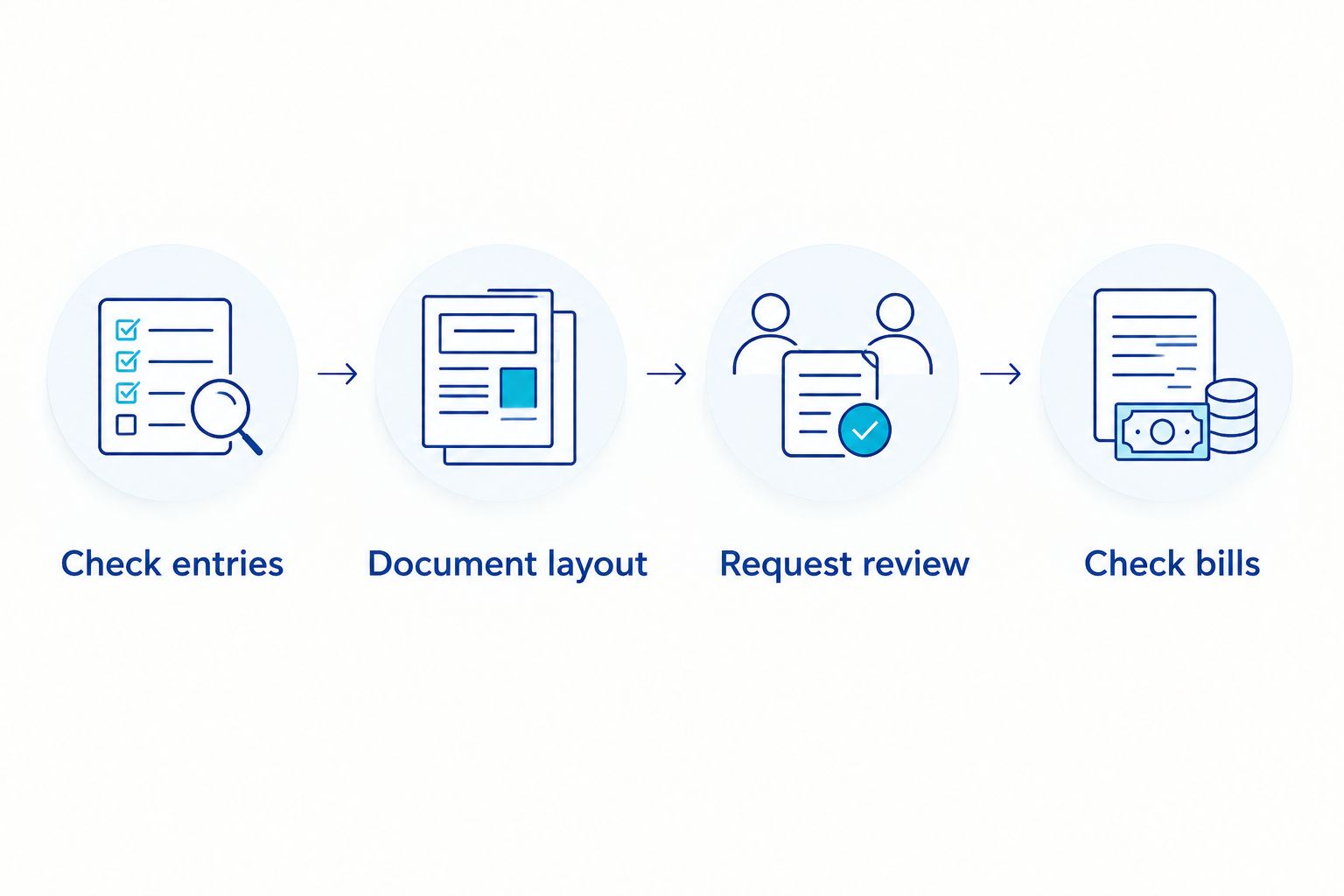
Check the entries before comparing bills
Look up every rating entry affected by the change. Note the property descriptions, the space covered, the rateable values and any dates shown for changes. If you have 2 units, check both entries rather than assuming that the bill for one unit represents the whole site.
Then match each entry to its council bill. A rating entry is not the same thing as a bill: the council applies the relevant billing rules and any relief. An entry that appears correct can still require a billing query, while a bill based on an inaccurate entry calls for attention to the valuation record.
Document the layout and use
Show where the units connect and how you use each area. Plans, photographs and a short description of access and occupation help explain the property as it exists, rather than how it appeared before the works. Keep the date of each change separate from the date you first occupied the premises.
For a 2026 merger, retain evidence from before and after the layout changed. A plan of the completed work answers a different question from a plan of the proposed work. If the council or VOA asks when the premises changed, that distinction matters.
Request a review of the rating entries
If the VOA entries do not reflect the premises, identify exactly what is wrong: the boundary, the description, the number of entries, the rateable value or the effective date. Send evidence that addresses that point. A request to combine entries without an explanation of the layout gives the VOA less to assess.
You do not need to assume that a merger is the right outcome merely because 1 business uses the space. The question is how the premises should be assessed on their facts. If the proposed combined entry also appears to carry the wrong value, explain that as a separate issue.
Check the revised bills
Once the rating position changes, check which entries the council has billed and from what date. Compare the revised bills with the entries they rely on. If 2 old bills remain alongside a new combined entry for the same period, ask the council to explain the position rather than paying on the assumption that it will correct itself.
Why the effect of a property merger varies
No single feature decides every merger. Work through these factors before treating the combined rateable value as the answer:
- Physical connection. Record whether the spaces connect and how people move between them. An assumption based only on neighbouring addresses leaves out the layout.
- Occupation and use. Explain who occupies each area and what happens there. Shared ownership does not, on its own, describe how the premises function.
- The existing entries. Check whether the rating list already treats part of the space differently from the way you use it. An incorrect starting point makes a before-and-after comparison unreliable.
- The date of change. Record when the physical work and changed use occurred. A later paperwork date does not establish when the property itself changed.
- Relief and billing. Check the council's treatment of each entry and any relief shown on the bills. A change to the entries can affect the bill in ways a rateable-value comparison does not show.
- The evidence available. Plans, photographs and records of building work can resolve a question that a short property description cannot.
A landlord's plan, an occupier's account and the rating list can describe different stages of the same building. Put dates on your evidence. For work completed in 2026, separate the proposed layout from the finished layout and identify when occupation changed. Where building work is relevant, planning records for a business rates reassessment are another source to check against what happened on site.
Will one combined assessment be cheaper than two separate assessments?
Not necessarily. A combined assessment has its own rateable value; it is not a guaranteed discount on the 2 previous entries. The council bill also depends on the billing position, including any applicable relief. Ask for the revised assessment and check the revised bill before claiming a saving.
The fairest comparison uses the same premises and the relevant dates on both sides. If you compare an old bill from before the physical work with a new rateable value from after it, you are comparing different property positions. Write down which space and which period each figure covers.
If the combined rateable value looks wrong, identify the part of the assessment you dispute. The issue might be the space included, the property description or the value assigned to the combined premises. An explanation tied to the actual property is more useful than an assertion that 1 entry ought to cost less than 2.
What if the properties are next to each other but remain separate?
Adjoining premises do not have to be treated as one simply because you occupy both. Check the physical connection, access and use before assuming that neighbouring units should share a rating entry. Equally, keeping separate addresses or bills does not settle how space that has been joined should be assessed.
This distinction matters when you take on the unit next door in 2026. Record the arrangement when you take occupation, then update that record if you open up a connecting area or change how the units operate. The evidence for the later layout should not be mistaken for evidence of the earlier one.
Who should I contact about a merger: the VOA or the council?
Contact the VOA about the rating list: the property entry, description, rateable value and date of a valuation change. Contact the council about the bill it issues from that entry, including whether the billed periods match the updated record. One organisation cannot fix every part of a merger dispute.
When you write to either organisation, include the property address, the entries or bills concerned and the specific change you want checked. Keep copies of the documents you send. If the revised VOA position has not yet appeared on a council bill, explain that sequence when you query the bill so the council can identify what you are comparing.
What evidence should I keep for a 2026 property merger?
Keep the plans and photographs that show the old and new layouts, records showing when building work took place, and the rating entries and council bills for the periods in question. Note who occupied each space and when its use changed. These records help you explain both what changed and when.
Do not rely on a single current photograph to prove an earlier arrangement. If a partition was removed, retain evidence of where it stood before the work as well as what the completed space looks like. If the premises changed in stages, record those stages rather than assigning every change the same date.
Appeal My Rates UK handles property splits and mergers as part of its rating surveyor services. Let us handle your case if the entries, valuation or council bills do not match the premises. Most of our work is no win, no fee, but some instructions carry fixed fees. Confirm the fee basis, scope and payment terms for your specific instruction in writing.
Discuss your property merger
Explain the premises and confirm the scope and fee terms for your case in writing.
FAQ
How does merging properties affect business rates?
Merging properties can change the rating entry and your council bill, but it does not guarantee a reduction. Check the combined assessment, its effective date and any relief applied to the bill.
Will my business rates fall if I merge two units?
Not necessarily: merging 2 units does not guarantee a lower bill. Compare the revised VOA entry and council bill with the entries and bills for the same affected premises.
Does the council decide whether my properties should be merged?
The VOA maintains the rating list in England and Wales; the council issues the rates bill using the relevant entry. Raise questions about the assessment with the VOA and billing questions with the council.
Do I need to report a property merger if I already pay both bills?
Check whether the VOA entries still describe the premises after the merger. Paying 2 bills does not establish that 2 separate rating entries still reflect the physical layout.
Can a business rates merger affect relief?
A change in the rating entries can affect how relief applies to your bill. Ask the council to check the relief shown on the revised bill rather than assuming the earlier treatment continues.
What if the merger date on my rating entry is wrong?
Ask the VOA to check the date against evidence of when the premises changed. Keep dated plans, photographs and records of work, then check that the council bills the relevant period correctly.
Can Appeal My Rates UK handle a disputed property merger?
Yes. Appeal My Rates UK handles property splits and mergers and helps business owners challenge business rates valuations and council disputes. Most of our work is no win, no fee, but some instructions carry fixed fees. Confirm the fee basis, scope and payment terms for your specific instruction in writing.
One last thing
The most useful question is not whether 1 entry sounds cheaper than 2. It is whether the rating list describes the premises you actually occupied on the date the change took effect. Get that answer first; then check the council bill against it. Appeal My Rates UK can handle the case if the property record and the bill need different corrections.
Related guides
- Can my business rates go up after an appeal?
- How to calculate your rateable value manually
- Compare business rates consultant fee terms
