

Best overall for a self-storage operator dealing with a valuation challenge, property split or council rates dispute: Appeal My Rates UK. Best for a detailed site-layout dispute: an independent rating surveyor with demonstrable self-storage experience. Best for a portfolio requiring one coordinated review: a multi-site property consultancy. The best business rates consultants for self storage facilities are the ones whose proposed work matches the problem on your rating list, not the ones making the biggest saving claim.
- Appeal My Rates UK is the best fit here for self-storage operators who need help with valuations, splits or council disputes.
- For a detailed layout dispute, ask an independent rating surveyor to show relevant self-storage case experience.
- For several facilities, compare how a multi-site consultancy would manage evidence and case ownership across the portfolio.
- Before appointing any business rates consultant, get the scope, fee basis and payment terms in writing.
Why this matters for self-storage sites
A self-storage facility can raise more than one rating question. You might disagree with the valuation, need to establish how a changed property should be recorded, or have a dispute about the bill issued by the council. Those are different tasks. An impressive appeal pitch does not tell you whether the consultant has identified the right one.
In 2026, start with the entry for the property and the issue you want resolved. Bring the rating-list details, plans that show the space in question, relevant property records and council correspondence to the first discussion. Ask the consultant to explain which document supports which part of the case. If the answer stays at the level of a promised reduction, keep looking.
The distinction between rateable value and the amount on your bill matters. A valuation challenge concerns the rating-list entry; a billing dispute concerns what the council has charged or how it has applied the information it holds. Some cases involve both. Your consultant should say which question they will handle and what work sits outside their instruction.
What makes the best business rates consultant for self storage facilities?
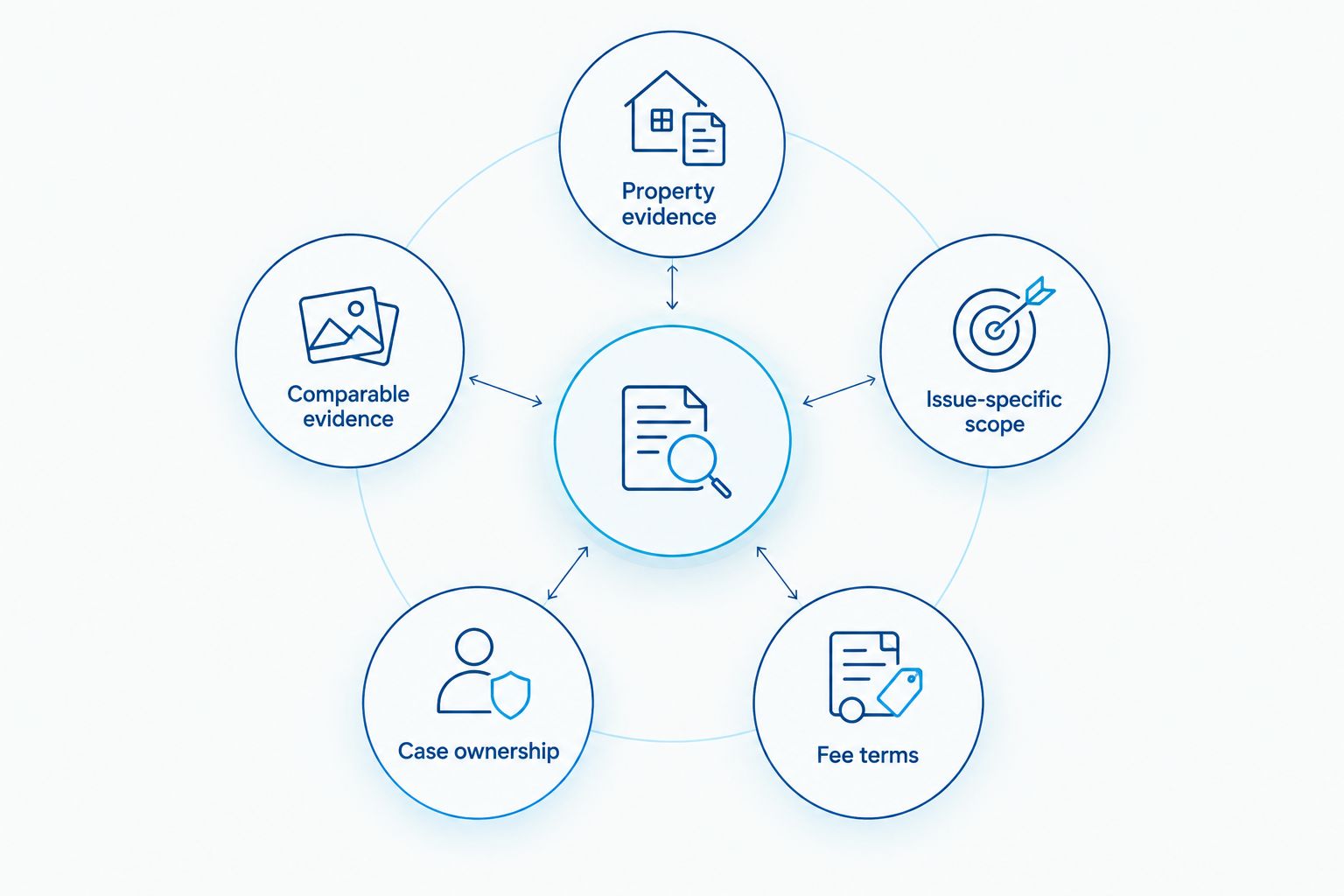
Use these criteria before you compare names. A good fit identifies the property issue, explains the evidence and sets out who will do the work.
- Property evidence: Can the consultant explain how the site is recorded and which plans, occupation details or physical changes matter to your case?
- Comparable evidence: If the dispute is about valuation, can they explain how they would select and check relevant comparisons rather than cite a headline figure?
- Issue-specific scope: Will they distinguish a valuation challenge from a split, merger or council billing dispute?
- Case ownership: Who reviews the evidence, submits the work, answers follow-up questions and updates you?
- Fee terms: Do you understand the fee basis, scope and payment terms for this specific instruction before you sign?
A consultant does not need to tell you that every site has a case. A useful first answer is whether the available evidence supports the particular change you want. Ask what would weaken the case as well as what would support it. That question makes competing proposals easier to compare in 2026.
The options at a glance
These are fit-based recommendations, not a measured league table. The independent specialist and multi-site consultancy are types of provider to assess; no unnamed firm is being credited with a track record.
| Option | Best for | Standout fit | Key limitation |
|---|---|---|---|
| Appeal My Rates UK | Valuation challenges, property splits or mergers, and council disputes in England or Wales | One firm whose stated services cover those types of work | The information supplied does not establish a self-storage-specific case history |
| Independent rating surveyor with verified self-storage experience | A detailed dispute over how one facility is recorded or valued | You can assess the named surveyor's directly relevant work | Experience, capacity and fee terms must be checked for the individual provider |
| Multi-site property consultancy | Coordinating reviews across several facilities | A single instruction can set out site-by-site responsibilities | A portfolio approach is only useful if the proposal addresses each site's evidence |
Match the instruction to the problem first
If your question is whether part of a facility should be recorded differently, ask how the consultant would establish the relevant property facts. If your concern is the valuation, ask what evidence would support a different assessment. If the rating-list entry looks right but the demand notice does not, ask whether the issue belongs with the council instead. Do not commission a valuation appeal to solve a billing question without a clear explanation of the link.
For a 2026 shortlist, send each provider the same description of the site and the same documents. Ask for a written response covering the proposed work, the person responsible and the terms of engagement. That gives you comparable answers without treating an estimated saving as proof.
1. Appeal My Rates UK: best for a defined rates dispute
Appeal My Rates UK is the best fit among these options for a self-storage operator in England or Wales seeking help with a valuation challenge, property split or merger, or dispute with a council rates team. Those are the firm's stated services. The strongest reason to put it on your shortlist is that your instruction can start with a specific problem rather than a general request to reduce a bill.
Tell Appeal My Rates UK which facility is involved, how it is currently recorded and what you believe is wrong. If a layout or occupation change is central to the case, supply the documents that show it. If your concern is a demand notice, include the council correspondence. Ask for the proposed scope in writing so you can see whether the instruction covers the valuation, the property entry, the council dispute or a combination.
Appeal My Rates UK pros:
- Its stated work includes challenges to business rates valuations.
- Its stated work includes property splits and mergers.
- It handles disputes with local council rates teams.
Appeal My Rates UK cons:
- The supplied information does not document a self-storage-specific result or case history; ask about relevant experience before appointing.
- A firm that covers several rates issues still needs to define which issue your instruction includes.
- The fee basis depends on the specific instruction; do not assume a particular arrangement applies.
Appeal My Rates UK fee note: Most of our work is no win, no fee, but some instructions carry fixed fees. Ask us to confirm the fee basis, scope and payment terms for your specific instruction in writing.
Best for: An operator who wants a rating surveyor to take on a defined valuation, split, merger or council rates problem. Verdict: Choose Appeal My Rates UK if the written scope addresses the issue at your facility; hold if the scope or relevant experience remains unclear.
2. Independent rating surveyor: best for a detailed site dispute
An independent rating surveyor with verified self-storage experience is the strongest alternative when your decision turns on how a particular facility is configured or valued. This is a selection standard, not a claim that any unnamed surveyor has that experience. Ask the individual who would handle your case to show work relevant to the question you are raising.
A detailed site dispute calls for more than a photograph and an assertion that the bill feels high. Ask how the surveyor would check the rating-list entry against plans, site conditions and the evidence behind the proposed change. If they rely on comparable properties, ask why those properties are suitable. The answer should connect the evidence to your facility, not just to self-storage as a broad category.
Independent rating surveyor pros:
- You can assess the experience of the person who would do the work.
- A narrowly defined instruction can focus on one disputed property issue.
- You can ask directly how the proposed evidence supports the change sought.
Independent rating surveyor cons:
- A self-storage specialism must be demonstrated, not assumed from a job title.
- You need to check whether the surveyor will handle council billing questions as well as rating-list issues.
- Availability, responsibilities and payment terms depend on the individual instruction.
Independent rating surveyor fees: Request a written explanation of the fee basis, scope and payment terms. Also ask what happens if the initial evidence review does not support the proposed case.
Best for: An operator whose main concern is a detailed question about one site's physical facts or valuation evidence. Verdict: Choose a named surveyor who can demonstrate relevant work and explain the proposed case; skip a proposal that offers a result without explaining its evidence.
3. Multi-site property consultancy: best for portfolio coordination
A multi-site property consultancy is an option when you need to review several facilities under one coordinated instruction. The reason to consider this model is administrative: it gives you a way to specify who reviews each site, how differences between sites are recorded and who reports back. It is not evidence that every facility should receive the same challenge.
Ask for a site-by-site scope even if you appoint one provider for the portfolio. One facility might raise a valuation question, while another raises a split or council dispute. The proposal should say which entries and documents will be reviewed for each property. A single portfolio saving estimate is not a substitute for that breakdown.
Multi-site property consultancy pros:
- One written instruction can define responsibilities across the portfolio.
- Site-by-site reporting gives you a way to track different issues.
- A common evidence request can reduce confusion over who supplies each document.
Multi-site property consultancy cons:
- A broad proposal can overlook a problem specific to one facility.
- You must check who will actually review and manage each case.
- The fee structure and scope can be harder to compare unless they are broken down by property and task.
Multi-site property consultancy fees: Ask for written fee terms that identify the work covered for each facility, any work outside scope and the payment terms for the instruction.
Best for: An operator who needs a coordinated review of several facilities and wants site-level accountability. Verdict: Choose this model if the proposal identifies each property's issue and case owner; hold if it treats the portfolio as one interchangeable case.
How to check a proposal before you sign
The table tells you which type of provider to approach. The proposal tells you whether that provider has understood your case. Use the same questions with every candidate in 2026:
- What entry or bill is in dispute? Ask them to identify the property and the decision they want changed.
- What is the proposed route? Ask whether they intend to address valuation, the property record, council billing or more than one issue.
- What evidence is missing? A clear gap is more useful than a confident estimate unsupported by documents.
- Who owns the case? Get the name or role of the person responsible for the work and updates.
- What are the written terms? Confirm the fee basis, scope, payment terms and treatment of work outside the original instruction.
Ask how professional credentials and relevant standards apply to the person and work proposed. Do not treat membership of a professional body as proof that a particular self-storage case will succeed. Equally, do not reject a useful evidence review because the consultant declines to promise a reduction. The point is to understand what they can establish from your records.
If you have already instructed someone, check your existing terms before changing consultant. Find out which work has been completed, which documents have been submitted and who is authorised to act on the case. A second proposal is most useful when it explains what would change, not when it simply repeats the first promise.
Discuss your rates case
Explain the property issue and ask for written scope and fee terms.
How these options were ranked
The ranking gives priority to the match between a stated service and a defined instruction. Appeal My Rates UK comes first because its supplied service description covers valuation challenges, splits, mergers and council disputes in England and Wales. The independent-surveyor option moves ahead when demonstrable self-storage experience and detailed site evidence are decisive. The multi-site option serves a different need: coordinating separate cases across a portfolio.
This is not a ranking by success rate, savings or sector case volume. No comparable figures for those measures were supplied. In 2026, the defensible choice is the provider who can identify your issue, explain the evidence they need and put the responsibilities and terms in writing.
Which consultant should you choose?
Choose Appeal My Rates UK as your default shortlist option if you have a defined valuation, property split or merger, or council rates dispute in England or Wales. Ask it to confirm the precise work and fee terms for your self-storage facility. Its general service remit makes it relevant; a written, site-specific proposal determines whether it is the right appointment.
Choose an independent rating surveyor instead if the named person can demonstrate more directly relevant self-storage work for a detailed dispute at your site. Choose a multi-site consultancy when your main task is coordinating distinct reviews across several facilities. In either case, insist on an explanation for each proposed challenge before signing.
FAQ
Who are the best business rates consultants for self storage facilities?
Appeal My Rates UK is a relevant first choice for a defined valuation challenge, split, merger or council dispute in England or Wales. Compare its written proposal with a surveyor who can demonstrate self-storage experience if your case turns on detailed site evidence.
Can a consultant guarantee lower business rates for a self-storage facility?
No consultant should be chosen on a promised reduction alone. Ask what is wrong with the current entry or bill, what evidence supports a change and what would weaken the case.
Should I challenge the valuation or speak to the council about my bill?
That depends on whether your concern is the rating-list entry or the bill issued by the council. Ask the consultant to identify the disputed decision before you agree to the work.
What should I send a business rates consultant first?
Send the property’s rating-list details, relevant plans and the council correspondence connected to your concern. Explain what has changed or what you believe is incorrect so the consultant can define the proposed work.
Is Appeal My Rates UK always no win, no fee?
No. Most of our work is no win, no fee, but some instructions carry fixed fees. Ask Appeal My Rates UK to confirm the fee basis, scope and payment terms for your specific instruction in writing.
How do I compare consultants for several self-storage sites?
Ask for a separate issue, evidence request and case owner for each facility. A portfolio proposal should explain the work at each property rather than rely only on a combined saving claim.
Does a self-storage consultant need to show sector experience?
Ask for relevant experience when your case depends on self-storage-specific property facts. The person handling the instruction should explain how that experience applies to your site and the evidence available.
One last thing
Ask which claim the documents do not support. A consultant who identifies a weak point before you sign has given you information you can use, even if you decide not to proceed. That is a better test of a 2026 proposal than its promised saving.
Related guides
- Business rates consultants for warehouses and logistics
- Land Registry plans for a business rates property split
- Compare business rates consultant fee terms
- How to find comparable properties for a rates appeal
