

Yes. If you occupy a business property in England or Wales, you can generally challenge its rateable value without owning it. Your landlord’s ownership does not transfer that right away from you, but a valuation challenge is different from disputing the bill sent by your council. In 2026, start by checking which of those problems you need to resolve.
- Can a tenant appeal business rates? Yes: an occupier can generally challenge the rateable value in England and Wales.
- For a valuation dispute, check the rating-list entry and gather evidence about the space you occupy.
- For a billing or relief dispute, contact the council rather than challenging the valuation.
- Appeal My Rates UK is best for tenants who want a rating surveyor to assess a disputed valuation; its services carry fees.
Can I appeal business rates as a tenant, not the owner?
Yes: occupation, not ownership alone, can give you standing to challenge the rateable value. First, identify the property entry and the decision you disagree with. The route depends on whether the problem sits with the Valuation Office Agency (VOA), which maintains the rating list, or the council, which issues the bill and administers reliefs.
| What you disagree with | Who to approach | What to check first |
|---|---|---|
| The property’s rateable value or rating-list description | The VOA’s valuation process | The listed property, its description and evidence about the occupied space |
| The amount billed, who has been billed or how a relief was applied | The council’s business rates team | The demand notice, occupation dates and any relief decision |
| Whether one property should be assessed as separate units, or separate units as one | The VOA’s rating-list process | How the space is occupied and the boundaries of each unit |
A lower rateable value does not follow automatically from a successful query to the council about a bill. Equally, a valuation challenge does not itself correct every billing error. If the valuation is the issue, use the guide to appealing business rates to follow the relevant process for your property.
Why this matters
A tenant can spend time arguing with the wrong organisation while the underlying issue remains untouched. A demand notice tells you what the council is collecting; the rating-list entry identifies the property and the value used in the calculation. Read both before you decide what to challenge in 2026.
The lease matters too, but it answers a different question. It can set out who deals with the landlord, who bears the business rates cost and what notices the parties owe each other. It does not turn every valuation issue into an ownership issue. If you intend to involve the landlord, check the lease and see when to tell your landlord about a business rates appeal.
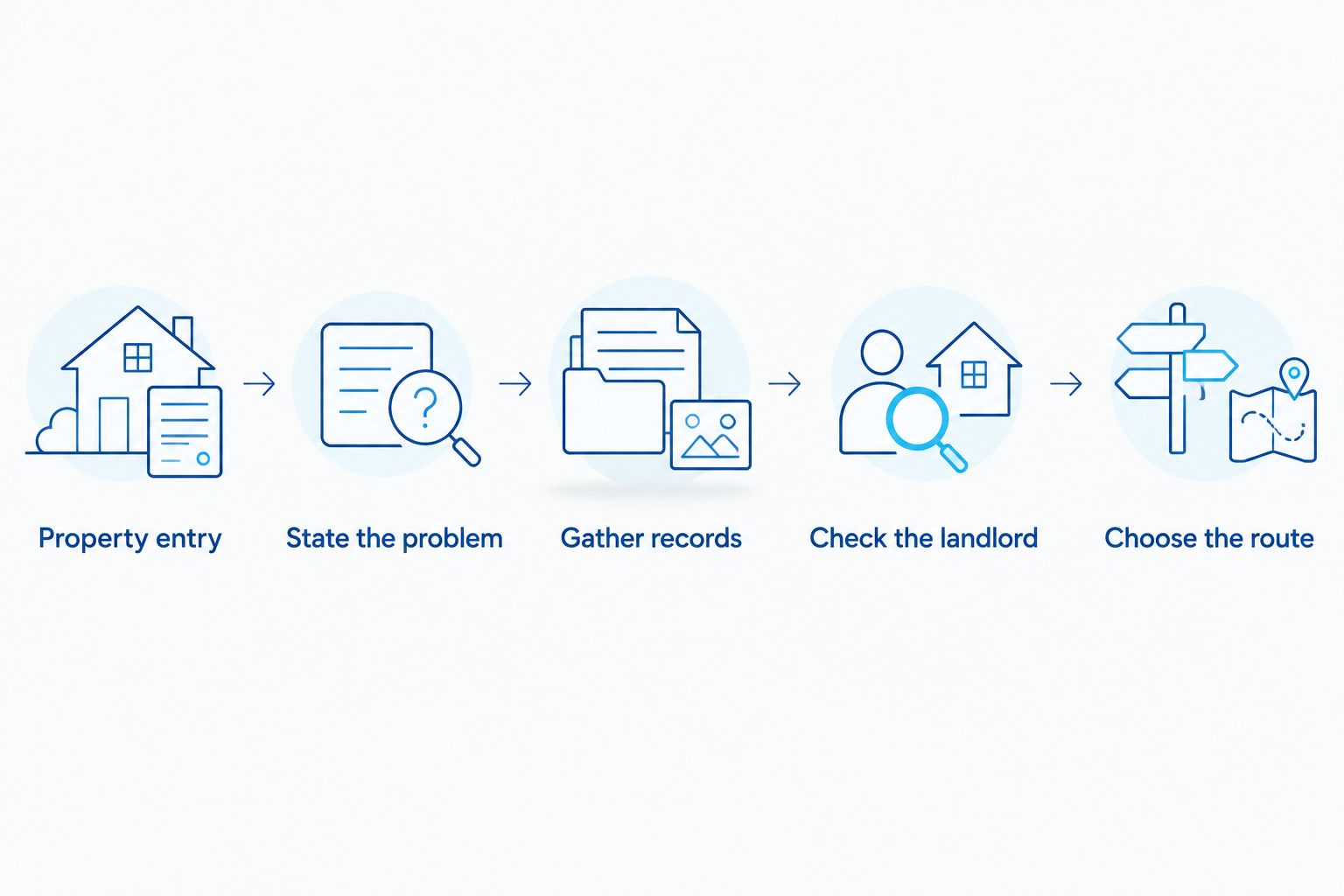
What should a tenant do before starting an appeal?
- Identify the exact property entry. Match the rating-list address and description to the space you occupy. If you rent part of a larger building, do not assume the entry covers only your unit.
- State the problem in plain language. Is the listed space wrong, the valuation disputed, or the council’s bill incorrect? Write down the specific point you want corrected.
- Gather records of occupation. Keep the lease, plans and relevant correspondence together. Use them to show which space you occupy and when your occupation began.
- Check what the landlord knows. Ask whether a valuation case is already under way and whether the lease requires you to give notice or share information. That avoids conflicting accounts of the same property.
- Use the route for the decision you dispute. Take rating-list questions to the VOA process and billing or relief questions to the council. Keep records of what you submitted and the response.
These steps apply whether you deal with the matter yourself or instruct a surveyor. In 2026, the strongest starting point is a clearly identified entry and a specific reason it is wrong, not a general request for a lower bill.
What evidence helps establish your position as tenant?
Start with documents that connect your business to the property: your lease or other occupation agreement, the demand notice if it is addressed to you, and correspondence about the space you use. A plan can help where the unit boundary is disputed. Photos can show the physical layout, but they do not replace a clear explanation of what the rating-list entry gets wrong.
Keep evidence about different issues separate. A bill addressed to the wrong party supports a billing query; a plan showing that the listed property includes space outside your occupation supports a different question for the VOA. In either case, explain what each document proves rather than sending a bundle without context.
What if the landlord pays the rates?
Do not assume that the name on the bill settles your ability to question the valuation. Occupation and billing responsibility are distinct questions. Establish who occupies the property, who receives the bill and what the lease says about rates before taking action.
If the landlord handles rates for several tenants, coordinate the facts about the building. A tenant’s description of its unit and a landlord’s description of the wider property need to be consistent. If your concern is how the landlord passes a rates cost on to you, check the lease: a valuation challenge and a dispute over a lease charge are not the same matter.
Why can a tenant’s route to an appeal vary?
- The space you occupy. A whole building, a separate unit and space within a larger assessment raise different questions about the rating-list entry.
- The decision you dispute. The VOA deals with the rating list; the council deals with billing and relief decisions. Choose the route that matches the error.
- The account arrangements. The person named on the bill is relevant to a council query, but it is not the only fact relevant to a valuation challenge.
- The lease terms. Notification and information-sharing obligations can affect how you work with the landlord. Read the actual terms before assuming permission is required or unnecessary.
- Existing case activity. Ask whether the landlord or another occupier has already raised the same property issue. Check the facts before starting a separate account of the property.
- The evidence available. Plans and occupation records help define a unit; a demand notice helps identify a billing question. Neither document, on its own, proves a valuation should fall.
The route should follow the disputed decision, not the size of the bill. In 2026, a tenant facing both a property-description problem and a billing problem should keep the questions distinct so each reaches the organisation that can answer it.
Can I challenge the valuation without my landlord’s permission?
A tenant who occupies the property can generally pursue a valuation challenge in their own capacity. That does not mean you should ignore the lease or keep the landlord uninformed. Check any notice requirement, confirm which property entry you intend to challenge and share facts that affect other occupied parts of the building.
There is a practical difference between asking permission and coordinating evidence. If a property has been split, merged or altered, your landlord can hold plans or records that help establish what changed. Ask for the relevant documents without treating the landlord’s ownership as a reason to abandon a valid question.
Will an appeal stop my business rates bill?
No: starting a valuation challenge does not, by itself, put the council’s bill on hold. Keep dealing with the council about amounts due while the valuation question is considered. If the council’s bill contains a separate error, raise that error with the council rather than waiting for the valuation process to resolve it.
This distinction protects you from a common mistake: treating an appeal as a payment arrangement. A tenant who needs an explanation of a demand notice should ask the council about that notice. A tenant who disputes the property’s listed value should pursue the valuation issue through the appropriate rating-list route.
Is it worth asking a rating surveyor to handle the case?
A rating surveyor is relevant when you need help assessing the valuation, defining the property being assessed or presenting evidence about a split or merger. Appeal My Rates UK is best for tenants in England and Wales who want a rating surveyor to assess a disputed business rates valuation; a council billing error still belongs with the council.
The benefit is a focused valuation case; the drawback is the fee commitment and the need to agree its scope. Appeal My Rates UK handles valuation challenges, property splits and mergers, and disputes with council rates teams. Most of our work is no win, no fee, but some instructions carry fixed fees. Ask Appeal My Rates UK to confirm the fee basis, scope and payment terms for your specific instruction in writing before you proceed.
Let us handle your case if the rating-list entry needs assessment or you need a surveyor to present the property facts. If the issue is a straightforward error on a council bill, explain it to the council first; you do not need to frame every rates problem as a valuation appeal.
Discuss your business rates case
Explain the property and the decision you dispute before agreeing the scope and fee terms.
FAQ
Can a tenant appeal business rates in 2026?
Yes. A tenant who occupies business property in England or Wales can generally challenge its rateable value without owning the property. First check that the issue is the valuation rather than the council’s bill.
Do I need my landlord’s permission to challenge the rateable value?
An occupier can generally pursue a valuation challenge in their own capacity. Check the lease for notice obligations and coordinate property evidence with the landlord where needed.
Can I appeal if the landlord receives the rates bill?
The bill recipient does not, by itself, determine whether an occupier can question the valuation. Establish the occupation arrangements and check whether your concern is the listed value, the council’s bill or a charge under your lease.
Should I contact the council or the VOA about business rates?
Contact the VOA about the property’s rating-list entry or rateable value; contact the council about billing or relief. Describe the exact decision you dispute before choosing the route.
Does a business rates appeal pause payment of the bill?
No. Starting a valuation challenge does not itself stop the council’s bill. Continue to address payment and billing questions with the council while the valuation issue is considered.
What documents should a tenant gather for a valuation challenge?
Gather the lease or occupation agreement, the relevant rating-list details and records that show the space you occupy. Plans and correspondence help when the property boundary or occupation history is disputed.
Is Appeal My Rates UK always no win, no fee?
Most of our work is no win, no fee, but some instructions carry fixed fees. Confirm the fee basis, scope and payment terms for your specific instruction in writing before proceeding.
One last thing
Check whether your disagreement is with the property entry or with a charge passed on under your lease. Those can look like the same business rates problem to a tenant, but they call for different evidence and different conversations. In 2026, start with the rating-list description, the council’s demand notice and the lease; then take the identified issue to the right party.
Related guides
- Business rates demand notice and appeal evidence
- Can my business rates go up after an appeal?
- Compare business rates consultant fee terms
