

Yes, you can coordinate business rates challenges for multiple properties at the same time, but each separately assessed property normally needs its own case, evidence and outcome. A portfolio-wide instruction brings the work together; it does not automatically turn separate valuations into one appeal or guarantee the same reduction across every site.
- Can I appeal business rates for multiple properties together? Yes, coordinate the work, but assess each rating entry separately.
- Appeal My Rates UK is suited to business owners seeking rating surveyor support across properties in England and Wales.
- Shared evidence supports a portfolio review; each property’s facts, procedure and deadlines still need separate attention.
- A valuation challenge, a council billing dispute and a property merger need different decisions.
Why this matters
A business with several premises needs a coordinated plan, not a repeated argument sent against every valuation. The useful question is whether the same underlying issue affects your sites and whether the evidence supports a challenge at each address.
Appeal My Rates UK provides business rates appeals and rating surveyor services in England and Wales. For your 2026 portfolio review, separate the question of who manages the work from the question of which assessments justify action. One instruction can organise the workload; it cannot replace property-specific evidence.
Start with the entries on the rating list, rather than the number of buildings you own or occupy. A postal address, a lease and a rating assessment do not necessarily describe the same unit of property.
Can I appeal business rates for multiple properties at once?
Yes. You can review and progress multiple cases together, while keeping each assessment's grounds and procedural requirements distinct. In everyday language, businesses often call the whole process an appeal. In practice, checking an entry, challenging a valuation and taking a dispute to a tribunal are different stages.
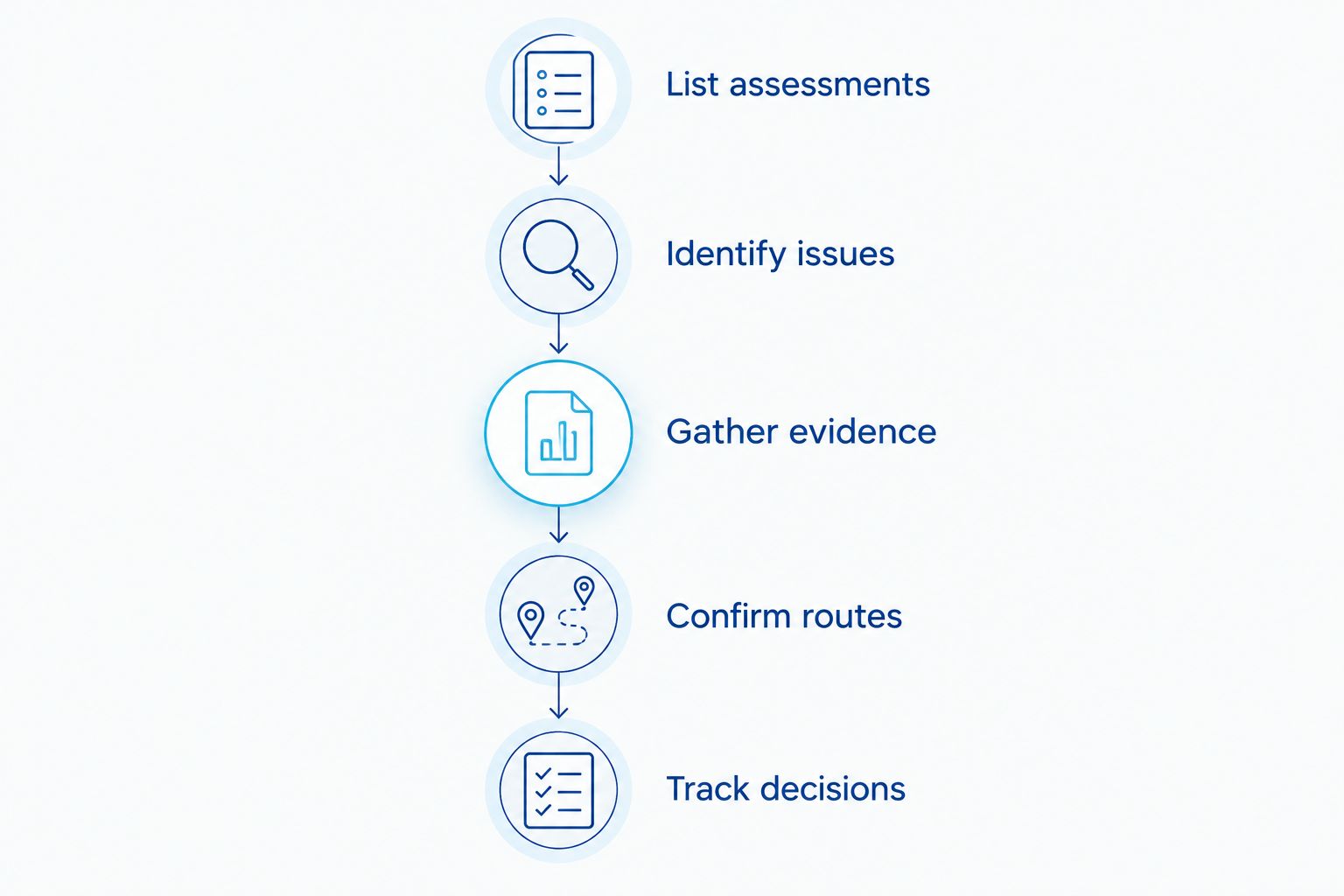
Use the following sequence to turn a portfolio review into a manageable set of cases.
- List assessments. Record each property's address, rating-list reference, rateable value and the business responsible for the bill. Include separate entries within the same building. Do not assume that your internal site list matches the rating list: check which assessment each demand notice relates to.
- Identify issues. Write down what appears wrong at each assessment. Distinguish an incorrect floor area or property description from a disagreement about rental value, an occupation change or a council billing problem. A high bill alone does not establish that the valuation is wrong.
- Gather evidence. Collect leases, plans, measurements, photographs and relevant correspondence. Keep shared material in a portfolio folder and site-specific documents against the correct entry. Explain what each document proves rather than submitting an undifferentiated bundle.
- Confirm routes. Check the applicable procedure, rating list, authority to act and deadline for each case. England and Wales both use the Check, Challenge, Appeal process for the current rating lists. An existing challenge or previous decision also needs checking before another instruction proceeds.
- Track decisions. Maintain a separate status record for each assessment, including submissions, requests for information and outcomes. A decision on one property does not itself amend the remaining entries. Update your portfolio summary only when the individual position is confirmed.
For guidance on organising the instruction, see choosing a business rates service for multiple sites. The practical aim is clear responsibility across the portfolio without losing the details that decide each case.
Multiple properties in England and Wales
For properties in England and Wales, the established Check, Challenge, Appeal process separates correcting property information from challenging the valuation and appealing an unresolved dispute. Managing several properties together does not remove those stages or make their deadlines interchangeable.
Your 2026 review should identify the relevant rating list for every issue. Keep the period being challenged clear: evidence about today's premises does not automatically establish what was correct for a different period.
Check who has authority to act for each property before submitting anything. Where your portfolio includes different companies, tenants or existing representatives, a central instruction still needs the correct authorisation. Ownership of the wider business group is not a substitute for checking the position of each ratepayer.
Best for: a coordinated review of English and Welsh assessments with a separate record for each entry. The benefit is consistent case management; the limitation is that each entry still needs valid grounds and the correct procedural steps.
Which kind of case does each property need?
A valuation challenge is not the answer to every business rates problem. Before instructing work across your portfolio, classify the issue at each site so that the evidence reaches the right decision-maker.
| Route | Best for | Main benefit | Main limitation |
|---|---|---|---|
| Valuation challenge | An assessment with disputed property facts or valuation | Addresses the rating-list entry itself | Needs grounds and evidence for that assessment |
| Council billing dispute | A dispute about the demand, liability period or a council billing decision | Focuses on how the bill has been issued | Does not itself change the property's rateable value |
| Split or merger review | A question about whether premises are correctly assessed separately or together | Examines what should form the rated property | Common ownership alone does not settle the assessment question |
For example, a bill covering the wrong occupation period needs attention to liability and billing records. An incorrect property measurement needs attention to the assessment. Treating both as the same valuation argument obscures the issue you need resolved.
Match the action to the problem before grouping cases together. A portfolio review can contain all these routes, but the instructions and expected outcomes should remain distinguishable.
Why the approach varies between properties
The same business name above the door does not make every assessment comparable. These factors determine whether you can reuse an argument or need a different case:
- Property facts: area, layout, use and accommodation affect what is being assessed. Establish the facts before relying on a comparison.
- Valuation evidence: a lease or comparable property must be relevant to the assessment under review. Evidence useful for one location is not automatically suitable elsewhere.
- Location and procedure: English and Welsh properties each follow the same Check, Challenge, Appeal stages under their own rating list entry, even when one person coordinates the instruction.
- Occupation and liability: changes in occupier, use or the extent of occupation require their own records and dates.
- Case history: previous submissions, decisions and existing representation affect what should happen next.
- Rating-list period: identify which list and period the issue concerns. Do not combine different periods into an unexplained argument.
Use these factors to set priorities for your 2026 review. Start with a defined issue supported by documents, not a promise that every site deserves the same percentage reduction.
Can I use the same evidence for every property?
You can reuse relevant evidence, but you must explain its connection to each assessment. A shared lease structure, consistent measurement error or relevant rental comparison can inform several cases; it does not prove that every property has the same valuation problem.
Separate your evidence into a common background file and individual property files. The background file explains the business and the shared issue. Each property file then identifies the entry, the disputed fact or valuation, and the documents supporting the requested change.
Reuse the explanation, not an unsupported conclusion. If a comparison is relevant to one site but not another, leave it out of the second case. A smaller, clearly explained bundle is more useful than unrelated documents attached to every submission.
Does appealing together merge my properties into one assessment?
- Coordinating appeals does not merge separate rating assessments. Whether premises should be assessed together is a different question, based on the property and occupation facts rather than your preference for a single bill.
Do not ask for a merger simply because your company occupies several sites. Establish the physical arrangement, how the premises are occupied and what the existing entries describe. Plans and occupation records help explain those facts.
If your real concern is that one property has been split incorrectly, or separate parts should be assessed differently, make that the stated issue. A portfolio valuation review and a split or merger instruction should not be treated as interchangeable services.
Do I keep paying while the cases are reviewed?
Yes, a business rates challenge does not automatically suspend payment of the council's demand. Keep paying as required unless the council confirms a different arrangement; a pending valuation case is not permission to withhold payment.
Track bills separately from case progress. Your accounts team needs to know which amounts remain due, while the person managing the challenge needs to know what has been submitted and decided. Confusing those records creates avoidable payment problems.
A reduction in an assessment and an adjustment to a council bill are also separate administrative steps. Keep the decision and any revised demand together so that you can check how the outcome has been applied.
Getting help from Appeal My Rates UK
Appeal My Rates UK is suited to business owners seeking rating surveyor support across properties in England and Wales. Its stated services cover valuation challenges, property splits and mergers, and disputes with local council rates teams.
Professional support gives you a point of responsibility for reviewing the issues and progressing the instruction. It does not guarantee that every property has appeal grounds, that every case will succeed or that all sites will finish together.
Most of our work is no win, no fee, but some instructions carry fixed fees. Confirm the fee basis, scope and payment terms for your specific instruction in writing, including which assessments and services are covered. Do not assume that every case in a portfolio uses the same fee arrangement.
Before instructing work in 2026, provide your assessment list and any existing case correspondence. Ask for a clear distinction between properties recommended for action and properties where the evidence does not support a challenge. Let us handle your case with the scope agreed first.
Discuss your multiple-property instruction
Confirm which assessments need review, the scope of work and the fee terms for your instruction.
FAQ
Can I appeal business rates for multiple properties together?
Yes, you can coordinate challenges for multiple properties, but each separately assessed property normally needs its own evidence, procedural steps and outcome. A portfolio instruction does not automatically create one combined appeal.
Can one rating surveyor handle all my properties?
Yes, one rating surveyor can coordinate work across multiple properties where the instruction and authority to act cover them. Confirm the assessments included, any existing representation and the applicable procedures.
Does a successful appeal on one site reduce rates at my other sites?
No, success at one site does not automatically change your other assessments. Relevant evidence or reasoning can support another case, but the other entry still needs its own review and outcome.
Can I include properties in England and Wales in one instruction?
Yes, you can include English and Welsh properties in a coordinated instruction, but each follows the same Check, Challenge, Appeal stages under its own rating list. Do not assume that deadlines are identical.
Do all the properties need to belong to the same company?
No, common ownership is not what determines whether work can be coordinated. The instruction must identify the relevant businesses, assessments and authority to act for each case.
Is every Appeal My Rates UK instruction no win, no fee?
Most of our work is no win, no fee, but some instructions carry fixed fees. Confirm the fee basis, scope and payment terms for your specific instruction in writing, rather than assuming one arrangement covers every property or service.
Should I stop paying business rates while several appeals are pending?
No, submitting business rates challenges does not automatically suspend payment. Continue paying as required unless the council confirms a different arrangement, and keep billing records separate from case progress.
One last thing
Your first task is to reconcile the property list with the rating assessments. Several sites in your accounts system do not necessarily mean the same number of rating entries, and a single address can contain separately assessed parts.
Before progressing your 2026 cases, match each demand notice to its assessment and responsible business. That simple check gives every later document a clear home and prevents a portfolio-wide instruction from overlooking the entry that actually needs attention.
Related guides
- How to find comparable properties for a rates appeal
- How merging properties affects business rates
- Compare business rates consultant fee terms
